
Hunting for the elusive gravitational signal.
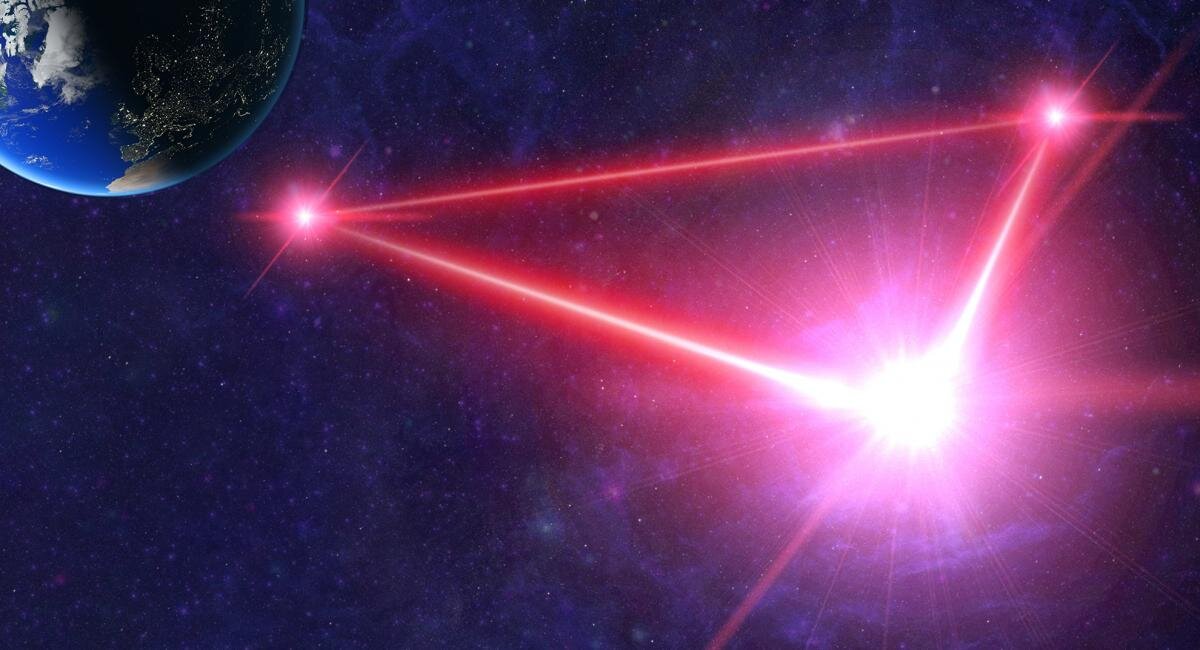
A new study proposes using a constellation of three or four space interferometers to map the flat and almost perfectly homogeneous stochastic gravitational wave background (SGWB) in a search for ripples. These small fluctuations, known as anisotropies, hold the information needed to understand the distribution of gravitational wave sources on the largest cosmological scale. Researchers suggest that a constellation of space interferometers orbiting the Sun could enable us to see subtle fluctuations in the gravitational background signal, thus allowing us to extract valuable information about the distribution of black holes, neutron stars and all other sources of gravitational waves in the universe.
Reading Insights
0
8
2 min
vs 3 min read
82%
568 → 102 words
Want the full story? Read the original article
Read on Phys.org