
Jupiter Vanishes Behind Waning Moon in Rare October Occultation
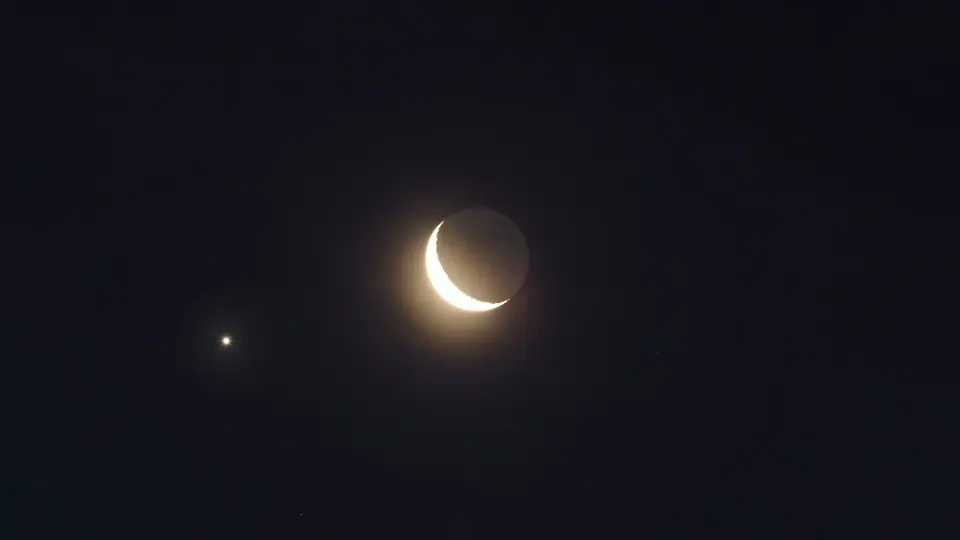
On October 6, 2026, a waning crescent Moon passed in front of Jupiter, hiding the planet and its four Galilean moons from view for approximately one hour. This rare alignment, visible across eastern North America, the Caribbean, and parts of Africa, occurred in pre-dawn hours. The event, which happens roughly once every 13 years for a specific location, allowed observers to witness Jupiter re-emerge from the Moon’s dark limb, accompanied by its satellites.
Key points
- The occultation began around 3:15 a.m. CDT and 4:15 a.m. EDT, with Jupiter disappearing behind the Moon’s bright limb.
- Jupiter reappeared from the Moon’s dark limb approximately 60 to 90 seconds later, depending on the observer's location.
- The four Galilean moons (Io, Europa, Callisto, and Ganymede) were also occulted, with some disappearing minutes before Jupiter.
- The event was visible to the naked eye, but binoculars or telescopes provided a clearer view of the planet and its moons.
- Parts of the western United States and Mexico saw only the reappearance, as the Moon and Jupiter had not yet risen when the occultation began.
Background
This event followed a series of planetary alignments in October 2026, including Saturn at opposition on October 4 and the Moon passing near Jupiter on October 5. The lunar cycle had recently begun with a 5% waxing crescent on September 13, leading to the waning crescent phase observed during the occultation. Previous coverage noted the rarity of such alignments, with the next similar event not expected for over a decade.
How outlets are covering it
Live Science emphasized the once-in-a-decade nature of the event and provided specific timing for major cities, noting that the occultation would be visible before dawn in much of the eastern U.S. and Canada. Sky & Telescope highlighted the 'quintuple' nature of the occultation, detailing the sequence of the Galilean moons disappearing and reappearing, and noted that Jupiter occultations occur on average every 13 years for a given location. WTOP focused on the practical aspects of viewing, suggesting binoculars, telescopes, or smartphone cameras, and noted the clear weather conditions. Astronomy.com provided a broader context, mentioning a rare occultation of Io by Callisto just before the main event and detailing the visibility zones across North America and the Caribbean.
Why it matters
The event offered a rare opportunity for skywatchers to observe a major planet being occulted by the Moon, a phenomenon that occurs infrequently. It also allowed observers to see the Galilean moons in a unique configuration, enhancing the understanding of the Jovian system. The event served as a reminder of the dynamic nature of celestial alignments and the importance of precise timing in astronomical observations.
What to watch
The next lunar occultation of Jupiter is not expected for over a decade. Skywatchers are encouraged to monitor future astronomical events, including the Orionid meteor shower peak in late October and the Hunter's Moon in late October. Observers may also look for other planetary alignments and lunar phases in the coming months.
- The moon and Jupiter are about to do something that won't happen again for 11 years Live Science
- Don’t Miss The Total Eclipse Of Jupiter: The Sky This Week forbes.com
- Rare Sight Ahead! Watch the Moon Occult Jupiter on October 6th Sky & Telescope
- Jupiter and the moon meet Tuesday morning before dawn wtop.com
- The Sky Today on Tuesday, October 6: The Moon occults Jupiter Astronomy.com
Want the full story? Read the original reporting
Read on Live Science