Tag

Jupiter

All articles tagged with #jupiter

Jupiter’s Lightning: Up to a Million Times More Powerful Than Earth’s
astronomy14 days ago

Jupiter’s Lightning: Up to a Million Times More Powerful Than Earth’s

New NASA Juno data suggest Jupiter’s lightning could be up to a million times more powerful than Earth’s, inferred from radio-emission measurements. The study highlights how Jupiter’s hydrogen-rich atmosphere and towering, long-lasting storms—including months-long 'stealth' storms—may amplify lightning energy, offering new insights into the gas giant’s weather and atmospheric dynamics.

Jupiter’s lightning could be up to a million times stronger than Earth’s bolts
space16 days ago

Jupiter’s lightning could be up to a million times stronger than Earth’s bolts

A study using NASA’s Juno data suggests Jupiter’s lightning may be enormously more powerful than Earth’s—potentially up to a million times stronger. By analyzing the planet’s radio emissions rather than optical flashes and focusing on long-lived “stealth” storms in Jupiter’s belts, researchers estimated lightning pulses with power ranging from Earth-like bolts to far more powerful discharges. The findings, which consider Jupiter’s hydrogen-dominated atmosphere and towering storm clouds (up to ~62 miles tall), aim to explain why Jovian lightning is so energetic and were published in AGU Advances.

Jupiter and a Waxing Moon Put on a Sunset Sky Show
space16 days ago

Jupiter and a Waxing Moon Put on a Sunset Sky Show

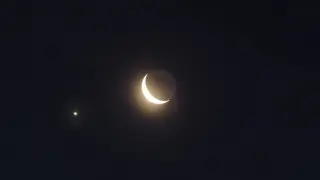
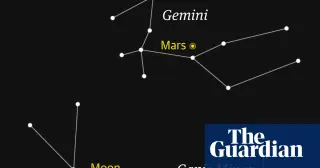
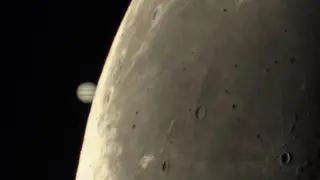
Look east at sunset on March 26 to see Jupiter near a waxing Moon; the Moon–Jupiter close approach occurs at 9:19 PM EDT (1319 GMT), with Jupiter about 5 degrees to the lower-right of the Moon. The pairing is best viewed from the northern hemisphere and remains visible through the evening, with Jupiter staying prominent in the spring sky until solar conjunction in July. A small telescope or binoculars will reveal the Moon’s craters and lunar seas and Jupiter’s cloud bands and moons; for exact rise/set times, check Time and Date for your location.

First-quarter Moon Pairs with Jupiter for a Night-Sky Show
stargazing16 days ago

First-quarter Moon Pairs with Jupiter for a Night-Sky Show

Tonight (March 25) the first-quarter Moon will glow in the southern sky after dusk, appearing about four degrees from the bright planet Jupiter for a striking nocturnal pairing, while Saturn is approaching solar conjunction and will reappear in the pre-dawn sky in April; observers with binoculars or a telescope can enjoy a classic night-sky setup and learn the Moon’s changing phase as part of ongoing stargazing.

Tiny moons boost Jupiter to 101 and Saturn to 285
space21 days ago

Tiny moons boost Jupiter to 101 and Saturn to 285

Astronomers report four new moons around Jupiter and 11 around Saturn, bringing totals to 101 and 285 for the planets and lifting the solar system’s known moon count to 442. The tiny satellites (~3 km across) have wide, faint orbits and were discovered with large telescopes (Magellan–Baade, Subaru, CFHT) by teams led by Scott Sheppard, David Tholen, and Edward Ashton.

JWST reveals Io’s cold footprint in Jupiter’s auroras
astronomy1 month ago

JWST reveals Io’s cold footprint in Jupiter’s auroras

NASA’s James Webb Space Telescope captured a surprising cold spot and unusually high ion density beneath Io’s auroral footprint on Jupiter, showing real-time interactions between the planet’s magnetic field and its Galilean moons. The cold patch (~265°C) and dense plasma arise from Io’s volcanic plumes feeding a surrounding plasma torus, altering the aurora as ions crash into Jupiter’s atmosphere. Scientists will pursue follow-up observations to determine how often these footprints occur, with the findings published in Geophysical Research Letters.

NASA Turns Space Data into Sound: A Sonic Tour of Jupiter and Saturn
space1 month ago

NASA Turns Space Data into Sound: A Sonic Tour of Jupiter and Saturn

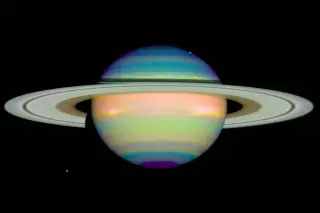
NASA’s Chandra X-ray Observatory is converting solar X-ray data into audible soundscapes, letting listeners hear Jupiter’s auroras and Saturn’s rings. By mapping data attributes like brightness, position, and energy to musical qualities such as pitch and volume, scientists create accessible, immersive representations of space that expand how the public experiences planetary data.