
MeerKAT Detects First Direct Radio Emission from Exoplanet Beta Pictoris b
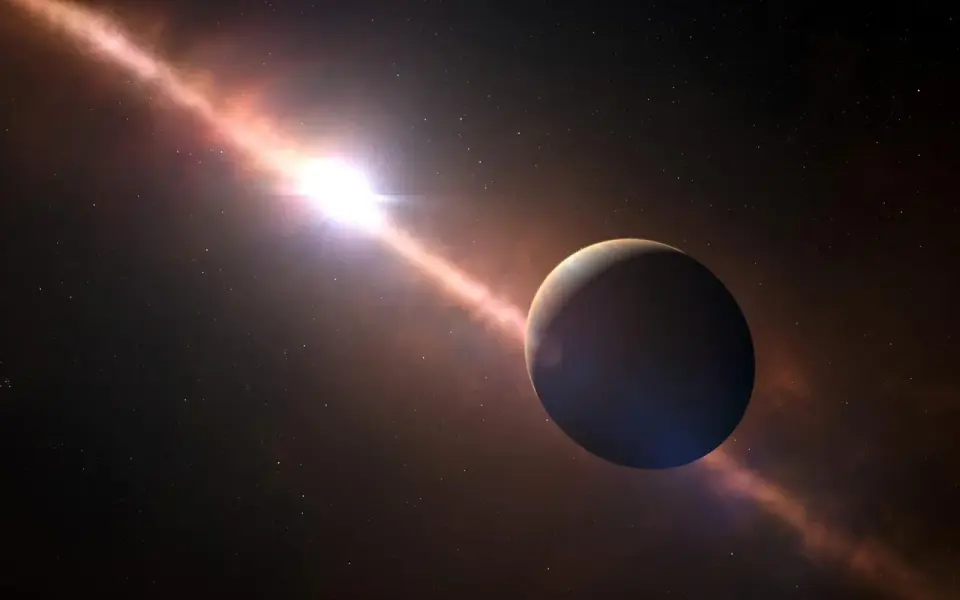
Astronomers using the MeerKAT radio telescope in South Africa have detected the first unambiguous radio signal originating from an exoplanet, Beta Pictoris b. Located 205 light-years away, this young gas giant exhibits auroral activity driven by a magnetic field estimated at over 1,000 gauss, thousands of times stronger than Earth's. This discovery marks a milestone in exoplanetology by allowing direct characterization of planetary magnetism without relying on host star signals.
Key points
- The signal was detected using the 64-antenna MeerKAT array in the Karoo Desert, South Africa, representing the first clear radio emission associated with an exoplanet rather than its host star.
- Beta Pictoris b is a young gas giant, less than 23 million years old, with a mass approximately ten times that of Jupiter, orbiting a star 205 light-years from Earth.
- The emission is attributed to auroral processes, similar to those observed on Jupiter and Earth, indicating a magnetic field strength exceeding 1,000 gauss compared to Earth's 0.5 gauss.
- Scientists require further observation to confirm the signal's origin by detecting modulation synchronized with the planet's eight-hour rotation period, distinguishing it from stellar activity.
- This breakthrough enables direct study of exoplanetary magnetic fields and atmospheric interactions, moving beyond indirect detection methods previously used for exoplanets.
Background
Previous coverage from late September 2026 established that the MeerKAT telescope had identified short, circularly polarized radio bursts from Beta Pictoris b, confirming a magnetic field of approximately 1,250 gauss. Those reports highlighted the significance of this being the first direct radio signal from a single exoplanet, paving the way for future observations with next-generation radio observatories to characterize distant worlds' atmospheres and habitability.
Why it matters
This detection validates a new method for characterizing exoplanets by directly observing their magnetic fields and auroral activity, rather than relying on indirect transit or radial velocity methods. It provides a pathway to assess planetary habitability and atmospheric interactions in distant systems, potentially revealing whether other giant exoplanets possess similar protective magnetic shields.
What to watch
Researchers plan to monitor Beta Pictoris b for signal modulation matching its eight-hour rotation period to definitively confirm the emission's planetary origin. Future observations will likely target other giant exoplanets using next-generation radio observatories to expand the catalog of characterized magnetic fields and auroral activities across the galaxy.
Want the full story? Read the original reporting
Read on futura-sciences.com