Tag

Meerkat

All articles tagged with #meerkat

Gigamaser Beacon Detected From 8 Billion Light-Years Away by MeerKAT
science27 days ago

Gigamaser Beacon Detected From 8 Billion Light-Years Away by MeerKAT

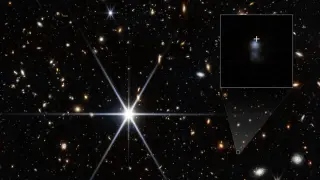
Astronomers using the MeerKAT radio telescope detected a bright, narrow 18-centimeter hydroxyl emission line from the distant galaxy system HATLAS J142935.3-002836 at z=1.027 (about 8 billion light-years away). The signal is amplified by a foreground galaxy’s gravitational lensing and the background merger’s dense, energized gas, pushing it toward megamaser/gigamaser levels. The rapid detection in a few hours demonstrates MeerKAT’s capability to find distant hydroxyl emitters in wide surveys.

Distant Galaxy Collision Yields Brightest Gigamaser Yet
science1 month ago

Distant Galaxy Collision Yields Brightest Gigamaser Yet

Astronomers using the MeerKAT radio telescope have detected the brightest and most distant hydroxyl gigamaser, produced when gas in colliding galaxies stimulates hydroxyl molecules to emit intense microwaves. The signal, traveling about 7.8–8 billion light-years, is magnified by a foreground galaxy acting as a gravitational lens, making it appear exceptionally bright. The discovery advances study of high-redshift OH megamasers and galaxy mergers and is published (preprint available) in Monthly Notices of the Royal Astronomical Society Letters.

Cosmic laser beacon: brightest megamaser seen from 8 billion light-years away via gravitational lensing
space1 month ago

Cosmic laser beacon: brightest megamaser seen from 8 billion light-years away via gravitational lensing

Astronomers using the MeerKAT radio telescope have detected the brightest and most distant hydroxyl megamaser from a galaxy merger about 8 billion light-years away. The signal, amplified by gravitational lensing, may qualify as a gigamaser and provides a rare beacon to study how ancient galaxies form and evolve; scientists hope to find many more such megamasers to map the cosmos’s history.

Cosmic Space Laser: Gigamaser Detected in Distant Galaxy
space1 month ago

Cosmic Space Laser: Gigamaser Detected in Distant Galaxy

Astronomers using the MeerKAT radio telescope detected a record-breaking microwave laser (a gigamaser) in a galaxy about 8 billion light-years away, magnified by gravitational lensing. The emission, arising from excited hydroxyl molecules during a galaxy merger, is roughly 100,000 times the luminosity of a star and is the most powerful maser yet observed. Upgrades to MeerKAT could uncover hundreds to thousands more such megamasers, offering insight into conditions in the distant universe.

Giant Rotating Cosmic Filament Rewrites How Galaxies Get Their Spin
astronomy1 month ago

Giant Rotating Cosmic Filament Rewrites How Galaxies Get Their Spin

An Oxford-led team identifies a giant, razor-thin cosmic filament about 140 million light-years away that is rotating with galaxies aligned to its spin, offering new insights into how galaxies acquire angular momentum and evolve. The finding, enabled by MeerKAT’s MIGHTEE survey and complemented by DESI and SDSS data, challenges existing models of galaxy formation within the cosmic web.

Deep Space Radio Bursts Hit Earth in Rapid Succession
science7 months ago

Deep Space Radio Bursts Hit Earth in Rapid Succession

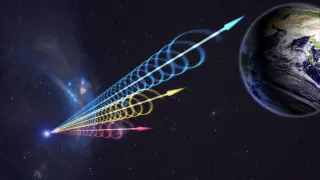
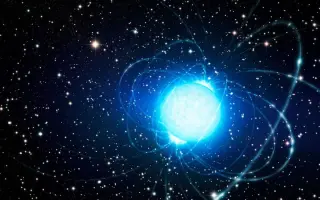
A team using MeerKAT in South Africa discovered a highly active repeating fast radio burst source, FRB 20240619D, emitting hundreds of short radio pulses across multiple frequencies, providing valuable insights into the nature of these cosmic phenomena and their potential origins near magnetars, while also setting limits on optical counterparts and helping map the universe's ionized gas.

Gravitational Waves Unveil Hidden Cosmic Structures and Black Holes
science1 year ago

Gravitational Waves Unveil Hidden Cosmic Structures and Black Holes

Astronomers from Swinburne University have created the most detailed maps of gravitational waves, revealing hidden black holes and cosmic structures. Using the MeerKAT Pulsar Timing Array, they detected a strong gravitational wave signal from merging supermassive black holes, uncovering unexpected hotspots that suggest directional biases. This research offers new insights into the universe's evolution and the formation of massive black holes, challenging previous assumptions about the gravitational wave background's distribution.

MeerKAT Unveils New Giant Radio Galaxy
science1 year ago

MeerKAT Unveils New Giant Radio Galaxy

Astronomers using the MeerKAT radio telescope have discovered a new giant radio galaxy, MGTC J100022.85+031520.4, in the COSMOS field. This galaxy, hosted by an elliptical galaxy with a redshift of 0.1034, spans about 4.2 million light years and is one of the few GRGs located in a galaxy cluster. The discovery, part of the MIGHTEE survey, provides insights into the formation and evolution of radio sources.

"MeerKAT Scan Unearths 49 New Galaxies in Record Time"
astronomy2 years ago

"MeerKAT Scan Unearths 49 New Galaxies in Record Time"

Astronomers using the MeerKAT radio telescope in South Africa have discovered 49 new galaxies while investigating the presence of hydrogen gas within a specific galaxy. The discovery provides insights into dynamic galactic interactions, with some galaxies actively siphoning gas from their neighbors. The MeerKAT radio telescope, a cornerstone in astronomical exploration, is part of the Square Kilometre Array (SKA) project and has detected radio galaxies and examined the Milky Way’s galactic center. Planned projects include surveys exploring star-forming hydrogen gas within new and existing galaxies, aiming to understand the evolutionary processes of galaxies.

"MeerKAT Telescope Discovers 49 New Galaxies in Record Time"
astronomy2 years ago

"MeerKAT Telescope Discovers 49 New Galaxies in Record Time"

Astronomers using the MeerKAT radio telescope in South Africa discovered 49 new gas-rich galaxies in just three hours, dubbing them the "forty-niners." The galaxies were found while studying star-forming gas in a single radio galaxy, demonstrating the telescope's power in revealing star-forming gas. Many of the newfound galaxies are located in close proximity to each other and form galaxy groups, with three in particular capturing the researchers' interest due to their interconnected gas content. The team's research was published in the Monthly Notices of the Royal Astronomical Society, and they hope to continue sharing more discoveries of new gas-rich galaxies with the wider community.

"MeerKAT's Rapid Scan Unveils 49 New Gas-Rich Galaxies"
astronomy2 years ago

"MeerKAT's Rapid Scan Unveils 49 New Gas-Rich Galaxies"

Using the MeerKAT radio telescope in South Africa, astronomers discovered 49 previously unknown galaxies in just under three hours, while originally aiming to observe hydrogen gas in a specific galaxy. The findings, published in the Monthly Notices of the Royal Astronomical Society, shed light on the importance of studying gas in galaxies to understand their formation and evolution. The MeerKAT telescope, part of the Square Kilometre Array project, has proven to be a valuable tool for such discoveries and is expected to reveal more insights into the universe's mysteries.

"Surprise Discovery: Astronomers Uncover 49 New Galaxies in Record Time"
astronomy2 years ago

"Surprise Discovery: Astronomers Uncover 49 New Galaxies in Record Time"

An international team of astronomers using the MeerKAT radio telescope in South Africa discovered 49 new gas-rich galaxies in under three hours, with the galaxies informally nicknamed the "49ers." The observations, facilitated by IDIA, revealed that many of the galaxies are near each other, forming galaxy groups, with some directly connected by their gas content. The discovery highlights the power of MeerKAT as an imaging instrument and the methods developed for studying these galaxies will be useful for future large science surveys and observing campaigns.

"Breakthrough Discovery: Unusual Space Object Challenges Astrophysics"
astronomy2 years ago

"Breakthrough Discovery: Unusual Space Object Challenges Astrophysics"

Astronomers have discovered a celestial object in the star cluster NGC 1851 that challenges existing astrophysical classifications, possibly uncovering a new type of cosmic entity at the edge of known physics. The enigmatic system, known as NGC 1851E, consists of a millisecond pulsar and a massive, invisible companion object, which could be a pulsar in orbit around the remains of a merger of two neutron stars. This discovery holds immense promise for understanding extreme matter in the universe and may lead to the identification of a new, as yet unknown, astrophysical object at the boundary between neutron stars and black holes.