
Apollo 4 Marks First Saturn V Flight and Heat Shield Test 59 Years Ago
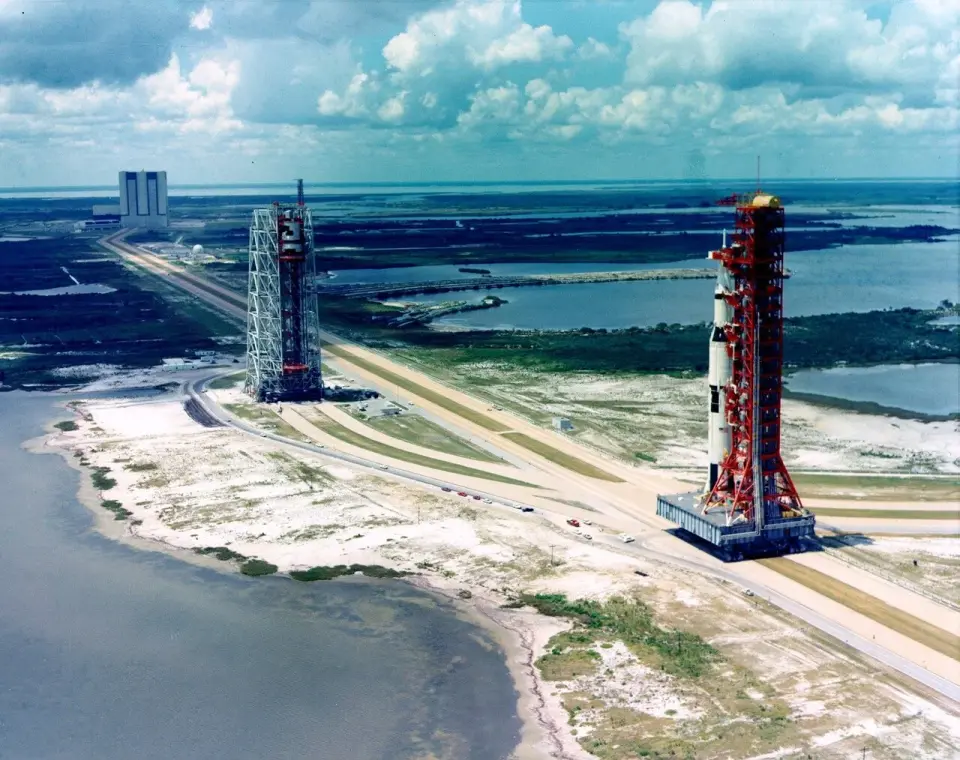
On November 9, 1967, NASA launched Apollo 4 from Kennedy Space Center’s Launch Complex 39A, marking the inaugural flight of the Saturn V rocket. This uncrewed mission tested all three rocket stages simultaneously and validated the command module’s heat shield against lunar-return speeds, paving the way for the first crewed Moon landing.
Key points
- The launch occurred at 7:00 a.m. Eastern Standard Time from Launch Complex 39A in Florida, marking the first operational flight of the Saturn V’s S-IC and S-II stages.
- NASA employed an 'all-up' testing strategy, flying all three stages together rather than testing them separately, which included a restart test for the S-IVB third stage.
- The command module reached approximately 25,000 mph during reentry, simulating conditions of a lunar return to evaluate heat shield integrity.
- The mission lasted eight hours and 37 minutes, concluding with a successful splashdown in the Pacific Ocean and recovery by the USS Bennington.
- The Saturn V stood 363 feet tall, weighed 6.2 million pounds fully fueled, and generated 7.5 million pounds of thrust from its first stage.
Background
This historical milestone coincides with recent developments at Kennedy Space Center, where SpaceX is preparing Pad 39A for its first Starship launch and NASA recently hosted the 'Max Power' expo for the nation's 250th anniversary. While the 1967 Apollo 4 launch validated the hardware for the Moon landing, the site is now transitioning to support next-generation lunar and Mars missions.
Why it matters
The success of Apollo 4 provided critical confidence in the Saturn V rocket and Apollo spacecraft, directly enabling the first crewed lunar landing less than two years later. It demonstrated that the complex 'all-up' testing approach was viable, accelerating the timeline for human spaceflight achievements.
What to watch
The legacy of this launch continues as Kennedy Space Center’s Launch Complex 39A prepares for SpaceX’s Starship operations, linking historical Apollo milestones with current efforts to expand launch frequency and support future deep space missions.
Want the full story? Read the original reporting
Read on Vintage Aviation News