
Cranial evolution in Homo shaped by constraints and neutral change, not steady directional selection
TL;DR
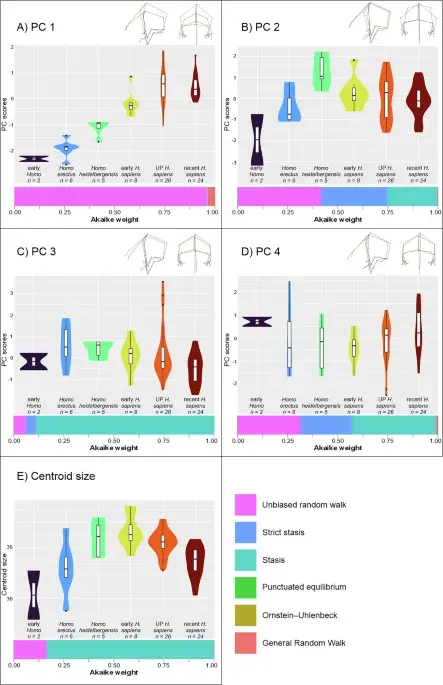
A morphometric analysis of fossil and modern Homo skulls shows brain- and face-related cranial changes were not driven by gradual directional selection for larger brains or smaller faces. Instead, neutral processes and stabilizing selection best explain the observed variation in both Homo sapiens and Homo neanderthalensis, with some axes hinting at limited selection. The results highlight environmental and cultural constraints (e.g., cooking, tool use) as key factors shaping cranial evolution rather than continuous, linear directional pressures, and suggest releases from stabilizing selection during major transitions may have fueled later diversification.
Topics:sciencebiological-anthropology#biological-anthropology#cranial-morphology#encephalization#homo#neutral-evolution#stabilizing-selection
- Evolutionary drivers of encephalization and facial reduction in the genus Homo Nature
- Larger brain, smaller face: Human evolution took a different course than previously thought Phys.org
- Human brains may have got bigger for no particular reason New Scientist
- Study Challenges Long-Held Assumptions About Human Evolution tovima.com
Want the full story? Read the original reporting
Read on Nature