
Petermann Glacier sheds 76-square-kilometer ice island in largest Arctic calving since 2020
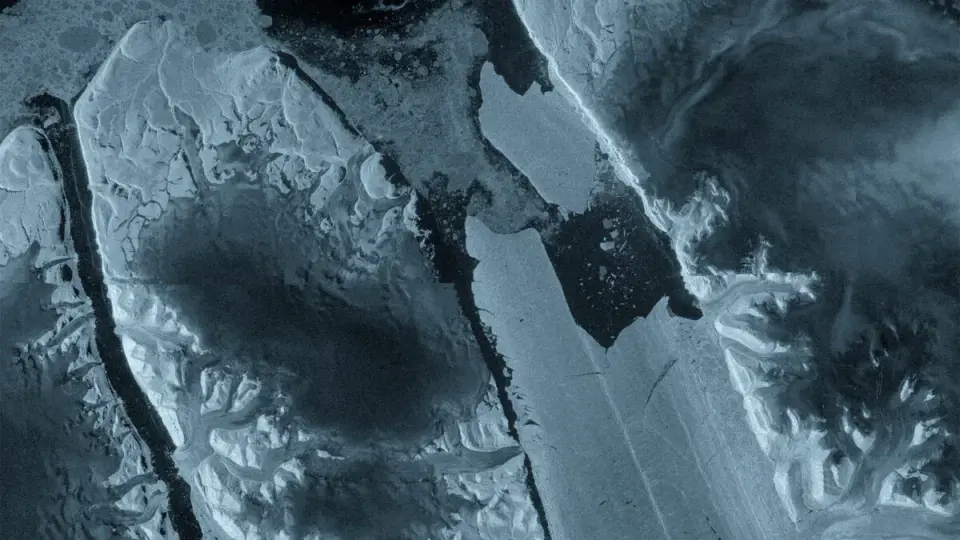
A 76-square-kilometer ice island broke from Petermann Glacier in northwest Greenland on August 4, 2026, marking the largest floating ice loss in over a decade. Satellite data revealed rapid fracture propagation in the weeks prior. Scientists anticipate two more major calving events that could reduce the glacier’s remaining ice tongue by 22 percent.
Key points
- The calving event occurred on August 4, 2026, releasing a 76-square-kilometer (29-square-mile) ice island from Petermann Glacier.
- The new ice island is estimated to be up to 150 meters thick and is comparable in surface area to Manhattan Island.
- This is the largest floating ice loss from Petermann Glacier since 2012 and the biggest Arctic calving event since 2020.
- Satellite imagery from ESA’s Copernicus Sentinel-1 mission detected significant deterioration along the glacier’s centerline on August 3, one day before separation.
- Researchers expect two additional ice islands, measuring approximately 94 and 84 square kilometers, to detach in the near future.
- If both future calving events occur, the combined loss would reduce Petermann Glacier’s floating ice tongue by approximately 22 percent.
Background
Petermann Glacier is one of Greenland’s largest marine-terminating glaciers, frequently shedding large icebergs. Scientists have monitored its floating ice tongue via satellite since 2019, tracking the expansion of fractures. Previous major calving events include a 251-square-kilometer loss in 2010 and a 130-square-kilometer loss in 2012. The current event follows a pattern of accelerating ice loss linked to warming ocean temperatures and changing polar conditions.
How outlets are covering it
Gizmodo and PetaPixel emphasize the visual evidence from satellite imagery, highlighting the rapid crack propagation observed in the weeks leading up to the calving. ScienceDaily, citing the University of Ottawa and international collaborators, focuses on the long-term monitoring aspect and the specific identification of the event by PhD student Adam Garbo. All sources agree on the scale of the loss but differ in emphasis: Gizmodo and PetaPixel highlight the 'Manhattan-sized' comparison and the rarity of Arctic ice islands, while ScienceDaily stresses the collaborative scientific effort and the projected future losses. No source disputes the factual timeline or measurements.
Why it matters
The calving event underscores the fragility of Greenland’s remaining ice tongues and the accelerating pace of ice loss in the Arctic. The anticipated future calving events could significantly reduce the glacier’s floating ice, impacting sea-level rise projections and polar ocean dynamics. Additionally, the drifting ice island poses potential hazards to Arctic shipping routes and offshore infrastructure as it fragments over time.
What to watch
Researchers will continue monitoring the newly formed ice island using satellite imagery, aerial observations, and tracking data to observe its movement and fragmentation. Scientists anticipate two more major calving events from Petermann Glacier in the near future as existing rifts continue to propagate. Environment and Climate Change Canada is evaluating the ice island’s trajectory for potential risks to vessels and resource operations.
- A Massive Iceberg Broke off Greenland. New Images Show What Led up to It Gizmodo
- Manhattan-sized ice island breaks off Greenland’s Petermann Glacier ScienceDaily
- Satellite Images Show Manhattan-Sized Ice Island Breaking Away From Greenland Glacier PetaPixel
- A Stunning Timelapse of a Colossal Iceberg Collapsing and Flipping Over in Ilulissat, Greenland Laughing Squid
- Sentinel-1 captures major ice loss from Greenland glacier European Space Agency
Want the full story? Read the original reporting
Read on Gizmodo