
Swiss Students Test Wool Blankets to Slow Glacier Melt, Matching Plastic Performance
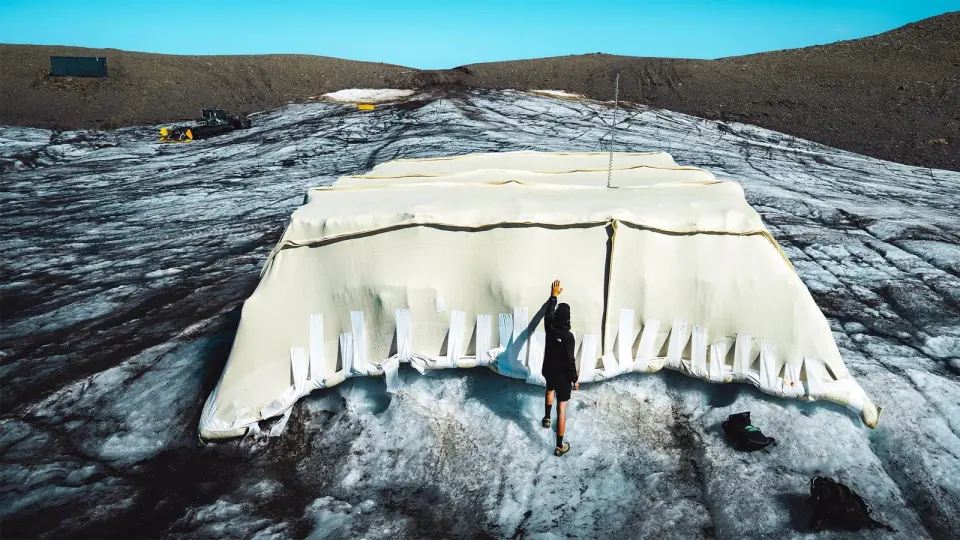
Swiss researchers tested biodegradable sheep’s wool blankets on the Tsanfleuron Glacier, finding they reduced summer ice melt by 50 to 70 percent, matching the performance of traditional synthetic covers. The 'Keep It Wool' project, led by the Summit Foundation and the University of Lausanne, aims to replace plastic tarps that shed microfibers. While the wool offers a cleaner, local alternative, experts emphasize it only protects tiny patches of ice and does not address global warming.
Key points
- The 'Keep It Wool' project tested two 100-square-meter wool blankets on the Tsanfleuron Glacier in June 2026, comparing them against standard synthetic geotextiles.
- Biweekly measurements through September showed that wool reduced melting by 50 to 70 percent, performing similarly to plastic covers.
- The initiative utilizes discarded Swiss wool, 40-70% of which is currently wasted, providing a biodegradable alternative to plastic tarps that shed microfibers.
- The experiment was led by four master’s students from the University of Lausanne, with scientific oversight from GLAMOS and funding from Innosuisse.
- Researchers stress that these covers protect only 0.02% of Swiss glacier area and cannot reverse global warming or prevent large-scale glacier retreat.
Background
Swiss glaciers have faced unprecedented loss, shedding over 5% of their volume in 2026 and nearly 20% over the past five years. This record melt year, characterized by extreme heat and low snowfall, has led to the disappearance of small glaciers like Bella Tola. While synthetic covers have been used since 2004 to protect ski areas, they cover only a fraction of the total glacier area. The current trial builds on previous efforts to find sustainable alternatives to plastic, which has environmental drawbacks despite its effectiveness in slowing local melt.
How outlets are covering it
Earth.com and The Daily Galaxy highlight the success of the wool trial in matching plastic performance while offering a biodegradable solution. Futura emphasizes the technical details, noting that wool’s insulating properties work well but require further testing for long-term durability. Noticias Ambientales focuses on the 50% melt reduction achieved by the students. All sources agree that while the wool is a promising local innovation, it is not a substitute for reducing greenhouse gas emissions. The Daily Galaxy notes the project originated from an art exhibition questioning plastic pollution, adding a cultural dimension to the scientific trial.
Why it matters
The trial offers a potential eco-friendly alternative to plastic glacier covers, reducing microfiber pollution in alpine water systems. It also provides a market for discarded Swiss wool, turning waste into a climate adaptation tool. However, the limited scale of the intervention underscores the urgent need for broader climate action to address the root causes of glacier loss.
What to watch
The team plans to analyze the full dataset and test the wool’s durability over multiple seasons. Future research will focus on long-term maintenance costs, fiber shedding, and the environmental impact of scaling wool production. If successful, the method could be adopted by other ski resorts seeking sustainable glacier protection.
- Glaciers get wrapped in plastic each summer to slow the melt, but now Swiss researchers seem to have a much cleaner option Earth.com
- Four students wrapped part of an alpine glacier in sheep's wool in June — and cut summer melt in half by September Futura, le média qui explore le monde
- Four Swiss students manage to slow the melting of an alpine glacier by 50% with sheep's wool Noticias Ambientales
- Four Students Covered a Melting Swiss Glacier With Sheep’s Wool and Found an Alternative to Plastic The Daily Galaxy
Want the full story? Read the original reporting
Read on Earth.com