
Astranis Launches Perceptor to Fill Geostationary Surveillance Gaps
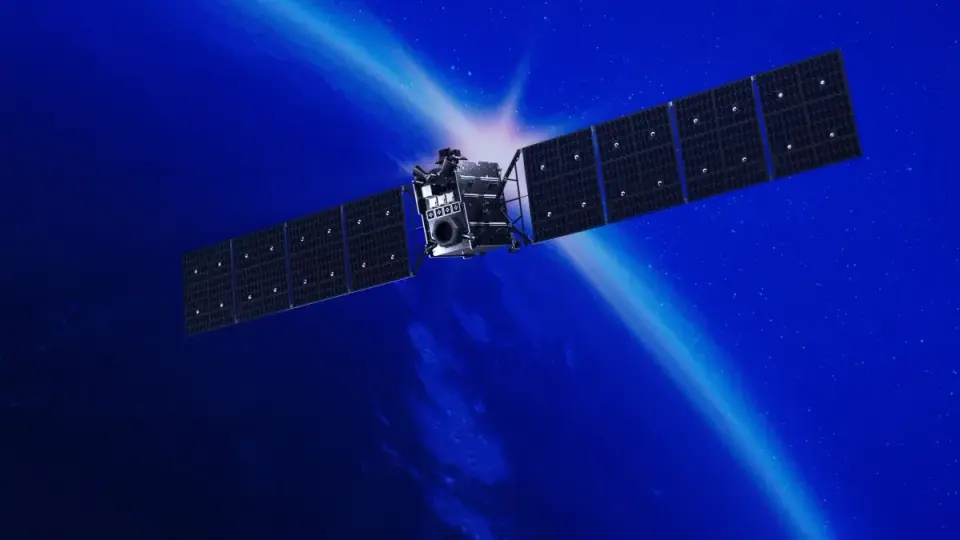
Astranis has unveiled the Perceptor, a new micro-satellite designed to monitor and maneuver around other spacecraft in geostationary orbit. Built on the company's existing microGEO platform, the satellite uses electric propulsion to conduct close-range inspections and flybys. This move expands Astranis’s focus from broadband communications into space domain awareness, aiming to eliminate blind spots that could be exploited by adversaries. The announcement follows a recent $450 million funding round and positions Astranis to compete for contracts under the U.S. Space Force’s Andromeda program.
Key points
- Astranis unveiled the Perceptor satellite on August 13, 2026, designed for monitoring and inspecting other satellites in geostationary orbit.
- The spacecraft is built on the microGEO platform, weighing a few hundred kilograms, and utilizes electric propulsion for repositioning.
- The system supports multi-satellite operations to provide simultaneous observation from different angles, making it harder for targets to evade surveillance.
- Astranis is pivoting from its core broadband communications business into space domain awareness, a military term for tracking orbital objects.
- The company recently secured $450 million in funding to expand manufacturing capacity and prepare for U.S. government procurements.
- Astranis was selected in April 2026 among 14 companies to compete for task orders under the Space Force’s Andromeda contract vehicle.
Background
This development occurs within a broader trend of increased activity in geostationary orbit, where concerns over satellite servicing and debris have grown. Recent missions by SpaceX and Northrop Grumman have demonstrated robotic servicing capabilities to extend satellite lifespans, while studies have highlighted the potential for debris to complicate future astronomical events like the 2029 Apophis flyby. Astranis’s entry into surveillance adds to the competitive landscape for companies seeking to provide security and awareness services in high-Earth orbit.
Why it matters
Geostationary orbit is critical for U.S. military communications and missile warning systems. As China and other nations develop maneuverable spacecraft, the risk of interference or collision increases. Astranis’s Perceptor aims to mitigate these risks by providing continuous, close-range monitoring, thereby enhancing the resilience of critical space infrastructure against emerging threats.
What to watch
Astranis is expected to pursue contracts under the Space Force’s Andromeda vehicle, which supports the RG-XX constellation. The company plans to use its recent funding to scale production of microGEO satellites, potentially leading to the deployment of Perceptor units in the coming years to support both government and commercial reconnaissance missions.
Want the full story? Read the original reporting
Read on spacenews.com