
Muscle-derived BH2 signals cold-induced longevity across tissues
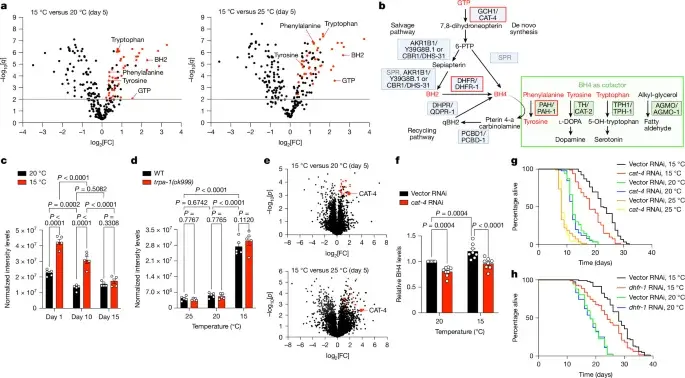
Researchers identified a metabolic pathway where cold temperatures trigger muscle tissue to produce dihydrobiopterin (BH2), which travels to other organs to extend lifespan and prevent protein aggregation.
Key points
- Cold exposure (15°C) in C. elegans upregulates the enzyme CAT-4 in muscle, increasing BH2 production.
- BH2 transports to distal tissues like the intestine and neurons, where it converts to BH4 to support tyrosine synthesis.
- This pathway extends lifespan and reduces pathological protein aggregation even at normal or elevated temperatures if CAT-4 is artificially increased.
- Human cell tests showed BH2 or tyrosine supplementation reduced protein clumping linked to Huntington’s disease and ALS.
- Oxidative stress can impair BH2-to-BH4 conversion, but tyrosine supplementation remains effective under these conditions.
Background
Previous studies established that moderate cold extends lifespan in various species, but the molecular mechanisms remained unclear. Recent research on longevity genetics and metabolic health has highlighted the importance of systemic signals in aging, but this study provides a specific metabolite-driven mechanism linking temperature to proteostasis.
How outlets are covering it
Nature presents the primary findings, detailing the BH2-BH4 axis as a conserved longevity mechanism. Bioengineer.org emphasizes the limitations of translating worm findings to humans, noting that while human cells showed reduced protein aggregation, the study did not prove lifespan extension in mammals. Chosun Ilbo highlights the potential for anti-aging therapies, focusing on the reduction of protein clumps in human nerve cells associated with neurodegenerative diseases like ALS and Huntington's. All sources agree on the core mechanism but differ in their emphasis on translational potential versus experimental constraints.
Why it matters
This discovery offers a potential therapeutic target for aging and neurodegenerative diseases by identifying a specific metabolic signal that can be activated without lowering body temperature, potentially leading to treatments that mimic the benefits of cold exposure.
What to watch
Future research will focus on determining if similar tissue-to-tissue transport occurs in mammals and assessing the safety and efficacy of BH2 or tyrosine supplementation in human patients.
- Cold activates a BH2 metabolic network promoting longevity and proteostasis Nature
- Mechanism revealed behind the positive effects of cold temperatures on delaying aging and preventing age-related diseases EurekAlert!
- Cold triggers a muscle-to-tissue metabolic network in worms Bioengineer.org
- Muscle’s Longevity Signal BH2 Delays Aging in Cold Environments 조선일보
Want the full story? Read the original reporting
Read on Nature