
Six-Year Trial Shows Elevated CO2 Boosts Oak Growth by Unlocking Soil Nitrogen
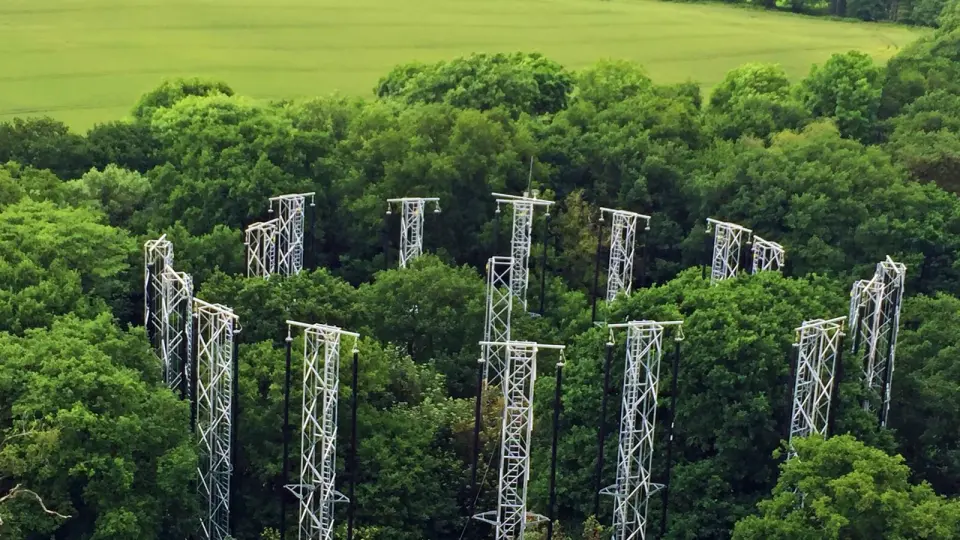
A six-year experiment in England demonstrates that elevated carbon dioxide levels can enhance oak tree growth by stimulating soil microbes to release more nitrogen, potentially improving long-term carbon storage.
Key points
- A long-term field study in Staffordshire, England, exposed 180-year-old English oaks to 573 parts per million of CO2 since 2017, simulating atmospheric conditions expected by the 2050s.
- Trees in high-CO2 zones produced significantly more wood, driven by a 29% increase in usable nitrogen released by the soil, an extra 23 pounds per acre annually.
- Root exudates acted as an 'energy drink' for soil microbes, accelerating the breakdown of organic matter and freeing nitrogen that was previously locked away.
- Contrary to fears of a 'leaky' nitrogen cycle, the system remained 'tight'; trees absorbed the extra nitrogen before it could be lost as gas or washed away by rain.
- The study highlights that while nitrogen reserves are finite, the current mechanism offers a temporary boost to forest growth and carbon sequestration under rising CO2 levels.
Background
Recent research has complicated the narrative on forests as carbon sinks. A July 2026 study noted that heat can halt woody growth in oaks mid-summer, decoupling photosynthesis from biomass production. Additionally, while China’s Great Green Wall expands forest cover rapidly, its long-term carbon storage capacity is inferior to that of natural forests. These findings underscore the complexity of predicting how forests will respond to climate change, making the Birmingham experiment’s focus on nutrient availability a critical piece of the puzzle.
Why it matters
Understanding the link between carbon dioxide and nitrogen availability is essential for accurate climate modeling. If forests can access more nitrogen under higher CO2 levels, they may sequester more carbon than previously estimated. However, this benefit is temporary and dependent on finite soil reserves, meaning long-term climate strategies must account for potential nutrient limitations and the eventual exhaustion of these organic stores.
What to watch
Researchers must now precisely measure all carbon inputs and outputs in the soil to determine if the net effect is a gain or loss of carbon. Future studies will need to test whether this 'faster but tighter' nitrogen cycle holds true in other forest types, particularly those limited by different nutrients like phosphorus, to assess the global applicability of these findings.
Want the full story? Read the original reporting
Read on Earth.com