
Penguin Guano Fuels Green Algae, Accelerating Antarctic Snowmelt
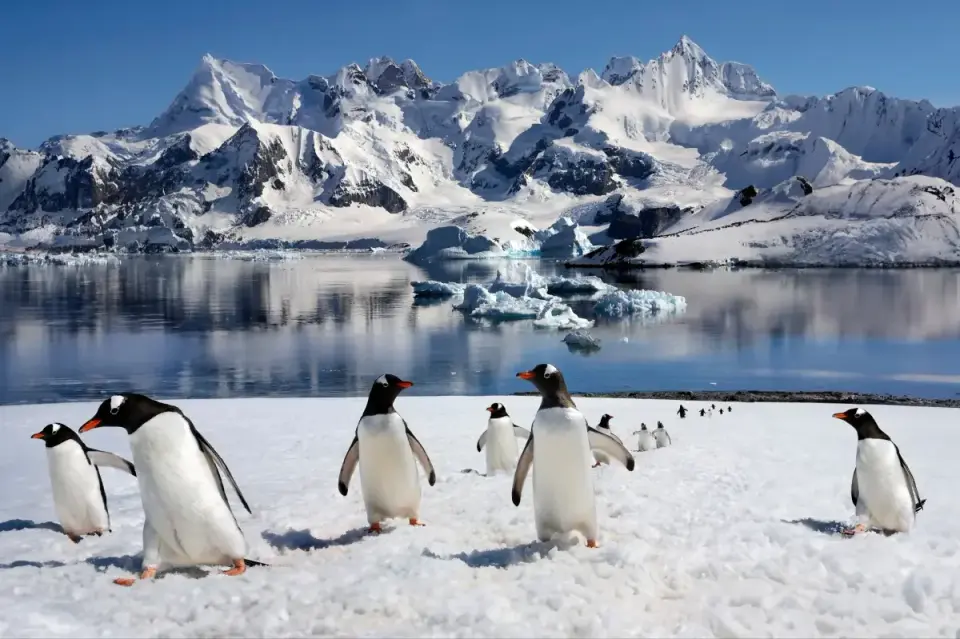
A new study reveals that penguin droppings are fertilizing green snow algae in Antarctica, which absorbs significantly more heat than white snow and accelerates melting. This biological darkening effect is currently missing from climate models, potentially leading to underestimations of ice loss.
Key points
- Research published in the Journal of Geophysical Research: Biogeosciences identifies penguin guano as a key nutrient source for green snow algae.
- Green algae absorb 40% more solar energy than clean white snow, creating a feedback loop that speeds up snowmelt.
- Senior author Alia Khan notes that current projections underestimate ice-free expansion because they ignore this biological darkening.
- As penguins migrate further south due to changing conditions, the area affected by this fertilized algae bloom is expected to expand.
- The study is the first to link penguin excrement directly to the life cycle and color changes of Antarctic snow algae.
Background
Recent archive coverage highlights a 63% decline in the world’s largest chinstrap penguin colony on Zavodovski Island, attributed to climate-driven krill displacement. Additionally, genetic studies have reclassified gentoo penguins into four distinct species, underscoring the urgent need to understand how climate change impacts Antarctic wildlife and ecosystems.
How outlets are covering it
The New York Post and BBC Wildlife Magazine both emphasize the mechanism by which penguin waste fertilizes algae, leading to increased heat absorption. The New York Post notes a conflicting finding from Finnish researchers suggesting that volatiles from penguin dung might form clouds that block sunlight, potentially slowing recession, though it acknowledges this impact remains unclear. BBC Wildlife Magazine focuses on the fieldwork challenges, describing the 'stinky' conditions and the specific nutrient (phosphate) analysis that confirmed the link. Bhaskar English offers no substantive analysis, merely listing the story as part of a roundup of unusual global news items.
Why it matters
Understanding the role of wildlife in altering snow albedo is critical for accurate climate modeling. If biological darkening from penguin colonies is not accounted for, scientists may underestimate the rate of coastal snowpack melting and the expansion of ice-free terrain in Antarctica, impacting global sea-level rise predictions.
What to watch
Further research is required to quantify the exact contribution of penguin guano to Antarctic snowmelt. Scientists will need to determine how this biological factor should be integrated into existing climate models to improve the accuracy of future ice-loss projections.
- Too much penguin poop in Antarctica is accelerating snow melt and rising sea levels: study New York Post
- Researchers Reveal How Penguin Poop Could Be Contributing to Snow Melt in Antarctica People.com
- “They’re just waddling around in their poop.” Penguin poop is melting snow in Antarctica. Here’s how BBC Wildlife Magazine
- Penguin poop is melting Antarctic snow by keeping algae green Phys.org
- Penguin poop melting Antarctica’s ice: Woman marries 14 times to fund gambling addiction | Top 5 interestin... Bhaskar English
Want the full story? Read the original reporting
Read on New York Post