
Perseverance Surpasses Opportunity’s Mileage Record in Half the Time
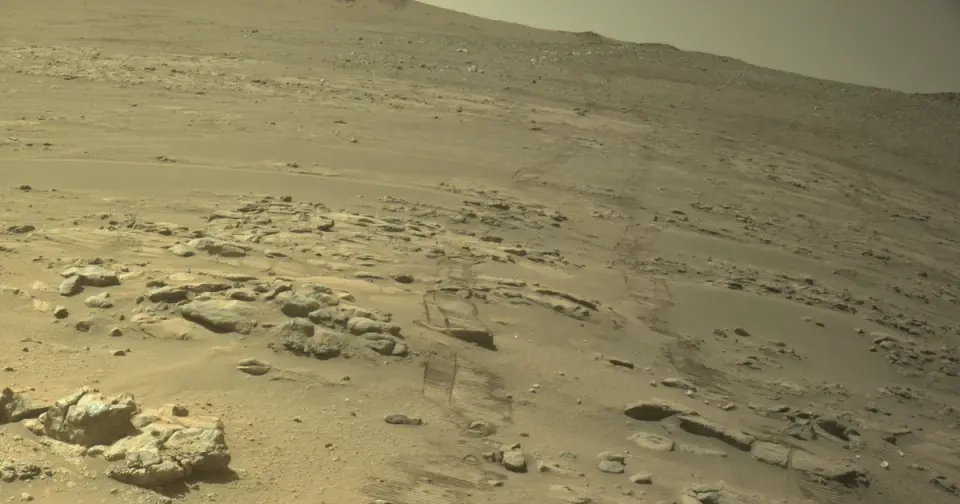
NASA’s Perseverance rover has officially become the vehicle to travel the farthest distance on another planet, surpassing the previous record held by Opportunity. On October 11, 2026, Perseverance reached 28.1 miles (45.22 km) on the surface of Mars, exceeding Opportunity’s 28.06 miles (45.16 km). Perseverance achieved this milestone in just over five years, whereas Opportunity took nearly 15 years to reach its mark. The record was set while the rover was exploring the western rim of Jezero Crater, specifically an area known as Lac de Charmes, where scientists are searching for evidence of ancient hydrothermal systems. This achievement highlights the effectiveness of Perseverance’s autonomous navigation system, AutoNav, which allows the rover to plan its own routes while moving. NASA has extended the mission through 2028, and officials expect the rover to continue adding to its record for years to come.
Key points
- Perseverance reached 28.1 miles (45.22 km) on October 11, 2026, breaking the record held by Opportunity.
- Opportunity’s record of 28.06 miles (45.16 km) was set after 15 years of exploration from 2004 to 2018.
- Perseverance achieved this distance in approximately five and a half years since its 2021 landing.
- The record was set while driving through the Lac de Charmes region on the western rim of Jezero Crater.
- The rover uses AutoNav, an autonomous system that allows it to map hazards and plan routes while driving.
- Perseverance has driven over 90% of its total distance using AutoNav, compared to 5% for earlier rovers.
Background
This record comes as NASA continues to extend the Perseverance mission despite the cancellation of the Mars Sample Return program in October 2026. While the rover has collected 29 rock samples, including potential biosignatures, the decision to scrap the return mission leaves these samples stranded on Mars. Meanwhile, China’s Tianwen-3 mission is on track to retrieve Martian samples by 2031. The current focus on the crater rim represents a shift toward exploring older geological formations, moving beyond the lakebed and delta fan areas previously studied.
How outlets are covering it
CBS News and NASA JPL agree on the core facts: Perseverance broke the record on October 11, 2026, reaching 28.1 miles. JPL provides more technical detail, noting that Perseverance used AutoNav for over 90% of its driving, compared to 5% for Opportunity. JPL also highlights the specific location, Lac de Charmes, and the goal of finding hydrothermal systems. CBS News emphasizes the speed of the achievement, noting Perseverance did in five years what took Opportunity 15. JPL quotes Steven Lee, the project manager, who states the rover has 'blown well past' the original 12.4-mile expectation. Space.com’s article is largely obscured by website code and does not provide distinct new information, but its title suggests the record is 'far from done,' aligning with JPL’s projection of continued driving. All sources confirm the mission extension through 2028.
Why it matters
This milestone demonstrates the significant advancement in autonomous navigation technology for planetary rovers. By using AutoNav, Perseverance can cover more ground and explore more diverse geological sites in less time, increasing the scientific yield of the mission. The ability to drive farther and faster allows the rover to reach areas like the crater rim, which contain some of the oldest terrain in the solar system. This efficiency is crucial for maximizing the scientific return of the mission, especially given the extended timeline and the current uncertainty surrounding the return of collected samples to Earth. The record also underscores the long-term durability and capability of modern Mars rovers, setting a new benchmark for future missions.
What to watch
Perseverance will continue its exploration of the Jezero Crater rim under its extended mission, which runs through the end of 2028. The rover is currently heading toward an area called Idubi within Lac de Charmes to search for traces of ancient hydrothermal systems. After Lac de Charmes, the plan is to head south toward Rainbow Falls, a 328-foot-wide block of ancient crust. NASA expects the rover to keep adding to its distance record for many years, provided its mobility systems remain operational. The focus will remain on investigating the oldest terrain in the solar system to understand early Mars history and potential past habitability.
- Perseverance Mars rover sets new driving record on surface of another world CBS News
- 28 Miles and Counting: NASA’s Perseverance Rover Sets a Mars Driving Record The New York Times
- NASA’s Perseverance Sets Off-World Record for Total Distance Driven NASA Jet Propulsion Laboratory (JPL) (.gov)
- NASA's Perseverance rover breaks record for off-planet driving on Mars Reuters
- NASA's Perseverance Mars rover breaks interplanetary driving record — and it's far from done Space
Want the full story? Read the original reporting
Read on CBS News