
Andromeda’s glow masks an Earth twin: why direct imaging there is off the table
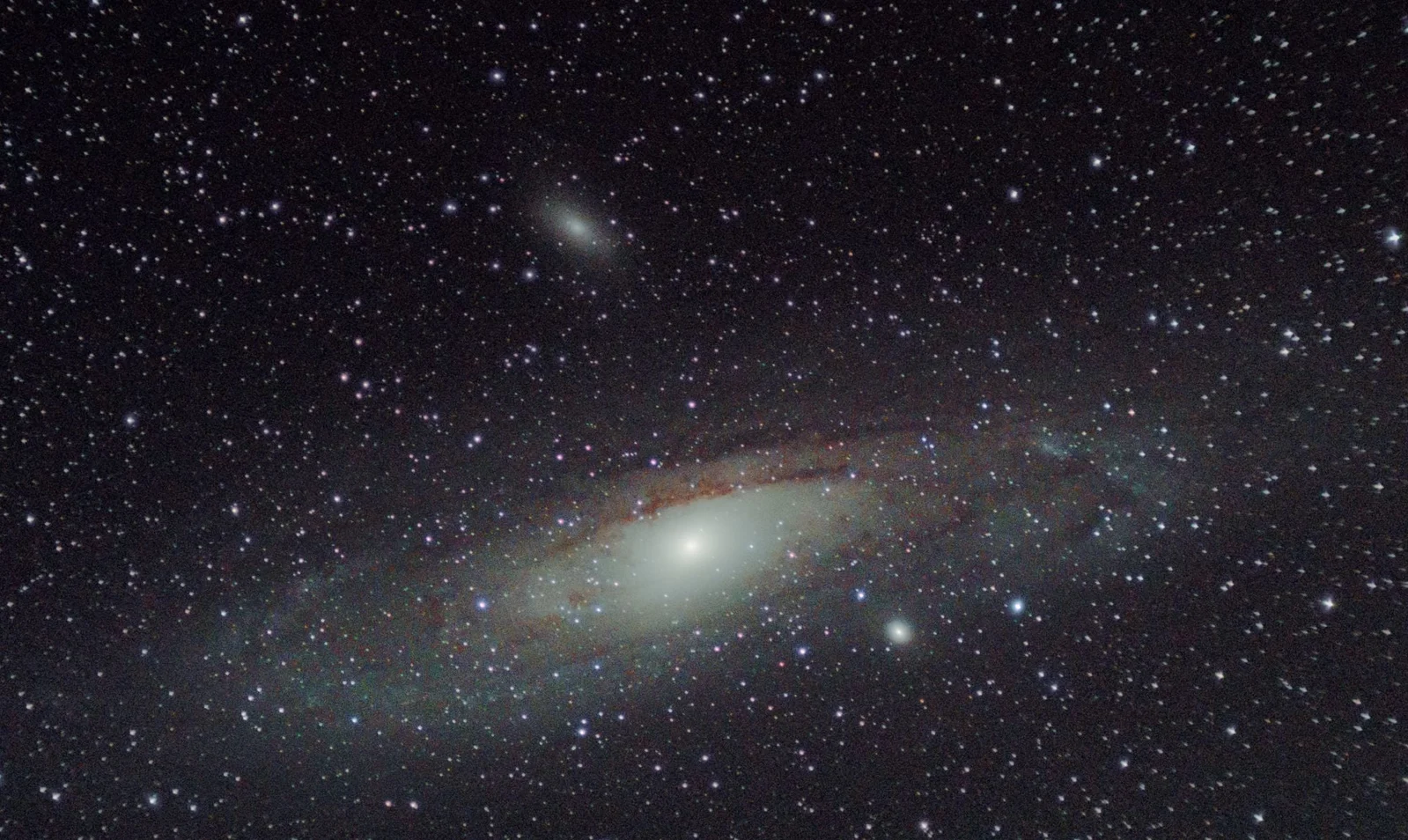
The article explains that Andromeda is visible because the light from hundreds of billions of stars blends into a single patch, not because individual stars are resolved. A hypothetical Earth-like planet orbiting a star in Andromeda would be about 10 billion times fainter than its star and separated by only about 1.3 microarcseconds, a scale far beyond current or planned direct-imaging capabilities. Even advanced future telescopes (like Webb or Roman) would struggle, requiring an unrealistically large aperture or space interferometry; indirect methods such as microlensing could, in principle, detect such planets, but imaging a world in another galaxy remains out of reach.
- Andromeda is visible from 2.5 million light-years because the light of hundreds of billions of stars blends together. But an Earth-like planet there would be roughly ten billion times fainter than its own star and separated from it by only about 1.3 microarcseconds Space Daily
- September offers stargazers a look at distant galaxies and star clusters DiscoverHumboldt
Reading Insights
1
7
11 min
vs 12 min read
96%
2,376 → 102 words
Want the full story? Read the original article
Read on Space Daily