
Trainer Rosie Borchert Recommends Four Kitchen-Counter Moves to Build Core Strength for Adults Over 70
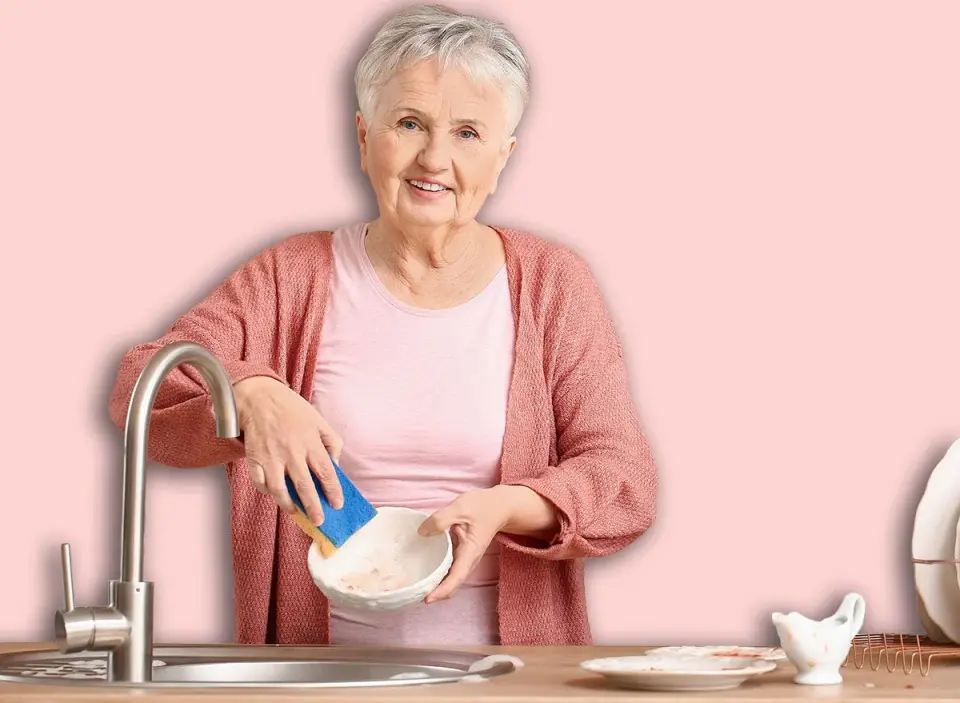
NASM-certified trainer Rosie Borchert advises adults over 70 to use kitchen counters for four specific exercises to improve core stability and balance. The routine includes incline planks, assisted squats, standing side knee lifts, and an isometric brace performed during daily chores. These movements prioritize control and mind-muscle connection over speed, offering a low-impact alternative to traditional floor-based workouts for those with limited mobility.
Key points
- Rosie Borchert, a NASM-CPT with REP Fitness, recommends counter-supported exercises to help older adults maintain independence and physical strength.
- The first move is an incline plank, where users place hands on a counter and walk feet back to create a straight line, engaging abdominal, arm, and shoulder muscles.
- Assisted squats involve standing facing a counter with hands lightly resting on the surface for balance while lowering into a squat position to strengthen the lower body and core.
- Standing side knee lifts target the obliques and hip flexors by lifting one knee to the side while lightly touching the counter, helping to improve balance and prepare the body for walking.
- An isometric brace is performed while washing dishes, where users pull the ribcage in and engage the obliques to hold a core contraction without moving.
Background
Recent coverage in our archive highlights a growing trend of trainers recommending at-home, low-equipment routines for older adults. In November 2026, James Brady suggested four bodyweight moves for core strength in adults over 60, while another trainer advised standing exercises to restore calf strength for those over 65. These recommendations align with Borchert’s approach, emphasizing that effective fitness for seniors does not require gyms or complex equipment, but rather consistent, controlled movements that integrate into daily life.
Why it matters
As people age, maintaining core strength and balance becomes critical for preventing falls and preserving independence. Borchert’s method offers a practical solution for those who may have limited mobility or balance issues, using a stable surface like a kitchen counter to provide support. By focusing on slow, controlled movements and mind-muscle connection, these exercises reduce the risk of injury compared to high-intensity or floor-based workouts, making them accessible for a wider range of older adults.
What to watch
Borchert encourages users to start with easier variations, such as keeping feet closer to the counter for planks or using a light touch for balance, and gradually increase intensity as strength improves. She also suggests integrating these movements into daily routines, such as bracing the core while washing dishes, to maximize consistency and make fitness a natural part of everyday life.
Want the full story? Read the original reporting
Read on Eat This Not That