Multiple outlets report significant discounts on adjustable dumbbells during October Prime Day. The Guardian highlights Bowflex SelectTechs at $328, while Lifehacker notes a generic set for $255. Fit&Well advertises an $80 discount on similar gear. These deals target consumers seeking space-saving strength training solutions.
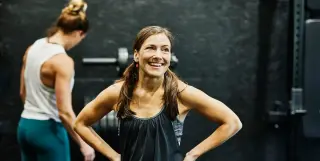
Women's Health UK outlines a six-exercise strength routine designed for busy women, emphasizing that consistent, minimal-effort training can yield significant physical benefits without requiring extensive time or equipment.
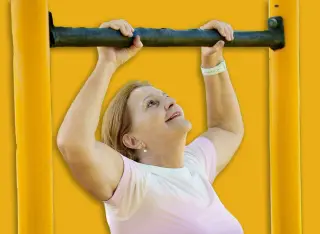
A new fitness benchmark for adults over 50 focuses on five bodyweight exercises to assess relative strength and functional capability. The test includes 20 push-ups, 5 pull-ups, 25 squats, 10 walking lunges per leg, and a 20-second single-arm plank. Experts emphasize that mastering these movements without equipment builds the foundational strength necessary before adding external load, offering a clear, accessible metric for physical health in midlife.
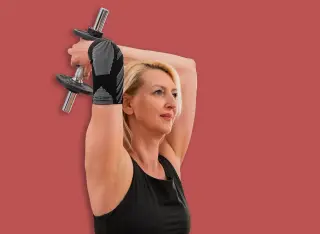
A certified personal trainer recommends five at-home exercises to address upper arm softness in adults over 60. The routine targets the triceps, which constitute roughly two-thirds of arm muscle mass but are often underused in daily life. The recommended moves include chair tricep presses, wall push-ups, overhead tricep extensions, tricep kickbacks, and close-grip wall push-ups. These exercises require only body weight and light dumbbells, aiming to rebuild muscle firmness and counteract age-related muscle loss.
An expert instructor highlights barre as a highly effective method for building strength without using equipment. The recommended 15-minute workout utilizes bodyweight movements to target major muscle groups, offering a low-barrier entry point for individuals seeking to improve physical fitness at home.
A fitness expert outlines four wall-based exercises to assess and build arm strength in adults over 65, emphasizing low-impact movements to overcome injury fears and maintain independence.
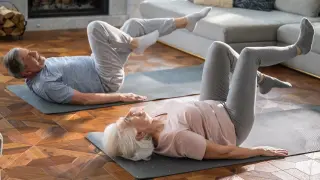
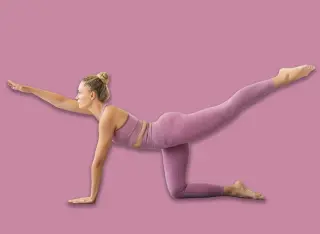
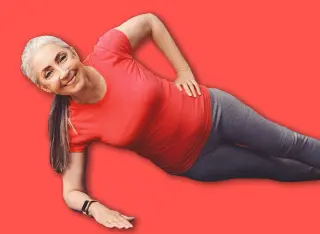
A certified fitness trainer recommends five specific daily exercises for women over 65 to maintain a toned midsection. The routine targets deep core muscles and obliques rather than focusing solely on abdominal crunches. These movements aim to counteract age-related changes in metabolism and body composition by strengthening the entire middle of the body. The goal is to support an active, independent lifestyle through improved stability and muscle firmness.
Four fitness experts confirm that walking qualifies as exercise, but emphasize that benefits depend on pace, duration, and consistency. While casual strolling offers some health perks, a brisk pace is required for significant cardiovascular gains. Experts also note that walking alone is insufficient for comprehensive fitness without complementary strength training.
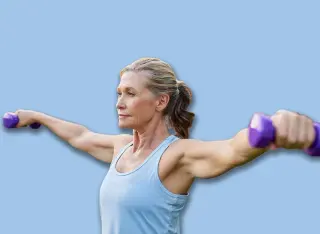
Maintaining arm strength is crucial for daily function after age 55, as muscle mass naturally declines by 3% to 8% per decade after age 30. Nutritionist Nikkii Behrens recommends six standing exercises using light dumbbells or resistance bands to build functional upper-body strength, posture, and stability. The recommended moves include bicep curls, overhead presses, bent-over rows, lateral raises, overhead tricep extensions, and resistance band pull-aparts. These exercises focus on practical movements rather than isolated muscle targeting, allowing for gradual progression in resistance.
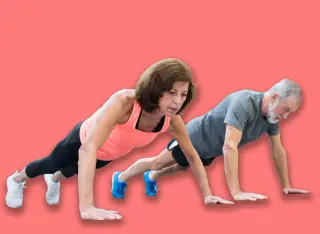
A personal trainer identifies 15 slow, controlled push-ups as the threshold for elite upper-body strength in adults over 60. This metric prioritizes form over volume, ensuring full range of motion and core stability. While research links high push-up counts to lower cardiovascular risk, experts emphasize that quality execution is more indicative of functional health than raw rep counts. For those unable to achieve this number, incline push-ups are recommended as a progressive alternative to build necessary strength safely.
A physical therapist compares power walking and jogging, noting that while jogging burns more calories per minute, power walking offers lower joint impact and is easier to sustain for longer durations, making it a viable alternative for fat loss and general fitness.
Fitness experts emphasize that effective core training extends beyond traditional crunches. Recent guidance highlights specific bodyweight moves like the RKC plank and dead bug for older adults, while others advocate for standing exercises that improve balance and functional stability for beginners.
A Houston podiatrist advises adults over 65 to perform five specific ankle-focused exercises daily to improve balance and prevent falls. These moves, which require minimal equipment, target stability issues that often arise with age. The routine includes heel raises, single-leg stands, toe lifts, ankle alphabets, and resistance band inversions. Consistent practice aims to rebuild ankle stability and alleviate common age-related complications without the need for specialized gear like balance boards.
Cyclists face heightened risks of illness and injury in winter due to cold exposure, reduced sunlight, and indoor crowding. Experts recommend covering the face to protect airways, taking probiotics to maintain immune-supporting amino acids, stretching to prevent tendon tears, supplementing with vitamin D, practicing strict hygiene, limiting alcohol, and maintaining regular riding to support lymphatic flow.
As adults age, muscles become less responsive to protein and other growth signals, making post-exercise recovery critical for preserving strength. Fitness coach Jacob Zemer, who primarily works with clients aged 35 to 55, emphasizes that recovery is as important as the workout itself. He recommends six key strategies: prioritizing seven to nine hours of quality sleep, undergoing regular bloodwork to monitor hormonal changes, using heat therapy to improve circulation, stretching to restore muscle length, consuming adequate protein and hydration, and allowing time for the nervous system to de-stress. Zemer notes that while mild soreness is normal, pain lasting more than two or three days indicates overtraining, and advises reducing workout intensity by 30% if recovery is prolonged.