
Gut Microbiome Axes Link Lifestyle Choices to 15 Chronic Diseases
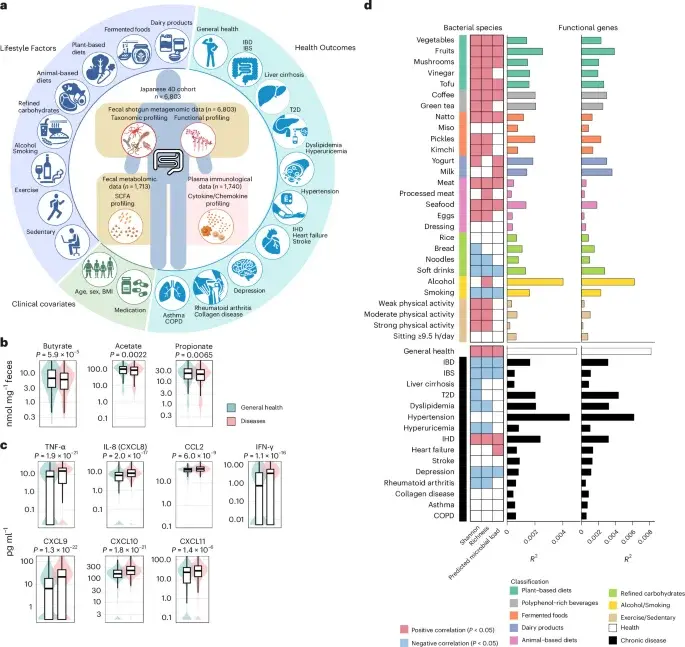
A large-scale study of 6,803 Japanese adults reveals that the gut microbiome acts as a key mediator between lifestyle factors and health outcomes. Researchers identified two opposing microbial axes: one linked to plant-based diets and health, and another tied to refined carbohydrates and disease risk. These findings, validated across international cohorts, suggest microbiome-based scores can predict disease risk and guide lifestyle interventions.
Key points
- Analysis of 6,803 adults in the Japanese 4D cohort identified two opposing microbiome-mediated axes linking lifestyle to health and 15 chronic diseases.
- A health-associated axis, enriched in microbial metabolism of dietary components, was linked to plant-based, soy, and dairy intake.
- A disease-associated axis, enriched in oral-derived bacteria and pathobionts, was linked to refined carbohydrates and sedentary behavior.
- Starter culture microorganisms used in food fermentation did not show statistically significant mediation of health effects, suggesting benefits are driven by fermentation-derived compounds rather than the microbes themselves.
- Microbiome-based prediction scores (MADE) successfully distinguished individual diseases across 13 independent external cohorts from the US, China, Sweden, Russia, and Australia.
Background
Recent research has increasingly highlighted the gut-brain axis and distinct microbiome signatures in various conditions, including Parkinson's disease and specific cancers. For instance, a Mayo Clinic study identified bacterial species linked to five cancer types, while other studies have connected ultra-processed food intake to cardiovascular risks. This new study expands on these findings by providing a unified framework that links multiple modifiable lifestyle factors to a broad range of chronic diseases through the gut microbiome.
Why it matters
This study provides a mechanistic framework for understanding how lifestyle choices influence health through the gut microbiome. By identifying specific microbial mediators and developing predictive scores, it offers a potential tool for personalized lifestyle interventions to prevent chronic diseases. The validation across diverse international cohorts suggests these findings may have broad applicability, potentially leading to more effective public health strategies focused on diet and physical activity.
What to watch
Future research will focus on establishing causality through experimental studies and validating the clinical utility of microbiome profiling in lifestyle intervention trials. Researchers also aim to address limitations such as residual confounding and the generalizability of findings to populations with different dietary habits. Additionally, the cost-effectiveness and accessibility of microbiome-based assessments will need to be evaluated for widespread clinical adoption.
Want the full story? Read the original reporting
Read on Nature