
New Study Reveals Undersea Tunnel Seals Degrade 35% Faster Than Predicted
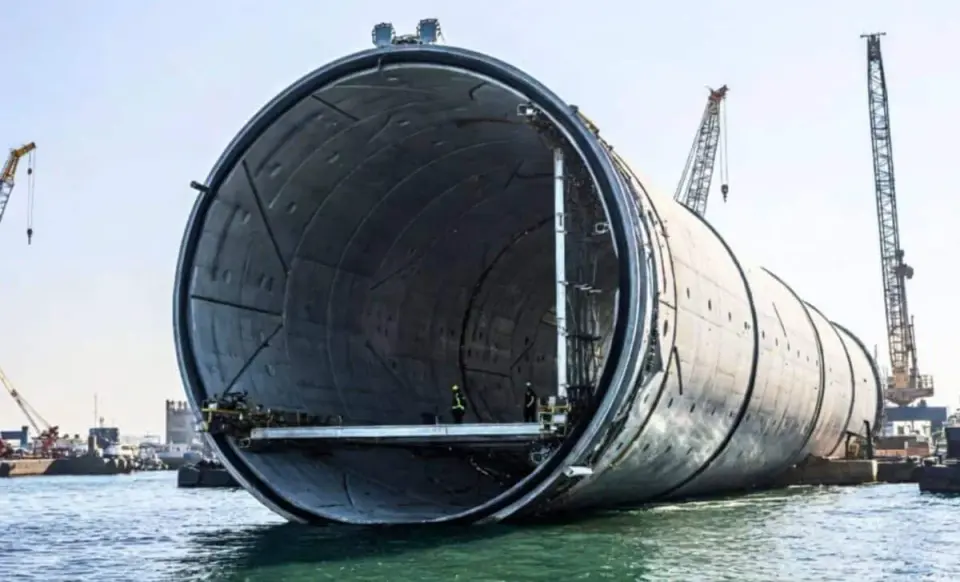
A study from Shijiazhuang Tiedao University indicates that rubber seals in immersed tunnels degrade significantly faster than previously modeled. By simulating real-world mechanical compression alongside seawater exposure, researchers found that sealing pressure drops 35% more than expected over a century, challenging existing maintenance schedules.
Key points
- Researchers at Shijiazhuang Tiedao University tested GINA gaskets from the Yuliangzhou tunnel using a custom device that combined seawater exposure with sustained mechanical compression.
- The study, published in Tunnelling and Underground Space Technology, revised the 100-year sealing pressure forecast downward by 35 percent, from 2.32 megapascals to 1.51 megapascals.
- Total sealing force loss across the test period reached 67.66 percent, with significant performance degradation occurring within the first 90 days of accelerated aging tests.
- As the rubber aged, its hardness increased by 14.18 percent and density rose by 5.88 percent, masking internal molecular breakdown that reduces elasticity and contact stress.
- The lower edge of the gasket fails first due to uneven pressure distribution, and joint rotation can shift pressure away from this vulnerable area, complicating visual inspections.
Background
This finding builds on earlier concerns regarding the longevity of critical infrastructure components. While previous archive items focused on military tunnel dismantling and climate impacts, this new research highlights a specific material science failure in civilian infrastructure. The Yuliangzhou tunnel, referenced in the study, is a major immersed tunnel project, and the GINA gasket is a standard component in such designs, including the Øresund Bridge tunnel. The discovery that surface hardness can mask internal decay contradicts older assumptions that visual integrity equates to functional reliability.
Why it matters
The revised projections suggest that existing maintenance schedules for immersed tunnels may be insufficient. Although the new 100-year pressure estimate of 1.51 megapascals still exceeds the minimum functional threshold of 0.61 megapascals, the narrower margin and earlier onset of decline imply that inspection intervals need recalibration. This is critical because the degradation is hidden; the rubber becomes harder, not softer, making it appear healthy during surface checks while losing the elasticity required to seal against water pressure. This could lead to unexpected leaks in major infrastructure projects worldwide that rely on similar sealing technologies.
What to watch
Engineers and infrastructure managers may need to review inspection protocols for immersed tunnels to account for the accelerated degradation timeline. The study suggests that relying solely on surface hardness or visual checks is inadequate, as internal structural changes occur rapidly. Future maintenance strategies may need to incorporate more advanced testing methods that detect internal polymer network breakdown rather than just external appearance. The findings may also prompt a re-evaluation of design assumptions for new tunnel projects to ensure longer-term safety margins.
Want the full story? Read the original reporting
Read on The Daily Galaxy