
BepiColombo Enters Mercury Orbit Despite Software Glitch
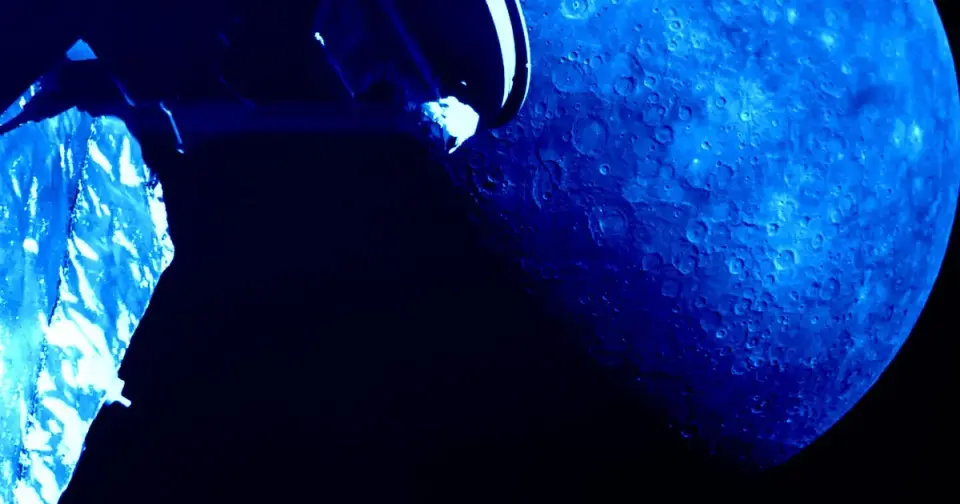
The European-Japanese BepiColombo spacecraft successfully entered orbit around Mercury on November 21, 2026, despite a software glitch that shortened its insertion burn. The probe, which launched in 2018, is now safe and on schedule to deploy two orbiters in December.
Key points
- BepiColombo entered Mercury's orbit on November 21, 2026, after an eight-year journey.
- A software glitch caused the thruster burn to last only 77% of the planned 37 minutes.
- The spacecraft entered safe mode but was confirmed to be in orbit six hours later.
- The mission is on track to separate its two science orbiters on December 9, 2026.
- Full scientific operations are expected to begin in April 2027.
Background
BepiColombo is the second spacecraft to orbit Mercury, following NASA's MESSENGER mission in 2011. The mission aims to study Mercury's magnetic field, surface features, and interior structure. Recent archive coverage noted similar communication and thruster issues with NASA's Voyager 1, highlighting the vulnerability of deep-space probes to technical glitches.
How outlets are covering it
Futurism and CBS News emphasized the software glitch that caused the thruster burn to be shorter than planned, noting the spacecraft entered safe mode. Space.com focused on the successful orbital insertion and the upcoming deployment of the two orbiters. The New Yorker provided broader context on Mercury's scientific significance, including its potential to reveal clues about the origins of life in the solar system.
Why it matters
The successful entry into orbit despite a technical glitch demonstrates the resilience of deep-space missions. The data collected by BepiColombo will help scientists understand Mercury's formation, magnetic field, and surface composition, contributing to broader knowledge of the solar system's evolution.
What to watch
BepiColombo will continue to adjust its orbit over the next few weeks. The two science orbiters, the Mercury Planetary Orbiter and the Mercury Magnetospheric Orbiter, are scheduled to separate on December 9, 2026. Full scientific operations are expected to begin in April 2027.
- Distant Spacecraft Near Mercury Hit by Outage Like All Those Banks the Other Week Futurism
- European-Japanese BepiColombo mission becomes 2nd ever to arrive in orbit around Mercury Space
- The Mystery of Mercury The New Yorker
- Spacecraft overcomes glitch to reach Mercury's orbit after 8-year journey CBS News
- Spacecraft reaches Mercury on second-ever mission to enter its orbit The Guardian
Want the full story? Read the original reporting
Read on Futurism