
New Study Confirms Neurons Process Data Independently Within Dendrites
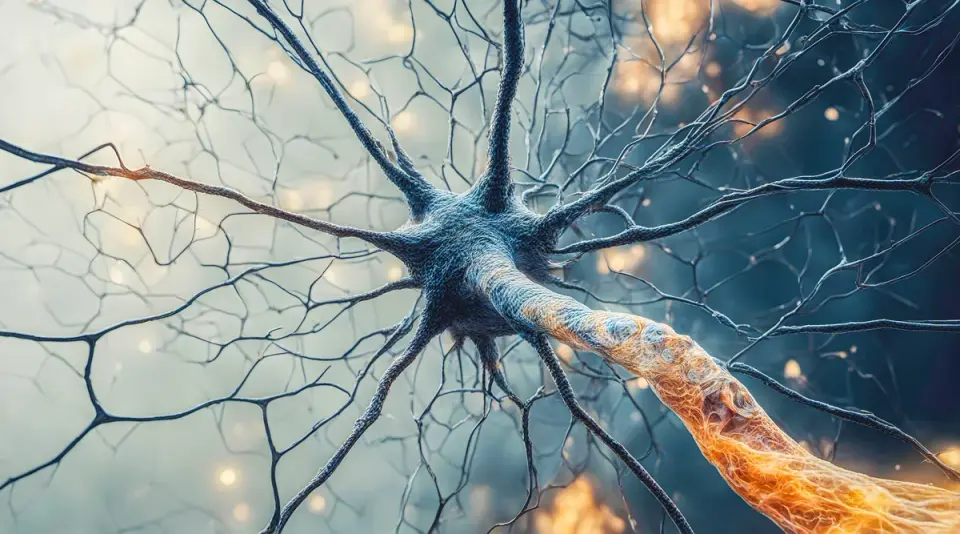
A new study published in Science provides direct evidence that dendrites, the branching structures of neurons, perform independent computations in living animals. This challenges the traditional view that each neuron acts as a single processing unit, suggesting the brain's computational capacity is vastly underestimated.
Key points
- Researchers at the University of Texas Southwestern Medical Center used voltage-imaging technology to record activity in the hippocampi of mice navigating virtual environments.
- The study found that dendrites can process information independently of the cell body, sometimes anticipating changes before the main neuron reacts.
- In new environments, certain dendrites adjusted their activity to represent new locations before the cell body caught up, suggesting they act as local memory devices.
- Senior author Attila Losonczy states that dendrites dramatically expand the computational capacity of individual neurons and the brain as a whole.
- The findings imply that a single neuron functions like a small neural network, with dendritic branches providing hierarchical organization for enhanced processing.
Background
This development follows recent discussions in our archive about the brain's computational efficiency and the rise of bio-inspired computing. Earlier coverage highlighted how lab-grown brain organoids and memtransistor chips are advancing energy-efficient AI, mirroring the brain's ability to process complex tasks with low energy demands. The current study reinforces the idea that biological neural structures offer unique computational advantages that artificial systems are only beginning to replicate.
Why it matters
Understanding that dendrites compute independently reshapes our view of brain architecture and efficiency. It suggests that the brain's power lies not just in the number of neurons but in the complex, distributed processing within each cell. This insight could influence future AI design, particularly in creating more efficient, energy-saving systems that mimic biological neural networks, and deepen our understanding of memory and learning mechanisms.
What to watch
Researchers will likely explore how dendritic computation contributes to other brain functions beyond memory and navigation, such as decision-making and sensory processing. Further studies may investigate the role of dendritic memory in learning and adaptation, potentially leading to new models of neural networks that better replicate the brain's hierarchical and distributed processing capabilities.
Want the full story? Read the original reporting
Read on Scientific American