
Japan's First Armored Dinosaur: Nipponopelta Reveals Ancient Coastal Migration
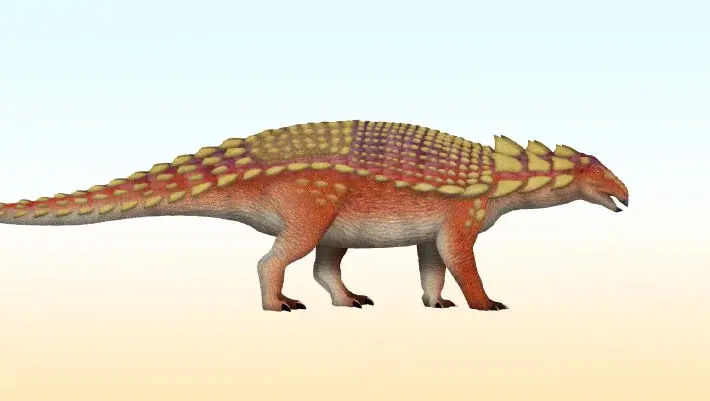
A new armored dinosaur species, Nipponopelta yezoensis, has been formally identified from fossils found in Hokkaido, Japan. Living 96 to 94 million years ago, this nodosaurid is the first of its kind described from Japan and the second Asian member of its subfamily known from skull material. Advanced CT scanning revealed previously hidden features, including the inner ear and lower jaw, confirming its close evolutionary ties to North American and European species rather than other Asian dinosaurs. The findings suggest these dinosaurs preferred coastal environments, facilitating their dispersal across continents.
Key points
- Nipponopelta yezoensis is the first ankylosaur formally described from Japan, found in the Hikagenosawa Formation in Yubari city, Hokkaido.
- The fossils, discovered in the 2000s, were re-examined using 3D CT scanning, revealing the dinosaur's left inner ear, lower jaw, and two intact teeth for the first time.
- Phylogenetic analysis places Nipponopelta yezoensis closely with North American and European nodosaurids like Pawpawsaurus and Edmontonia, rather than other Asian species.
- The species lived during the Late Cretaceous epoch, approximately 96 to 94 million years ago.
- Habitat reconstruction indicates the dinosaur preferred marine-influenced coastal or estuarine environments, which likely aided its dispersal across different regions.
Background
This discovery follows recent paleontological findings in Japan, such as the identification of a possible new mosasaur from a 30-year-old rock specimen in Osaka, highlighting how advanced re-examination of existing museum collections can yield new species. It also complements broader studies on armored pre-dinosaur relatives, such as the Triassic pseudosuchian from Brazil, which provided insights into ancient faunal links across the supercontinent Pangaea.
Why it matters
The identification of Nipponopelta yezoensis fills a significant gap in the fossil record for Asia, providing the first skull-based evidence of a nodosaurid in Japan. Its close evolutionary relationship with North American and European species, despite being in Asia, challenges previous assumptions about regional isolation and supports the theory that coastal habitats facilitated the long-distance dispersal of these dinosaurs across continents during the Cretaceous period.
What to watch
Researchers will likely continue to use advanced imaging techniques to re-examine other undetermined fossil specimens in Japanese museum collections, potentially uncovering more new species or clarifying the evolutionary history of Asian dinosaurs. Further studies may also explore the specific environmental conditions that allowed nodosaurids to thrive in coastal areas and migrate across vast distances.
Want the full story? Read the original reporting
Read on Sci.News