
"Uncovering Human Upright Walking Evolution Through Ancient Ape's Inner Ear"
TL;DR
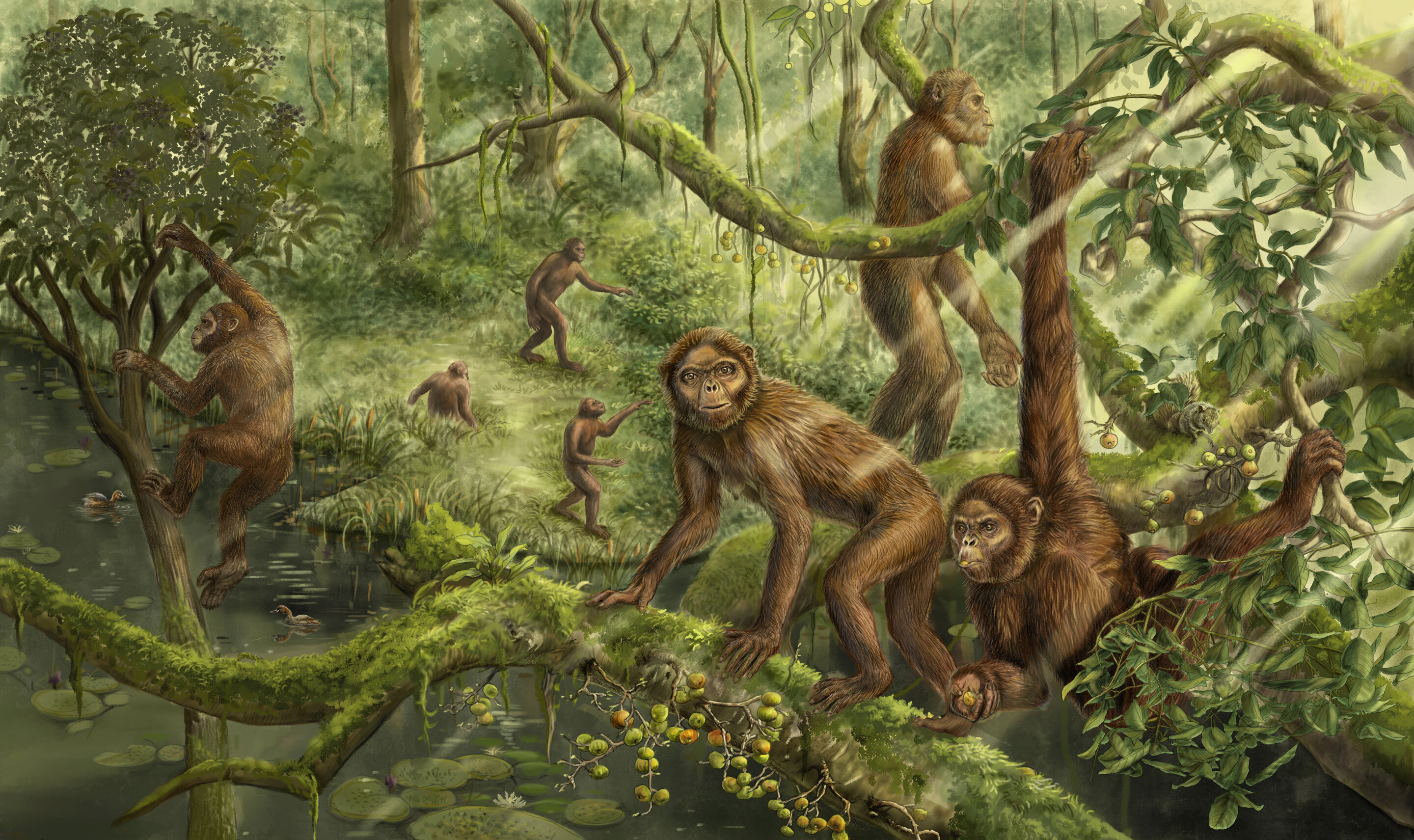
A study on the 6-million-year-old fossil ape, Lufengpithecus, sheds light on the evolution of human movement by analyzing its bony inner ear region using CT-scanning. The research suggests a three-step evolution of human bipedalism, indicating that the last common ancestor of apes and humans had a locomotor repertoire similar to Lufengpithecus, involving climbing, clambering, forelimb suspension, arboreal bipedalism, and terrestrial quadrupedalism. The study also proposes that climate change may have played a role in promoting the locomotor diversification of apes and humans.
- Inner ear of 6-million-year-old ape fossil reveals clues about the evolution of human movement Phys.org
- Extinct ape's inner ear holds clues to how humans learned to walk upright Popular Science
- Scientists Shine Light on How Humans First Learned to Walk Upright Newsweek
- Ancient Ape's Inner Ears May Hold Key to Evolution of Walking on Two Feet DISCOVER Magazine
- Six million year old human ancestors left clues found in their ear canal that they would one day walk upright, scientists have revealed The Mountaineer
Want the full story? Read the original reporting
Read on Phys.org