
Princeton Student Retracts High School Paper After Finding Methodological Flaws
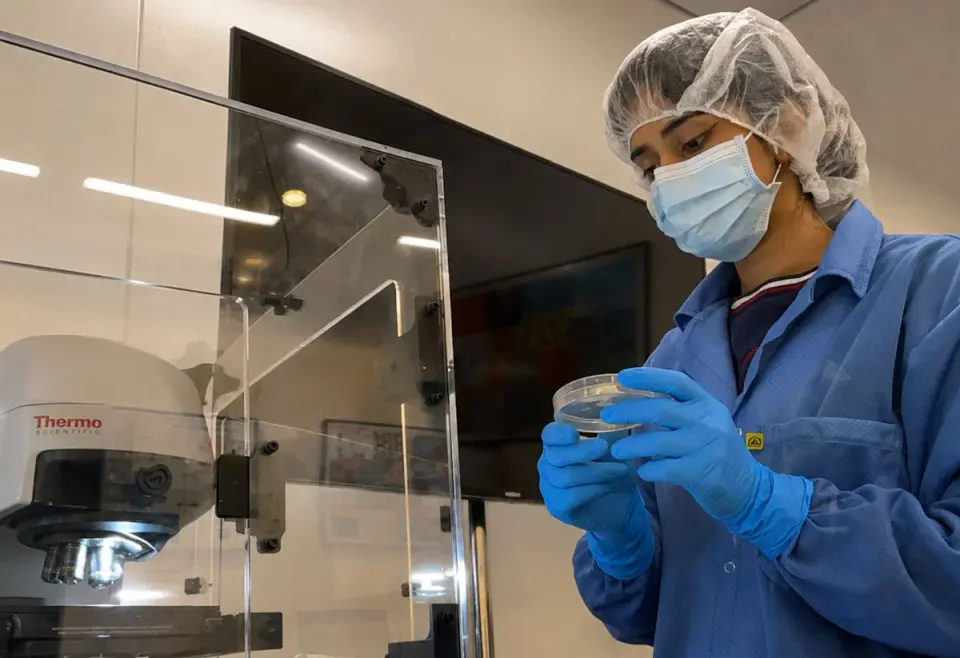
Rishika Porandla, a Princeton sophomore, voluntarily retracted a 2024 journal article she authored as a high school student after discovering critical methodological errors during a university course. The paper, published in Macromolecular Materials and Engineering, claimed a new process for biodegrading polyvinyl chloride using gold nanoparticles and electron beams. Porandla identified that the study failed to independently verify electron-beam exposure times and that gold nanoparticles were not uniformly dispersed in the plastic matrix. She contacted the publisher, Wiley, leading to a retraction in May 2026. The journal has encouraged her to resubmit a corrected version. Porandla’s action highlights the rarity of self-retractions and the importance of rigorous validation in early-career research.
Key points
- Rishika Porandla, a Princeton University sophomore, retracted a paper she published as a high school student after discovering two fundamental methodological errors.
- The original study, published in Macromolecular Materials and Engineering, proposed using gold nanoparticles and electron-beam irradiation to improve the biodegradability of polyvinyl chloride.
- Porandla discovered that the study did not independently verify the relationship between programmed electron-beam exposure time and actual delivered dose.
- Imaging and elemental mapping revealed that gold nanoparticles were not uniformly dispersed throughout the polyvinyl chloride matrix as the original study assumed.
- Porandla contacted Wiley directly, leading to a retraction in May 2026 after review by the journal’s editors.
- The journal has encouraged Porandla to resubmit a revised manuscript with a redesigned methodology and stronger validation procedures.
Background
This case follows a broader trend of scrutiny regarding research integrity and the handling of errors in scientific literature. In July 2026, Cochrane retracted an invited paper on AI methods due to a conflict-of-interest disclosure breach, highlighting the importance of transparency in publication processes. Similarly, in August 2026, Nature is investigating a gene-editing paper from Shanghai Jiao Tong University after a patient’s death, underscoring the consequences of undisclosed risks and data issues. These incidents, alongside Porandla’s self-retraction, emphasize the evolving standards for accountability and correction in academic publishing.
Why it matters
Porandla’s decision to self-retract underscores the critical importance of scientific integrity and the courage required to correct the record, especially for early-career researchers. Her case illustrates that retractions can be a constructive step toward improved research rather than a career-ending event. The rarity of self-retractions, as noted by Retraction Watch, highlights the need for institutional support and recognition, such as the new Ctrl-Z Award, to encourage transparency. This incident also raises questions about the adequacy of peer review processes, particularly for student-authored papers, and the role of educators in ensuring rigorous experimental validation before publication.
What to watch
Porandla is currently conducting follow-up work to address the weaknesses in her original study and is preparing a corrected manuscript for resubmission to Macromolecular Materials and Engineering. The revised paper will incorporate a redesigned methodology, stronger validation procedures, and a more comprehensive understanding of the physical mechanisms involved. She is also planning to pursue a career in developing space plasma detector instrumentation for heliophysics projects. The Center for Scientific Integrity will continue to recognize self-retractions through the annual Ctrl-Z Award, aiming to normalize and support the correction of scientific errors.
Want the full story? Read the original reporting
Read on Retraction Watch