Tag

Scientific Integrity

All articles tagged with #scientific integrity

Nikon revokes top microscopy prize after AI fabrication scandal
technology1 month ago

Nikon revokes top microscopy prize after AI fabrication scandal

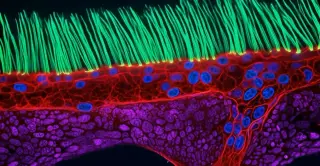
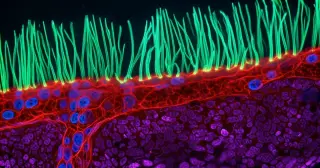
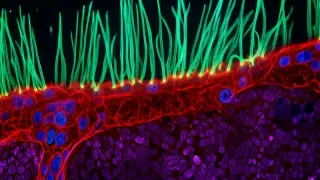
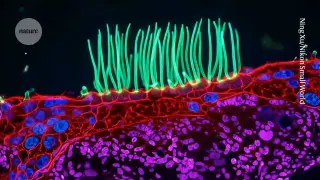
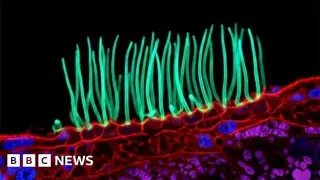
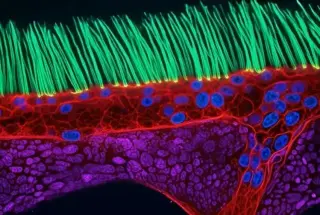
Nikon has stripped Dr. Ning Xu of his title in the 16th annual Small World in Motion contest after determining his winning video violated rules regarding generative AI. The footage, which depicted cilia in a child with a rare respiratory disorder, was flagged by scientists for biological anomalies and AI watermarks. Nguyen Nam Nhat of Vietnam has been named the new winner, and Nikon is reviewing its competition guidelines.
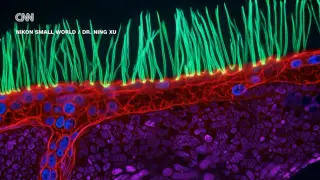
Nikon Disqualifies Microscopy Winner Over AI Use, Promotes Vietnamese Researcher
science1 month ago

Nikon Disqualifies Microscopy Winner Over AI Use, Promotes Vietnamese Researcher

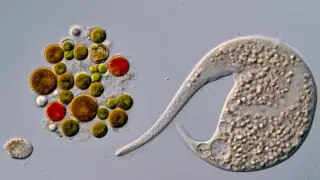
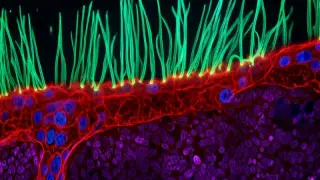
Nikon has disqualified Dr. Ning Xu from its prestigious Small World in Motion video competition after determining his winning entry violated rules regarding generative AI. The decision, announced on October 10, 2026, follows an investigation into claims that Xu used AI to alter biological structures in his footage of cilia. The new winner is Vietnamese researcher Nguyen Nam Nhat, whose video features a roundworm and a single-celled organism. Nikon stated it will revise competition rules to address emerging AI challenges, while Xu maintained that AI was only used for post-processing colorization, not to generate the motion or structures themselves.

Nikon Disqualifies Microscopy Video Winner After AI Manipulation Scandal
technology1 month ago

Nikon Disqualifies Microscopy Video Winner After AI Manipulation Scandal

Nikon has disqualified the 2026 winner of its Small World in Motion microscopy contest, Dr. Ning Xu of Tsinghua University, after determining his video violated rules against generative AI. The new winner is Nguyen Nam Nhat of Vietnam, whose entry features a roundworm and a single-celled organism. The decision follows weeks of scrutiny from scientists who identified biological anomalies and AI watermarks in Xu’s footage of cilia in a child’s airways. Nikon stated the ruling is based solely on eligibility rules, not a judgment of Xu’s professional reputation, and announced it will revise competition guidelines for future entries.

Nikon disqualifies AI-enhanced microscopy video, crowning new winner
science-and-technology1 month ago

Nikon disqualifies AI-enhanced microscopy video, crowning new winner

Nikon has disqualified the original winner of its 2026 Small World in Motion contest after determining that Dr. Ning Xu’s video of cilia in a child’s airway used generative AI for post-processing, violating competition rules. Nguyen Nam Nhat of Vietnam has been named the new winner for a video of a roundworm and a single-celled organism. Nikon stated it will revise its rules and evaluation procedures for future entries to address the rapid evolution of imaging and AI technologies.

Nikon Suspends Microscopy Prize Amid AI Controversy
science1 month ago

Nikon Suspends Microscopy Prize Amid AI Controversy

Nikon is re-evaluating the 2026 Small World in Motion winner after scientists accused Dr. Ning Xu of using AI to generate impossible biological structures in his winning video. While Xu claims AI was only used for post-processing colorization, critics point to a SynthID watermark and physical anomalies in the footage. Nikon has requested technical documentation from Xu, who has since deleted his LinkedIn profile.

Nikon re-evaluates microscopy prize after AI allegations
science1 month ago

Nikon re-evaluates microscopy prize after AI allegations

Nikon is re-reviewing the winning entry of its 16th annual Small World In Motion competition after scientists alleged the footage was manipulated using artificial intelligence. The winning video, submitted by Dr. Ning Xu, depicts cilia movement in a child with a rare genetic disorder. While Nikon initially awarded the prize in September, critics have since raised concerns about biological anomalies and the presence of AI watermarks. Nikon states it is examining technical documentation provided by Xu, who claims AI was used only for post-processing colorization, not for generating the biological structures or their motion. The controversy highlights tensions between scientific accuracy and artistic visualization in microscopy contests.

Nikon investigates AI use in winning microscopy video after scientists flag biological errors
science-and-technology1 month ago

Nikon investigates AI use in winning microscopy video after scientists flag biological errors

Nikon is re-reviewing the winning entry of its 15th annual Small World in Motion competition after scientists alleged that Dr. Ning Xu’s video of cilia was manipulated using artificial intelligence. Critics argue the footage contains biologically impossible structures and AI watermarks, while Xu claims he only used AI for post-processing colorization, not generation.

Nikon Microscopy Contest Winner Faces AI Allegations
technology1 month ago

Nikon Microscopy Contest Winner Faces AI Allegations

The winner of Nikon's 15th annual Small World In Motion contest is under investigation after scientists alleged the winning video was manipulated using artificial intelligence. Dr. Ning Xu of Tsinghua University submitted a clip of cilia in a child's airways, which Nikon initially accepted. Critics argue the footage contains impossible movements and AI watermarks. While Xu claims he only used AI for visualization, not generation, Nikon is reviewing the entry to ensure fair competition.

Retraction Watch highlights ongoing scrutiny of Nobel laureate, Stanford ex-president, and cardiologist conflicts
science-and-academia3 months ago

Retraction Watch highlights ongoing scrutiny of Nobel laureate, Stanford ex-president, and cardiologist conflicts

Retraction Watch’s latest weekend roundup highlights three major integrity issues: a Japanese institute defending a Nobel laureate against image duplication claims, a former Stanford president releasing emails to refute fraud allegations, and a cardiologist facing criticism for undisclosed financial ties to a drug manufacturer. The digest also notes Elsevier’s delayed investigation into retracted papers and rising AI usage in biomedical research.

Astrophysicist Paul Sutter Exposes Flaw in AI-Coded Algorithm During Live Presentation
technology3 months ago

Astrophysicist Paul Sutter Exposes Flaw in AI-Coded Algorithm During Live Presentation

Astrophysicist Paul Sutter publicly admitted that an AI-assisted algorithm he presented in February contained a critical error in handling survey edges, rendering downstream results invalid. The incident, detailed in a recent Nautilus article, highlights the risks of 'vibe coding' where AI fluency masks logical flaws. Sutter now advocates for rigorous auditing of AI outputs, warning that the current era resembles pre-scientific alchemy due to the lack of verifiable reasoning chains.

BMJ retracts vaccine-death study, triggering debate over science and politics
science3 months ago

BMJ retracts vaccine-death study, triggering debate over science and politics

The BMJ retracted a 2024 Dutch study suggesting COVID-19 vaccines may have contributed to excess pandemic deaths, citing misinformation in the discussion and lack of reflection of scientific consensus. The authors and three Dutch experts dispute the rationale, arguing political pressure may have influenced the decision. The case has reignited arguments about scientific integrity and post-publication scrutiny in vaccine-safety research, amid broader public-health debates and related compensation schemes.

Princeton Student Retracts High School Paper After Finding Methodological Flaws
science-and-academia3 months ago

Princeton Student Retracts High School Paper After Finding Methodological Flaws

Rishika Porandla, a Princeton sophomore, voluntarily retracted a 2024 journal article she authored as a high school student after discovering critical methodological errors during a university course. The paper, published in Macromolecular Materials and Engineering, claimed a new process for biodegrading polyvinyl chloride using gold nanoparticles and electron beams. Porandla identified that the study failed to independently verify electron-beam exposure times and that gold nanoparticles were not uniformly dispersed in the plastic matrix. She contacted the publisher, Wiley, leading to a retraction in May 2026. The journal has encouraged her to resubmit a corrected version. Porandla’s action highlights the rarity of self-retractions and the importance of rigorous validation in early-career research.

Generative AI Risks Fabricating Biological Evidence in Scientific Workflows
science-and-technology3 months ago

Generative AI Risks Fabricating Biological Evidence in Scientific Workflows

Generative AI tools used in biological research pose a significant risk of 'hallucinating' non-existent biological effects. While AI can assist in drug screening, its potential to fabricate data or distort signals in complex datasets may lead researchers to accept false discoveries as fact. Computational biologist Thomas Burger warns that the danger lies not just in obvious errors, but in subtle corruptions of data that bypass experimental verification.