
Retractions for Former NIH Neuroscientist Eliezer Masliah Reach 32 Amid Misconduct Findings
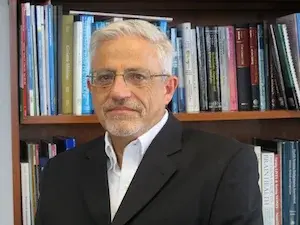
Eliezer Masliah, a former director of neuroscience at the National Institute on Aging, has accumulated 32 retractions, with 15 occurring in 2026. The National Institutes of Health previously found him guilty of falsifying data in two publications. Investigative journalists and forensic experts identified image manipulation in over 130 of his papers, leading to ongoing journal reviews. Masliah declined to comment, while co-authors expressed regret over errors but disputed some retractions.
Key points
- Masliah, who led a $2.6 billion research portfolio at the National Institute on Aging until 2024, has 32 retractions to date, including 15 in 2026.
- The National Institutes of Health concluded in 2024 that Masliah committed research misconduct, specifically falsification and fabrication involving reused figure panels in two publications.
- Investigative journalist Charles Piller and a team of four experts compiled a 300-page dossier identifying suspect images in 132 of Masliah's papers, including western blots and histological images.
- A 2018 paper in Nature Communications was retracted in October 2026 due to image irregularities; co-author Seung-Jae Lee stated that Masliah could not retrieve raw data from closed facilities but provided available original images.
- Masliah's work, cited over 147,000 times, focused on alpha-synuclein and Parkinson’s disease; some cited studies involved the unapproved drug Cerebrolysin.
- Masliah declined to comment on the allegations, while the NIH did not respond to requests for comment regarding the recent dossier or ongoing retractions.
Background
Masliah served as director of neuroscience at the National Institute on Aging from 2016 to 2024 and previously held a professorship at the University of California, San Diego. His career focused on alpha-synuclein, a protein linked to Parkinson’s disease, and included work on experimental immunotherapies. In 2023, the U.S. Office of Research Integrity received allegations against him, prompting an NIH investigation that resulted in a 2024 finding of misconduct. Investigative journalist Charles Piller began examining research integrity in Alzheimer’s studies in 2023, focusing on authors with multiple flagged articles on PubPeer. Piller enlisted experts Matthew Schrag, Mu Yang, Kevin Patrick, and Elizabeth Bik to analyze Masliah’s work, sharing their findings with the NIH before its official announcement.
Why it matters
The extensive retractions and confirmed misconduct findings raise significant concerns about data integrity in high-impact neuroscience research, particularly in neurodegenerative diseases. The scale of the issue, involving over 130 flagged papers and a former leader of a major NIH institute, highlights the potential impact of manipulated data on subsequent studies and drug development, such as the unapproved peptide mixture Cerebrolysin. Ongoing retractions suggest that the full scope of the misconduct may not yet be fully addressed, potentially affecting the reliability of cited literature in the field.
What to watch
Journals are expected to continue reviewing and retracting Masliah’s work, as investigative journalist Charles Piller anticipates further retractions due to the large number of papers involved. The NIH has not indicated whether it will investigate the additional allegations of image manipulation detailed in the 300-page dossier. Masliah has issued corrections to some papers, which experts noted may have introduced further issues. The situation remains under scrutiny as the scientific community evaluates the integrity of his remaining publications.
Want the full story? Read the original reporting
Read on Retraction Watch