
"James Webb Space Telescope Reveals Ancient Quasars and Host Galaxies in Groundbreaking Discovery"
TL;DR Summary
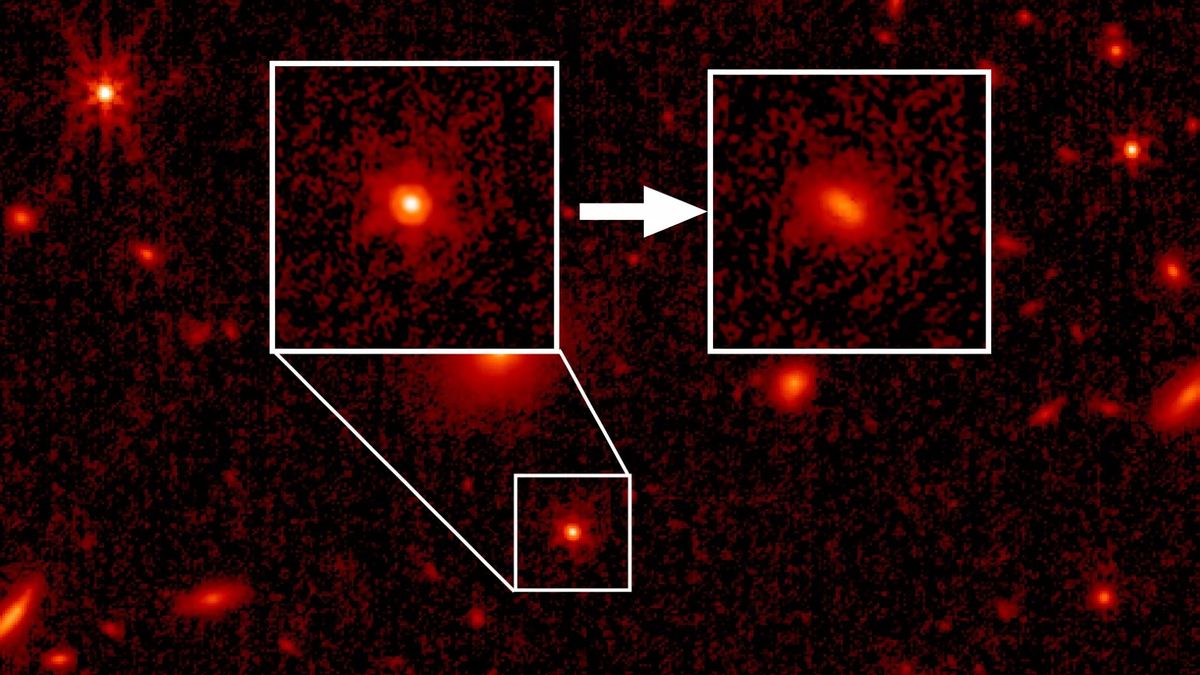
The James Webb Space Telescope (JWST) has observed starlight from two early galaxies hosting feeding supermassive black holes, or quasars, for the first time. The observations revealed the mass of the galaxies and the mass of the supermassive black holes, providing insights into how these black holes grow and evolve with their galaxies. The findings support the existing relationship between the masses of supermassive black holes and their galaxies, even in the early universe. This groundbreaking discovery was made possible by the JWST's ability to separate the light from quasars and stars in these distant galaxies.
Topics:science#early-universe#galaxies#james-webb-space-telescope#quasars#science-and-astronomy#supermassive-black-holes
- James Webb Space Telescope sees 1st starlight from ancient quasars in groundbreaking discovery Space.com
- Starlight and the first black holes: Researchers detect the host galaxies of quasars in the early universe Phys.org
- The Starlight Around An Early-Universe Quasar Seen For First Time IFLScience
- View Full Coverage on Google News
Reading Insights
Total Reads
0
Unique Readers
9
Time Saved
6 min
vs 7 min read
Condensed
92%
1,204 → 96 words
Want the full story? Read the original article
Read on Space.com