Tag

Early Universe

All articles tagged with #early universe

Ultra‑Poor Star PicII-503 Illuminates the Universe’s Dawn
science13 days ago

Ultra‑Poor Star PicII-503 Illuminates the Universe’s Dawn

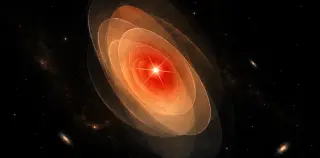
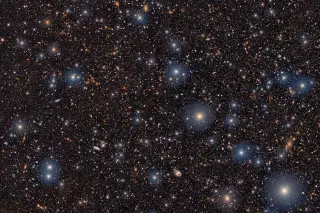
Astronomers have identified PicII-503, an extremely iron-poor Population II star in the ultra-old dwarf galaxy Pictor II, about 150,000 light-years away. Its iron abundance is about 43,000 times lower than the Sun and calcium about 160,000 times lower, while its carbon is vastly enriched, suggesting it formed from gas enriched by the very first stars. As the most iron-poor star found outside the Milky Way, PicII-503 offers a rare glimpse into early nucleosynthesis and the remnants of Population III stars; it was discovered via the MAGIC survey using the Dark Energy Camera and is reported in Nature Astronomy.

JWST Dots May Be Young Globular Clusters, Not Baby Black Holes
space18 days ago

JWST Dots May Be Young Globular Clusters, Not Baby Black Holes

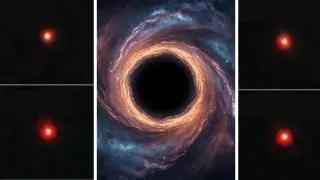
A Space.com analysis of James Webb Space Telescope data suggests the mysterious “Little Red Dots” from the early universe could be newborn globular clusters rather than proto-black holes. A new arXiv study proposes these LRDs host very young stellar populations, potentially powered by an extremely massive, short‑lived star, which could explain their distinctive V‑shaped spectrum. The observed redshift range aligns with metal‑poor globular clusters, and the team estimates a global formation density around 0.3 per cubic megaparsec, similar to the number of globular clusters today. If confirmed, this would provide a direct window into early globular cluster formation, though future spectroscopy tracking chemical signatures (like helium and nitrogen enhancements, and specific element anti-correlations) will be crucial to test the hypothesis.

Webb telescope spots mysterious red dots that baffle scientists
science23 days ago

Webb telescope spots mysterious red dots that baffle scientists

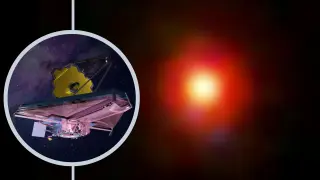
NASA’s James Webb Space Telescope images reveal hundreds of faint red dots dubbed little red dots (LRDs). While many researchers suspect they are powered by growing black holes in the early universe, their exact nature remains unclear, with hypotheses ranging from dust-enshrouded black holes to emission from dense hydrogen gas, and even a possible new class of objects called black-hole stars or quasi-stars, exemplified by the enigmatic feature “The Cliff.” The findings could reshape ideas about black-hole formation, but there is no consensus yet.

Early-Universe Red Dots Hint at Overmassive Black Holes
science28 days ago

Early-Universe Red Dots Hint at Overmassive Black Holes

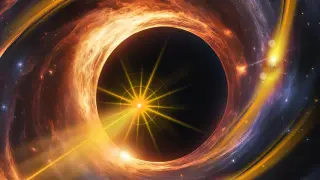
JWST observations reveal numerous compact ‘little red dots’ in the early universe whose spectra show active galactic nucleus features, suggesting central black holes. Some dots, notably the Virgil Galaxy, appear normal in UV/optical light but harbor an exceptionally massive black hole detected in mid‑infrared, challenging current growth models. A leading idea—quasi-stars—posits black holes inside dense gas cocoons that could skew mass estimates. These findings could reshape how we understand black hole formation in the first billions of years and motivate deeper mid‑infrared surveys for more such objects.

Cosmic web revealed: 3D map shows hidden sea of light in early universe
astronomy1 month ago

Cosmic web revealed: 3D map shows hidden sea of light in early universe

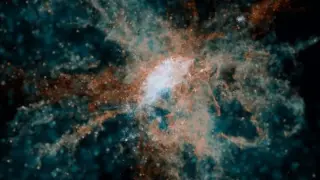
Space researchers used the Hobby-Eberly Telescope Dark Energy Experiment (HETDEX) to produce the largest 3D map of Lyman-alpha light from hydrogen dating to 9–11 billion years ago, exposing a vast “sea of light” between galaxies and outlining the cosmic web. By applying Line Intensity Mapping to thousands of spectra, the team mapped faint hydrogen gas beyond bright galaxies, shedding light on how gas accreted, galaxies formed, and the large-scale structure of the early universe.

JWST Dots May Be Monster Population III Stars Near Collapse
science1 month ago

JWST Dots May Be Monster Population III Stars Near Collapse

A new study proposes that JWST-detected “little red dots” are not black holes but supermassive Population III stars from the early universe that are in their final moments before collapsing into black holes. The models reproduce the objects’ extreme brightness and a distinctive V-shaped spectral dip, which may arise from the stars’ atmospheres and mass loss. Such monster stars would have very short lifetimes (tens of thousands to ~10,000 years for near-million-solar-mass stars), meaning only a narrow window to observe them; alternative explanations include direct-collapse black holes. Future X-ray checks and especially radio observations could decisively distinguish between the star and black hole scenarios.

Webb Finds the Earliest Jellyfish Galaxy Drifting Through a Young Cosmos
space1 month ago

Webb Finds the Earliest Jellyfish Galaxy Drifting Through a Young Cosmos

Astronomers using the James Webb Space Telescope have identified the farthest known jellyfish galaxy, at redshift z=1.156 (about 8.5 billion years old), in the COSMOS field. The galaxy shows blue, newly formed stars in long trailing gas streams created by ram-pressure stripping as it speeds through a dense cluster, implying harsh cluster environments existed earlier in the universe and potentially reshaping ideas about how galaxies evolved billions of years ago.

Ancient quasar defies growth rules by 13× the cosmic limit
space1 month ago

Ancient quasar defies growth rules by 13× the cosmic limit

Astronomers studying the distant quasar ID830 find a supermassive black hole actively accreting at about 13 times the Eddington limit, powering gigantic radio jets and a bright X-ray corona. The extreme, short-lived super-Eddington phase challenges standard black hole growth models and supports the idea that early-universe SMBHs grew rapidly, shaping their host galaxies through intense outflows and radiation.

Early Universe’s Metal-Rich Dusty Galaxies Unearthed by JWST and ALMA
astronomy1 month ago

Early Universe’s Metal-Rich Dusty Galaxies Unearthed by JWST and ALMA

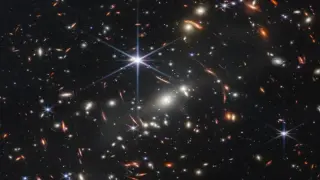
Astronomers using the James Webb Space Telescope (JWST) and the Atacama Large Millimeter/submillimeter Array (ALMA) have identified 70 dusty, star-forming galaxies at the edge of the observable universe, seen less than 1 billion years after the Big Bang. From an initial set of around 400 bright galaxies, JWST follow-up confirmed these candidates as metal-rich, suggesting that heavy-element production and star formation began earlier than current models predict, potentially reshaping our understanding of cosmic evolution and linking these galaxies to both ultrabright early systems and older, quiescent populations.
LHC Finds Quark-Gluon Plasma Flows Like a Liquid in Early-Universe Conditions
science1 month ago

LHC Finds Quark-Gluon Plasma Flows Like a Liquid in Early-Universe Conditions

Physicists at the Large Hadron Collider recreated brief, Big-Bang–like conditions by colliding heavy nuclei, forming a droplet of quark-gluon plasma that behaves more like a liquid than a gas. By tagging quarks with Z bosons, researchers observed a tiny wake and a sub-percent dip in particle production, indicating energy transfer to the plasma and opening new avenues to study the primordial state of matter, as reported in Physics Letters B.

James Webb and Chandra Reveal Likely Most Distant Protocluster, Challenging Cosmology
space1 month ago

James Webb and Chandra Reveal Likely Most Distant Protocluster, Challenging Cosmology

Astronomers using the James Webb Space Telescope and the Chandra X-ray Observatory have captured the clearest image yet of a galaxy protocluster, JADES‑ID1, located about 12.7 billion light‑years away. The structure hosts at least 66 galaxies with a combined mass of roughly 20 trillion suns, embedded in a huge cloud of hot gas detected in X‑rays. Formed when the universe was about 1 billion years old, this protocluster appears more massive and earlier than current cosmological models predict, sparking questions about how such enormous structures grow in the early universe.

JWST and Chandra spot massive protocluster that defies early-universe timing
space1 month ago

JWST and Chandra spot massive protocluster that defies early-universe timing

Using JWST's infrared data and Chandra's X-ray observations, astronomers report JADES-ID1, a massive protocluster about 12.7 billion light-years away, containing at least 66 galaxies and a surrounding hot gas cloud; its mass is estimated at ~20 trillion suns and it spans ~1.1 million light-years, existing when the universe was ~1 billion years old, challenging models that such large structures should form later by 2–3 billion years after the Big Bang.

Ancient Protocluster Defies Early-Universe Timing
space1 month ago

Ancient Protocluster Defies Early-Universe Timing

Astronomers using the James Webb Space Telescope and the Chandra X-ray Observatory identified JADES-ID1 as a protocluster with at least 66 galaxies and enveloped in million-degree gas, already amassing about 20 trillion solar masses just one billion years after the Big Bang—far earlier than models predict and prompting questions about how the universe’s largest structures form.

Cosmic Dawn Surprise: JWST Reveals a Massive Galaxy 400 Million Years After the Big Bang
space2 months ago

Cosmic Dawn Surprise: JWST Reveals a Massive Galaxy 400 Million Years After the Big Bang

JWST observations of CEERS2-588 at redshift 11.04 (about 400 million years after the Big Bang) reveal a surprisingly massive (≈1.26 billion solar masses) and metal-rich galaxy with a high star-formation rate (~8.2 solar masses per year) and no AGN activity, implying efficient, episodic starbursts and rapid quenching that challenge current models of early galaxy formation.

Distant Gamma-Ray Burst at Redshift 7.3 Rewrites Early-Universe Star Deaths
space2 months ago

Distant Gamma-Ray Burst at Redshift 7.3 Rewrites Early-Universe Star Deaths

A ten-second, ultra-distant gamma-ray burst (GRB 250314A) at z=7.3 (~13.1 billion years old) sparked a rapid, global follow-up, with JWST resolving its explosion as a supernova similar to modern Type II events. The findings imply massive stars were dying and enriching their surroundings within the universe’s first billion years, challenging Population III star death models and suggesting comparatively mature stellar processes occurred far earlier than previously thought.