Tag

Quasars

All articles tagged with #quasars

Euclid Discovers 31 Ancient Quasars, Revealing Fast-Growing Black Holes in the Early Cosmos
space1 hour ago

Euclid Discovers 31 Ancient Quasars, Revealing Fast-Growing Black Holes in the Early Cosmos

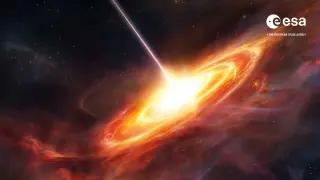
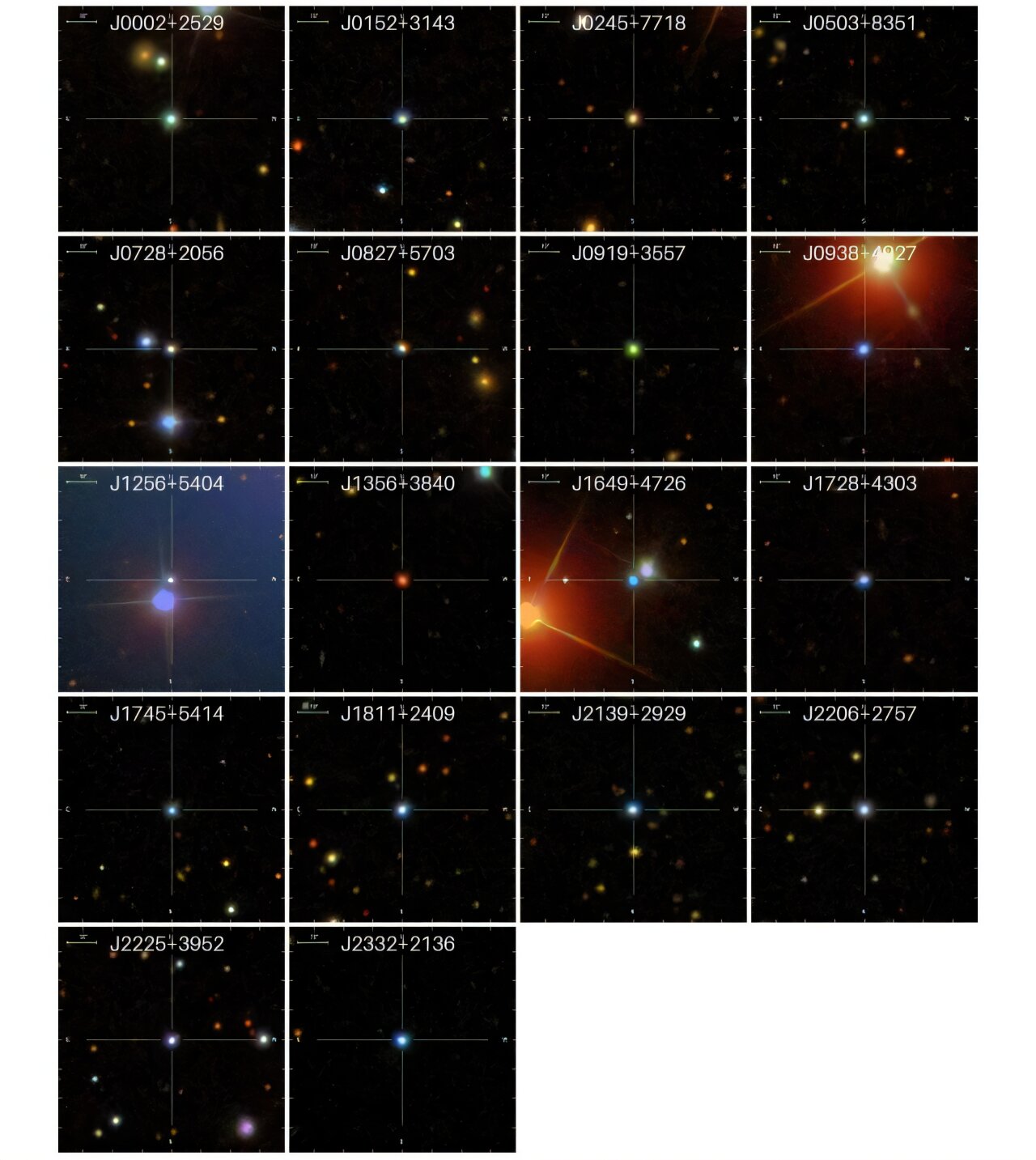
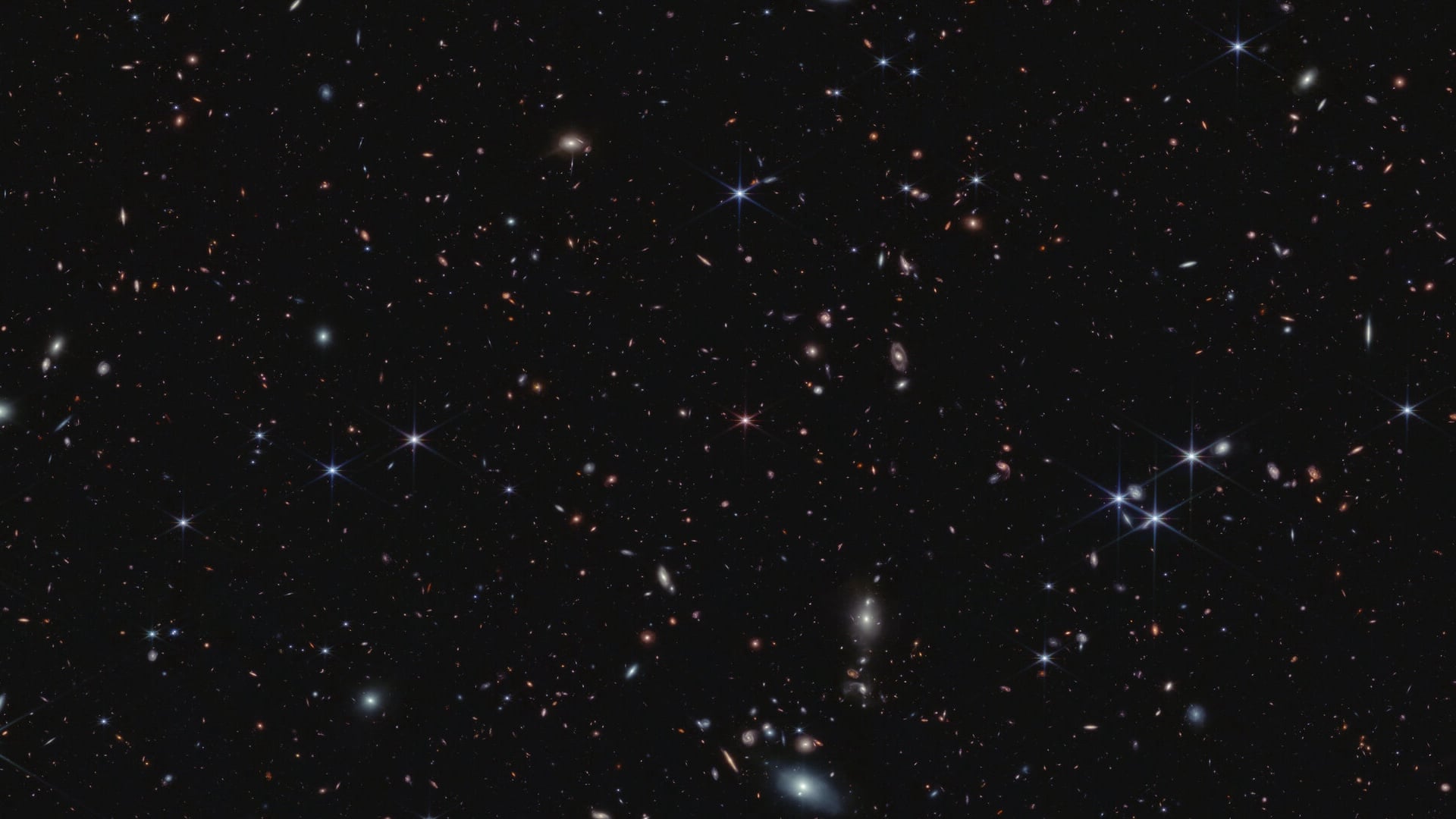
ESA’s Euclid space telescope found 31 ancient quasars dating to redshift 6.6–7.8, including two record-holders at z=7.77 and z=7.69, making them the oldest seen. Each hosts a billion-solar-mass black hole, existing when the universe was under a billion years old. The haul doubles the known number of such quasars and demonstrates Euclid’s unexpected capability to census the early cosmos, though how these enormous black holes formed so quickly remains a major puzzle. This is just the first major result from a six-year survey that could uncover many more distant quasars.

Euclid finds two ancient quasars, each shining with a trillion suns
space3 days ago

Euclid finds two ancient quasars, each shining with a trillion suns

The European Space Agency's Euclid space telescope has spotted 31 newly identified quasars dating to the universe's first 770 million years, including the two oldest known at redshifts 7.77 and 7.69, each radiating about a trillion suns. The discoveries, published in Astronomy & Astrophysics, double the number of quasars known from that era and shed light on how supermassive black holes formed so rapidly after the Big Bang. Euclid's wide-field survey will uncover hundreds more, helping create the largest 3D map of the universe and revealing how early galaxies and black holes evolved.

Distant quasar blasts ultraviolet winds at 0.3c, setting cosmic wind records
space1 month ago

Distant quasar blasts ultraviolet winds at 0.3c, setting cosmic wind records

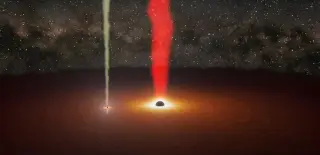
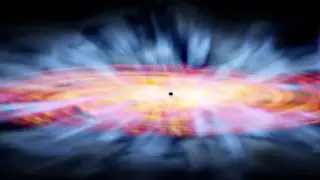
Astronomers report a distant quasar named J2318 powered by a 1.7-billion-solar-mass black hole emitting radiation-driven winds in ultraviolet light at speeds up to 0.3 times the speed of light—the fastest ultraviolet outflow observed. These extreme winds carry so much energy that they could push away gas and dust from the host galaxy, potentially quenching star formation and influencing galaxy evolution. The findings, derived from SDSS observations, were published in The Astrophysical Journal.

Cosmic predators: active black holes suppress star formation in neighboring galaxies
astronomy4 months ago

Cosmic predators: active black holes suppress star formation in neighboring galaxies

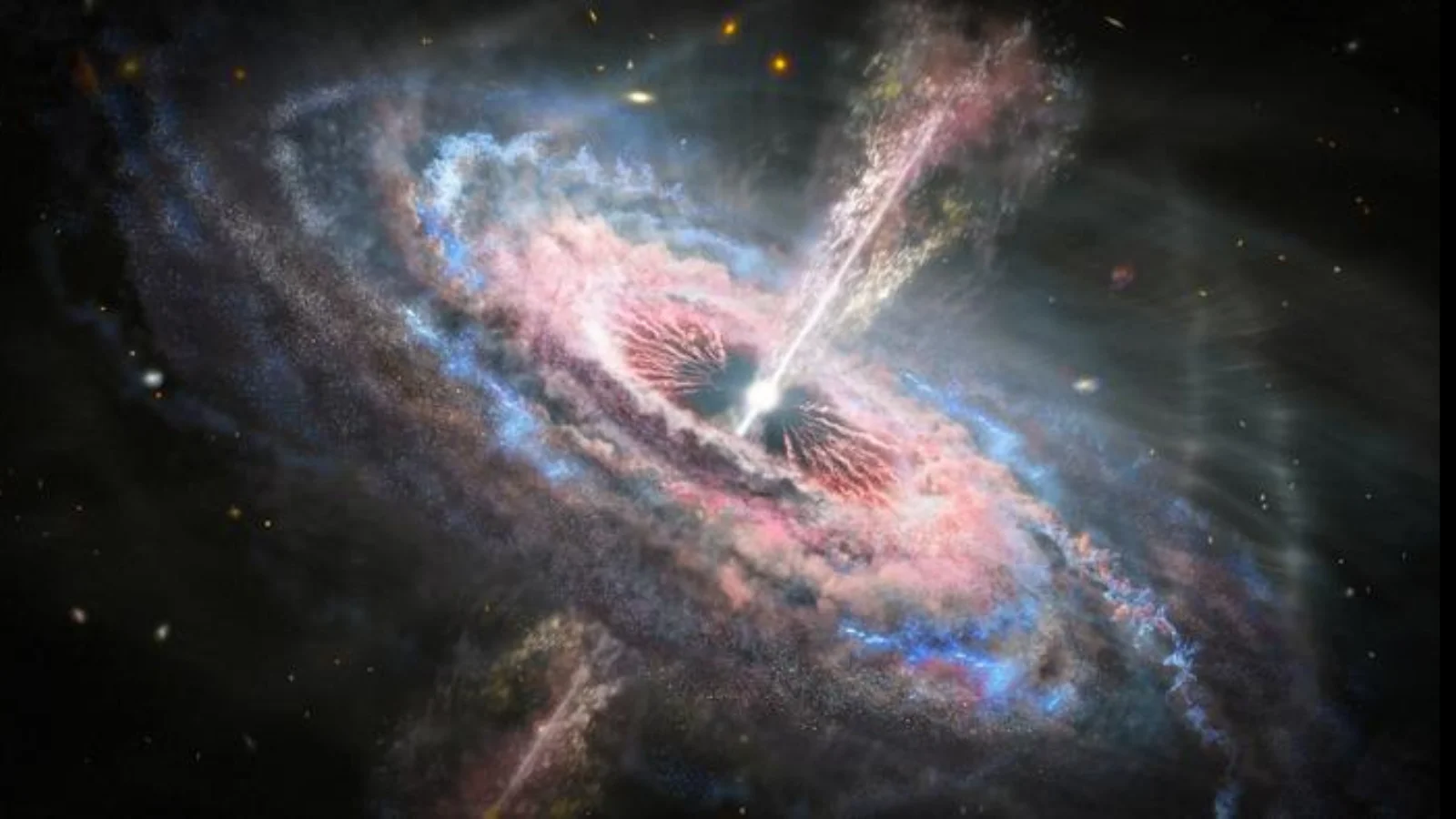
Astronomers using the James Webb Space Telescope found that one of the universe’s brightest quasars appears to quench star formation not only in its host galaxy but also in neighboring galaxies within about a million light-years. The study of quasar J0100+2802 showed reduced ionized oxygen in nearby galaxies, indicating suppressed star birth likely caused by intense radiation and outflows from the active supermassive black hole, suggesting a galactic “ecosystem” where massive black holes influence galaxy evolution beyond their own hosts, especially in the early universe.

Revolutionary Breakthrough Challenges 50-Year Black Hole Theory
science6 months ago

Revolutionary Breakthrough Challenges 50-Year Black Hole Theory

An international team of astronomers has found evidence suggesting that the relationship between ultraviolet and X-ray emissions in quasars has evolved over billions of years, challenging the long-standing assumption of its universality and potentially impacting cosmological models. Using data from eROSITA and XMM-Newton, they observed differences in this relationship in quasars from the early universe compared to the present day, which could influence our understanding of black hole growth and the universe's expansion.

Scientists Explain Why Days Are Getting Shorter
science9 months ago

Scientists Explain Why Days Are Getting Shorter

Earth's days are slightly getting shorter due to factors like atmospheric winds, ocean currents, Earth's internal movements, and lunar gravitational pull, with the shortest day on August 5, 2025, measuring just 86,399.99867 seconds. These tiny variations, measurable with precise instruments like atomic clocks and quasars, impact systems like GPS and are influenced by both short-term weather patterns and long-term geophysical processes.

Astronomers Find Dozens of New Bright Quasars
science10 months ago

Astronomers Find Dozens of New Bright Quasars

Astronomers from Seoul National University and others have discovered 62 new luminous quasars using the AllBRICQS survey, which utilizes WISE and Gaia data to identify bright quasars. These quasars, with redshifts between 0.09 and 2.48 and extremely high luminosities, include rare objects like the most luminous iron low-ionization broad absorption line quasar to date, providing valuable resources for studying black hole growth and galaxy evolution.

James Webb Telescope Discovers New Hidden Black Hole Type
science1 year ago

James Webb Telescope Discovers New Hidden Black Hole Type

Using the James Webb Space Telescope, astronomers have discovered a new, previously unseen type of supermassive black hole activity in the early universe, bridging the gap between classical quasars and faint, dust-obscured objects called Little Red Dots, which may represent baby quasars. This finding suggests that many active black holes in the early universe have been overlooked and provides new insights into galaxy evolution and black hole growth.

Hubble Unveils Mysterious Structures Near Quasar's Supermassive Black Hole
science1 year ago

Hubble Unveils Mysterious Structures Near Quasar's Supermassive Black Hole

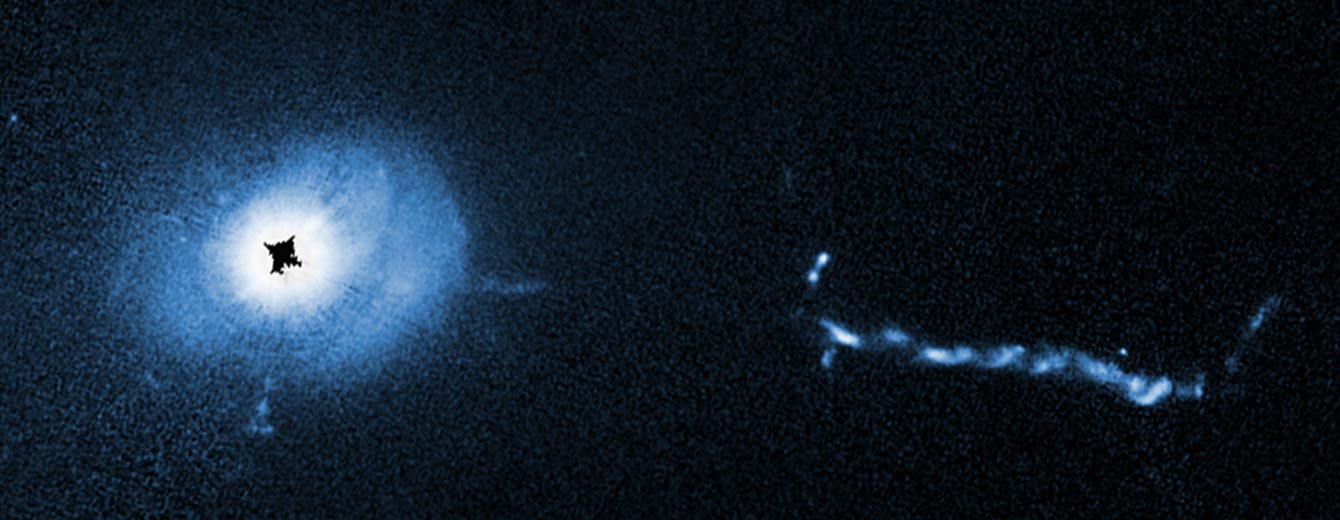
NASA's Hubble Space Telescope has captured detailed images of the quasar 3C 273, revealing complex structures and energetic jets near its supermassive black hole. These observations provide new insights into the mechanics of quasars and their galactic environments. Quasars, like 3C 273, are powered by supermassive black holes consuming surrounding material, and are crucial for understanding galaxy formation and evolution. The Hubble's advanced imaging capabilities have allowed astronomers to study these phenomena in unprecedented detail, paving the way for future research with instruments like the James Webb Space Telescope.

Supermassive Black Holes Challenge Physics with Monstrous Growth
science1 year ago

Supermassive Black Holes Challenge Physics with Monstrous Growth

A study using XMM-Newton and Chandra telescopes has linked X-ray emissions from 21 distant quasars to rapid growth of supermassive black holes in the early Universe, suggesting they grew through super-Eddington accretion rates. This challenges conventional physics by showing how these black holes, with masses billions of times that of the Sun, formed quickly within a billion years after the Big Bang. The findings, part of the HYPERION project, provide insights for future X-ray missions to better understand the formation of early cosmic structures.

New Insights Reveal How Supermassive Black Holes Defy Physics
science1 year ago

New Insights Reveal How Supermassive Black Holes Defy Physics

Scientists have discovered that supermassive black holes in the early universe may have grown rapidly by defying the Eddington limit, a rule that typically restricts their growth. Using X-ray data from the XMM-Newton and Chandra telescopes, researchers found evidence of "super-Eddington accretion," where these black holes consumed matter at rates that should have been impossible, allowing them to reach massive sizes less than a billion years after the Big Bang. This finding could help solve the mystery of how such large black holes formed so quickly.