
Cellophane Bees Produce Polyethylene-Like Plastic That Decomposes in Soil
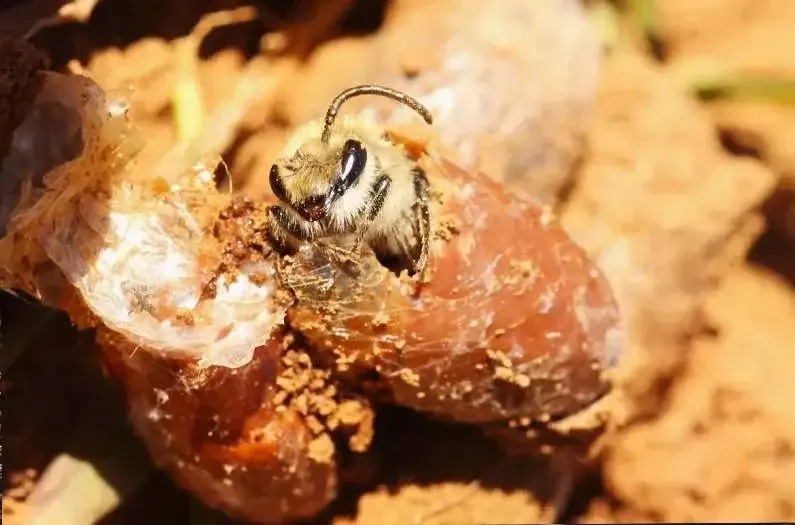
Researchers at Virginia Tech have identified a natural polymer produced by cellophane bees that mimics the structure of conventional polyethylene but degrades rapidly in soil. Published in PNAS, the study reveals that this bee-made material is cross-linked and semicrystalline, yet breaks down significantly within four months, offering a potential blueprint for sustainable plastics.
Key points
- Jonathan Coote and colleagues analyzed nest linings from Colletes inaequalis bees in Tennessee, finding the material is 73% polyester and 27% silk by weight.
- The polyester shares a semicrystalline structure and degradation temperature with polyethylene, which accounts for roughly one-third of global plastic production.
- Unlike lab-made polyethylene, the bee material degrades rapidly; polyester content drops to 40% within four months, and the film crumbles by 11 months.
- The material is likely cross-linked, a feature usually associated with durable thermosets that resist degradation, making the rapid breakdown counterintuitive.
- Researchers hypothesize that exposed ester bonds and esterase enzymes in the lining facilitate the rapid breakdown process.
Background
This development follows recent findings that microplastics are not chemically inert but generate reactive oxygen species at water interfaces, highlighting the persistent environmental hazards of conventional plastics. While previous archive items focused on unrelated topics like regenerative hair treatments, the current focus on biodegradable alternatives addresses the long-term pollution caused by standard polymers.
How outlets are covering it
Both the primary source from Anthropocene and the secondary source from DongA Science agree on the core findings: the structural similarity to polyethylene and the rapid degradation rate. However, they emphasize different aspects. Anthropocene highlights the 'reverse engineering' potential and the surprise that a cross-linked thermoset can degrade so quickly. DongA Science focuses more on the practical implications for replacing conventional plastics that take hundreds of years to decompose, noting that polyethylene accounted for about one-third of the 460 million tons of plastic produced in 2019. Both sources attribute the research to Jonathan Coote at Virginia Tech and the publication in PNAS.
Why it matters
This discovery provides a natural template for designing biodegradable plastics that match the performance of conventional polyethylene. By understanding how bees create a durable yet rapidly degrading material, scientists may develop new polymers that solve the persistence problem of current plastics, potentially reducing environmental pollution from packaging and agricultural films.
What to watch
The research team plans to investigate the specific mechanisms of degradation, focusing on the crystal structure and the role of esterase enzymes. The ultimate goal is to reverse-engineer this natural process to produce similar materials in a laboratory setting and eventually scale up production for practical use.
- Nature already invented biodegradable plastic. Scientists want to reverse engineer it. Anthropocene Magazine
- Bee nest linings could inspire plastics that break down in soil Phys.org
- These Bees Make Their Own Plastic, and Their Nests Could Help Us Make Less Lasting Waste Discover Magazine
- Bee nests inspire polyethylene-like bioplastic that decomposes within a year DongA Science
Want the full story? Read the original reporting
Read on Anthropocene Magazine