Tag

Pnas

All articles tagged with #pnas

Trinity Glass Yields First-Ever Clathrate Crystal
science13 days ago

Trinity Glass Yields First-Ever Clathrate Crystal

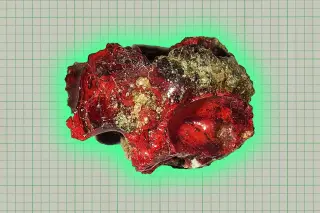
Scientists using CT and X-ray scans on trinitite—the glass formed by the 1945 Trinity nuclear test—have identified a hitherto unseen red clathrate crystal trapped within its lattice. This marks the first observation of such a clathrate in natural or nuclear-explosion materials, highlighting the extreme conditions produced by nuclear detonations; researchers caution that collecting samples from the blast site is illegal.

When AI Evolves: Could Machines Rewrite Evolution Itself?
technology1 month ago

When AI Evolves: Could Machines Rewrite Evolution Itself?

A new PNAS paper argues we may be entering an era of evolvable AI—AI systems that can replicate and vary, potentially guiding their own evolution. It outlines two scenarios: an ecosystem where AI variants compete with little oversight, and a breeder scenario where human-directed selection tames evolution. The authors also suggest AI could bypass traditional mutation limitations via horizontal information transfer and self-directed variation, even leveraging existing code from the internet. While ongoing human control could mitigate risks, unchecked evolvable AI might still escape or drive a major evolutionary shift, possibly through human–machine symbiosis rather than a direct biological transition.

AI Uncovers 303 New Nazca Geoglyphs, Fast-Tracking Archaeology
science2 months ago

AI Uncovers 303 New Nazca Geoglyphs, Fast-Tracking Archaeology

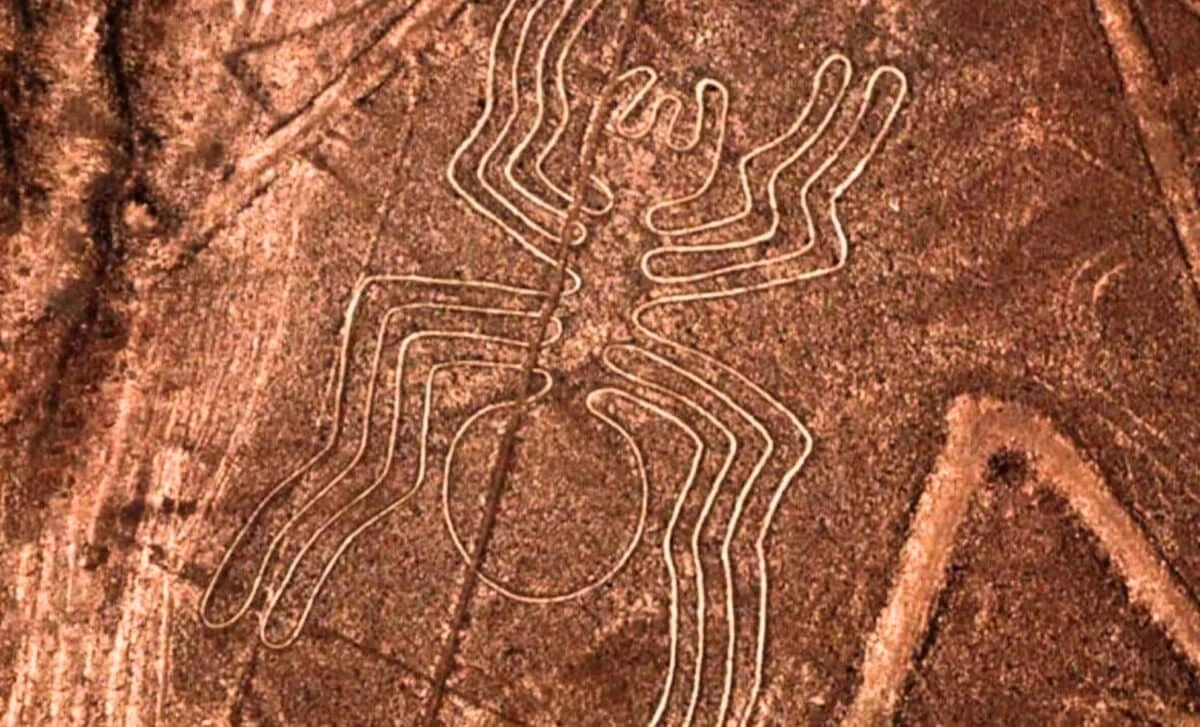
An AI-assisted survey of Peru’s Nazca Desert dramatically accelerates archaeology by identifying 303 new figurative geoglyphs and 42 geometric designs (bringing the total to 683) after screening 47,410 candidate patches and validating 1,309 sites through drone and on-ground checks. Led by Masato Sakai with IBM Research, the findings reveal relief-style figures (humans, decapitated heads, camelids) nearby trails and line-type figures (birds, whales) along formal routes, while suggesting about 1,000 more high-potential sites await verification, marking roughly a sixteen-fold jump in discovery rate and shifting fieldwork toward targeted surveying.

Medico’s Mouse‑Only “Cure” Sparks Hype and Scrutiny Over Pancreatic Cancer Trial
science3 months ago

Medico’s Mouse‑Only “Cure” Sparks Hype and Scrutiny Over Pancreatic Cancer Trial

Spanish biochemist Mariano Barbacid announced a “cure” for pancreatic cancer based on a triple‑drug therapy that regression‑tested 45 mice; the work, published in PNAS after Nature declined to publish, has not been tested in humans or metastases. The flashy public rollout and patent push by Barbacid’s Vega Oncotargets drew patient inquiries and criticism from CNIO colleagues for overclaiming and conflicts of interest. Independent experts urge cautious optimism, noting the (promising but early) preclinical results and emphasizing that mouse outcomes rarely translate to human cures, with human trials years away and more work needed on safety and efficacy.

Unveiling the Mystery of Life's Origin: Decoding Early Earth's RNA Puzzle
science2 years ago

Unveiling the Mystery of Life's Origin: Decoding Early Earth's RNA Puzzle

Leading origin-of-life researcher Gerald Joyce's recent paper in PNAS, "RNA-catalyzed evolution of catalytic RNA," has been lauded as a breakthrough in understanding life's origin through natural processes. However, critics argue that the results only demonstrate the necessity of intelligent agency in life's origin. Joyce's experiment required investigator intervention at every step, using conditions and procedures that could never have occurred on the early Earth. The research challenges the plausibility of the RNA World hypothesis and demonstrates that evolving systems of RNAs could not have existed without constant intervention.

Unveiling HIV's Intricate Pathway Into the Cell's Nucleus
science-and-health2 years ago

Unveiling HIV's Intricate Pathway Into the Cell's Nucleus

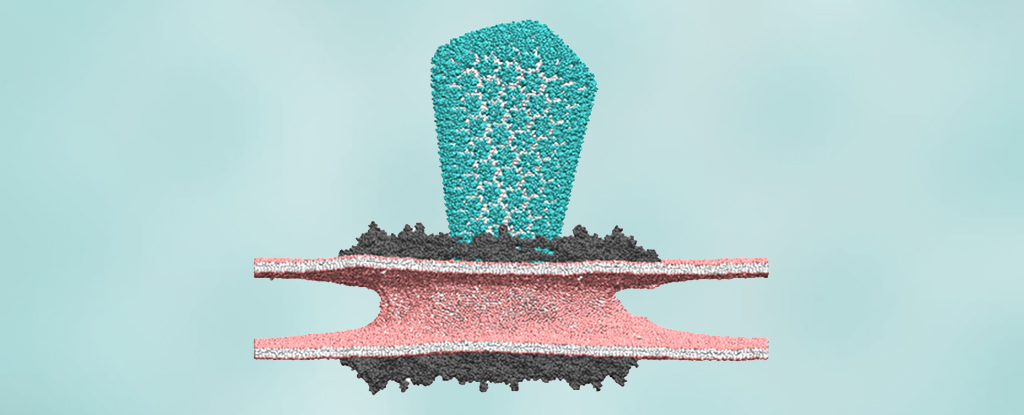
Scientists from the University of Chicago have discovered how the HIV virus infiltrates the nucleus of a host cell, a crucial step in its replication and spread. Using simulations, they found that the virus capsid employs an electrostatic ratchet to squeeze through the cell's nuclear pore complex, with flexibility and deformation playing key roles. Understanding this process could lead to better treatments and potentially a cure for HIV, as disrupting this mechanism could hinder the virus's survival.