
Cancer-Driven Osteoclasts Disrupt Meningeal Lymphatics to Suppress Immunity in Dural Metastasis
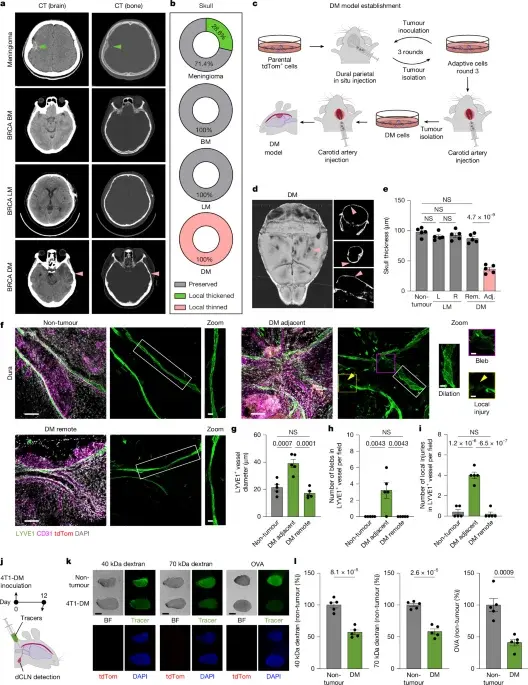
A new study in Nature reveals that cancer-related osteoclasts disrupt meningeal lymphatic drainage, creating an immunosuppressive environment that facilitates dural metastasis. Targeting these cells restores lymphatic function and enhances anti-tumor immune responses.
Key points
- Dural metastasis (DM), a complication of advanced breast and lung cancers, involves tumor infiltration into the dura mater and is distinct from brain metastasis due to unique cranial erosion patterns.
- Researchers developed a new mouse model to show that DM progression is associated with significant impairments in meningeal lymphatic drainage.
- Single-cell RNA sequencing identified a predominant immunosuppressive microenvironment driven by cancer-related osteoclasts (OCs), which localize at the skull-tumor interface and within tumors.
- Therapeutic targeting of these osteoclasts restored meningeal lymphatic structure and function, thereby augmenting anti-tumor immune responses.
- The mechanism involves osteoclast-derived angiopoietin-2 (ANG2), which dysregulates meningeal lymphatic drainage and contributes to T cell exhaustion.
Background
This research builds on prior findings regarding the role of meningeal lymphatics in brain immunity and tumor drainage. Earlier studies, such as those referenced in the archive, have highlighted how impaired lymphatic clearance can influence neurodegenerative processes and how dura immunity configures leptomeningeal metastasis. The current study extends this by specifically linking osteoclast activity to lymphatic dysfunction in the context of dural metastasis, offering a new conceptual framework for this specific metastatic disease.
Why it matters
Understanding the role of osteoclasts in disrupting meningeal lymphatics provides a new therapeutic avenue for treating dural metastasis. By targeting these cells to restore lymphatic function, clinicians may enhance anti-tumor immunity and improve clinical outcomes for patients with advanced malignancies like breast and lung cancer.
What to watch
The study suggests that selective osteoclast targeting could be a promising approach to restore meningeal lymphatic function. Future research will likely focus on translating these findings into clinical trials to evaluate the efficacy of osteoclast-targeting therapies in enhancing anti-tumor immunity and improving patient outcomes in dural metastasis.
Want the full story? Read the original reporting
Read on Nature