
1973 Concorde Flight Set Record for 74-Minute Solar Eclipse Observation
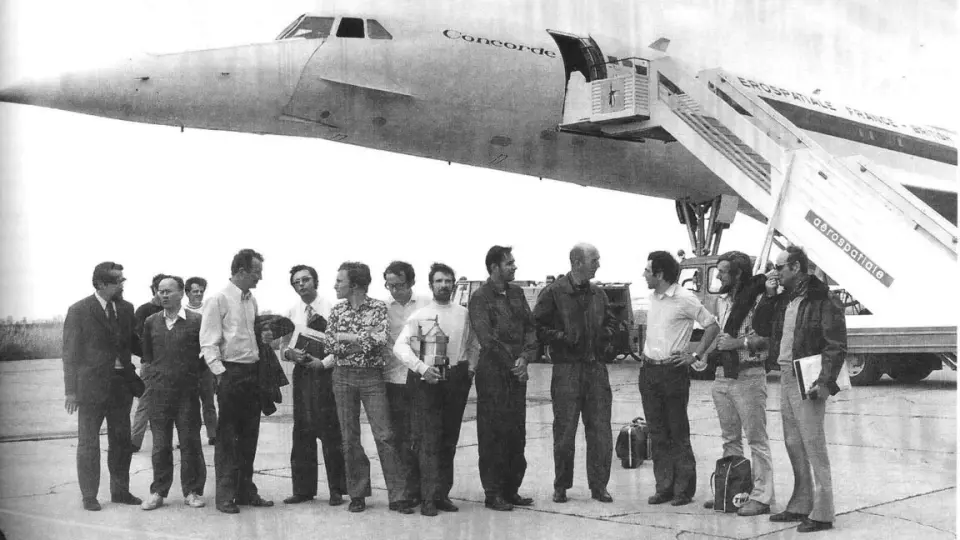
In June 1973, a team of eight scientists used the Concorde 001 prototype to observe a total solar eclipse for 74 minutes, setting a world record by flying at Mach 2.2 to chase the Moon's shadow across Africa. The mission, led by Pierre Léna, involved significant aircraft modifications and precise navigation to study the solar corona at various wavelengths, achieving a duration far exceeding ground-based observations.
Key points
- Pierre Léna initiated the project in 1972 to use the Concorde 001 prototype for observing the June 30, 1973, total solar eclipse.
- The aircraft flew at Mach 2.2 to match the speed of the Moon's shadow, which was moving slightly faster than the plane.
- The flight achieved 74 minutes of totality observation, compared to a maximum of 7.5 minutes on the ground.
- The Concorde 001 was modified with four ceiling portholes to accommodate instruments for studying the solar corona, chromosphere, and infrared dust.
- The mission involved scientists from France, the UK, and the US, including institutions like the Paris Observatory and Los Alamos National Laboratory.
- The flight took off from Las Palmas, Canary Islands, and landed in N'Djamena, Chad, after a precise rendezvous with the eclipse shadow over Mauritania.
Background
This historical event is notable for its unprecedented duration of totality observation, which remains unmatched 53 years later. The upcoming August 12, 2026, total solar eclipse, visible from parts of Europe, will offer a maximum ground-based totality of slightly over two minutes, highlighting the continued significance of high-altitude observations for solar science. The 1973 mission also demonstrated the potential of supersonic aircraft for astronomical research, a capability that has not been replicated since.
Why it matters
The 1973 Concorde eclipse chase remains a landmark achievement in solar physics, providing unique data on the solar corona that ground-based observations could not match. It demonstrated the feasibility of using high-speed aircraft for scientific missions and set a benchmark for future eclipse observations. The event also highlighted the collaborative nature of international scientific efforts and the importance of precise navigation in achieving complex experimental goals.
What to watch
The Concorde 001 prototype is now on display at the National Air and Space Museum of France in Le Bourget, with a map of the 1973 eclipse path painted on its nose. The aircraft's interior is empty, but the portholes used for the experiments are still visible. The legacy of the mission continues to inspire interest in solar eclipses and the potential of advanced aircraft for scientific research.
Want the full story? Read the original reporting
Read on Ars Technica