
Shark scars reveal hidden mating habits and migration patterns
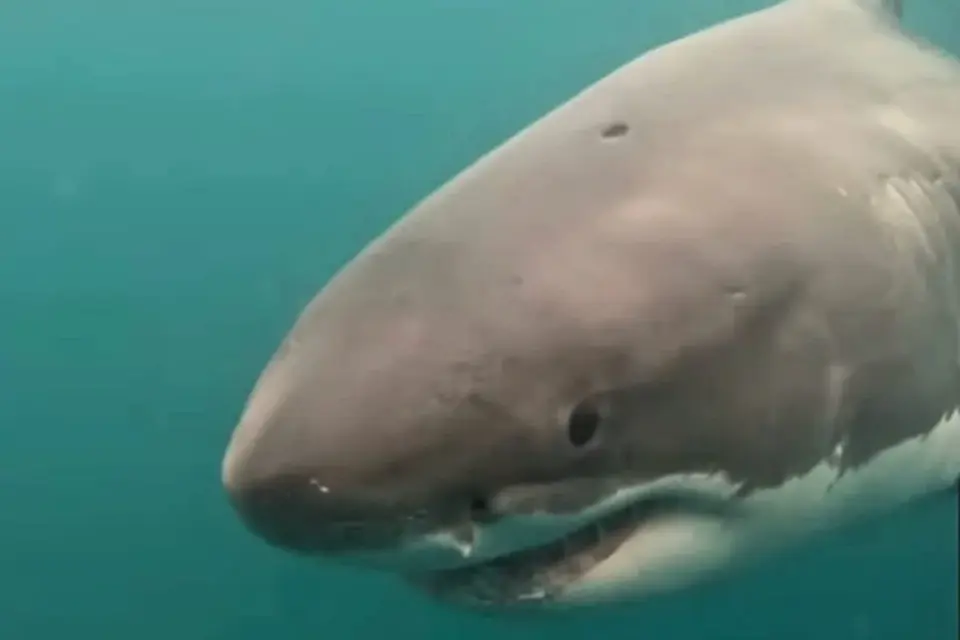
Researchers have developed a new system to classify scars on great white sharks, using these marks to decode the animals' interactions with prey, humans, and mates. A recent study highlights how a circular hole on a 16-foot female's head indicates a bite from a cookiecutter shark, while other wounds reveal mating behaviors and migration routes.
Key points
- A 2025 study in Frontiers in Marine Science introduced a systematic classification system for scars and wounds on great white sharks.
- Scars provide evidence of interactions with other sharks, prey, humans, and the environment, including boat strikes and fishing gear entanglement.
- A 16-foot female great white was observed with a perfectly circular hole on her head, identified as a cookiecutter shark bite.
- Cookiecutter bites occur during the 'offshore phase' of migration when great whites overlap in habitat with cookiecutter sharks.
- Mating scars, or 'hold bites,' are found on females' heads and pectoral fins, indicating that males bite females to hold on during copulation.
- These hold bites are usually fully healed by the time they are observed, suggesting mating occurs offshore.
Background
This study builds on ongoing efforts to track and understand great white shark behavior, such as the monitoring of individuals like Breton, Ernst, and Contender, which have shown complex and less-predictable migration patterns along the East Coast and beyond.
Why it matters
Understanding the scars on great white sharks provides crucial insights into their behavior, migration, and reproduction, which are essential for conservation efforts and reducing human-shark conflicts.
What to watch
Researchers will continue to use the new classification system to analyze more shark scars, aiming to further decode the mysteries of great white shark mating and migration.
Want the full story? Read the original reporting
Read on BBC Wildlife Magazine