
Humpbacks and Sea Lions Form Unlikely Hunting Partners in Monterey Bay
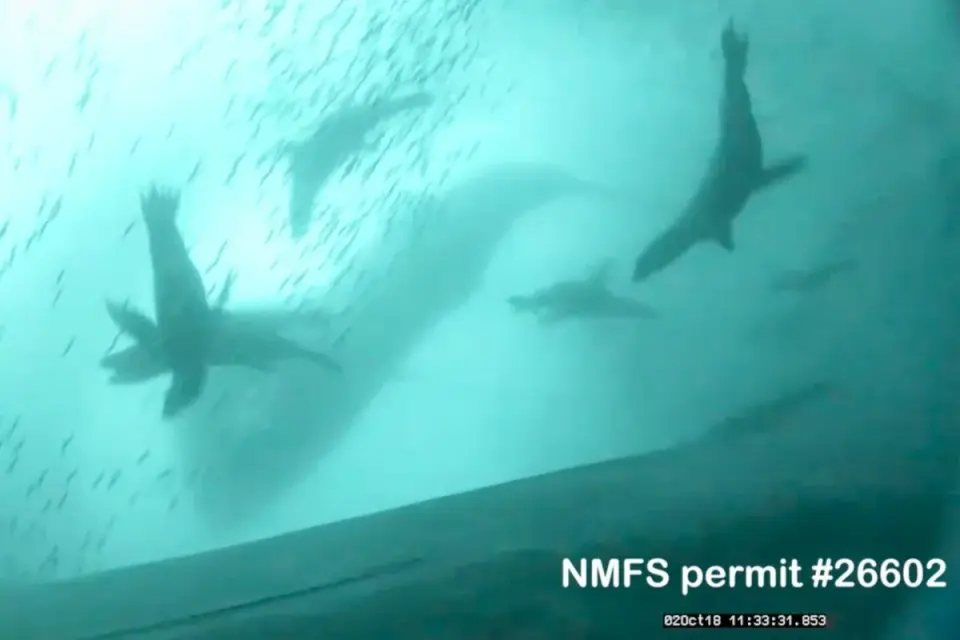
New research reveals that humpback whales in Monterey Bay feed more efficiently when California sea lions are present, suggesting a mutually beneficial hunting dynamic rather than competition.
Key points
- A study published in Philosophical Transactions of the Royal Society B found that humpback whales exhibited a 23% higher feeding rate and 16% shorter intervals between lunges when foraging alongside sea lions.
- Video footage from tagged whales shows sea lions darting across whale backs to catch anchovies that escape the whale's initial lunge, indicating complementary feeding strategies.
- The presence of sea lions did not alter the whales' speed, acceleration, or energy expenditure, suggesting the interaction is not competitive.
- Researchers hypothesize that sea lions help concentrate fish into denser bait balls, benefiting both species by reducing competition and increasing catch success.
Background
Recent monitoring in Monterey Bay has highlighted various humpback whale behaviors, including unusual river navigation and recovery patterns following marine heat waves. This new finding adds to the understanding of cetacean adaptability and social dynamics in the region.
Why it matters
Understanding interspecies cooperation in marine environments offers insights into ecosystem health and predator-prey dynamics, potentially informing conservation strategies for both whales and sea lions.
What to watch
Further research is needed to determine if whales actively seek out sea lions for foraging or if both species simply converge on the same prey, as the current study cannot confirm intentional coordination.
Want the full story? Read the original reporting
Read on BBC Wildlife Magazine