
Lake Superior Dominates Global Freshwater Rankings, Losing Only to Salty Caspian Sea
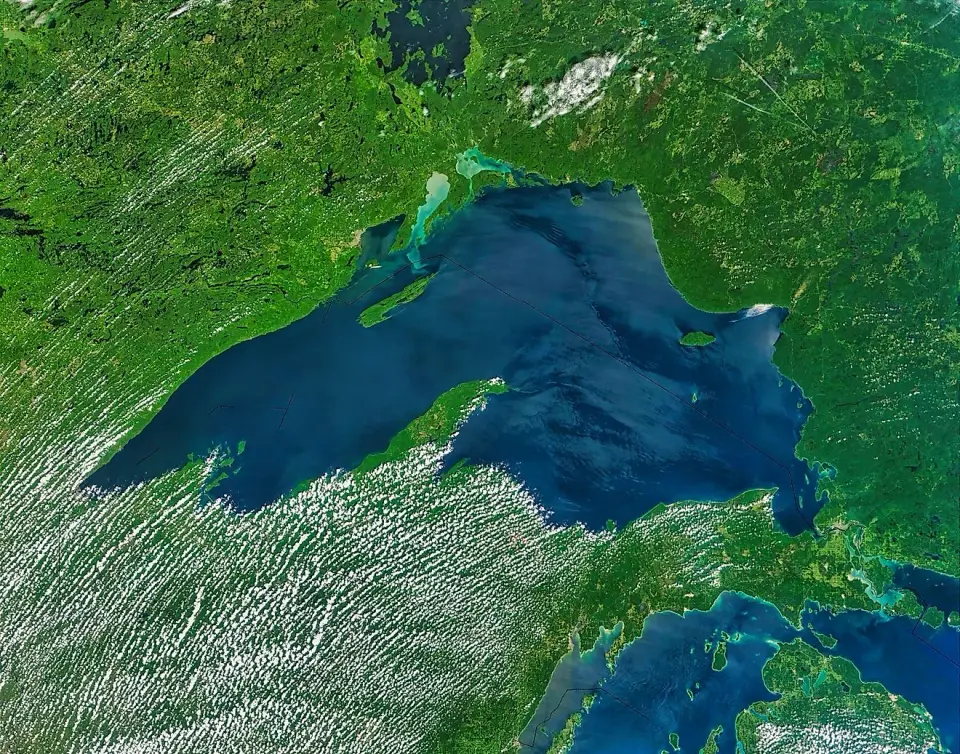
Lake Superior is the world's largest freshwater lake by surface area, spanning 31,700 square miles and holding 10% of global fresh surface water. It exceeds all other continental freshwater lakes in volume and area, except for the Caspian Sea, which is larger but saline. Lake Victoria in Africa is the closest competitor in area, but Superior holds four times the water volume. Other continental lakes, such as Europe's Lake Ladoga and South America's Lake Titicaca, are significantly smaller. Australia's Lake Eyre is often dry, and Antarctica's Lake Vostok is buried under ice, making Superior the clear freshwater heavyweight.
Key points
- Lake Superior covers 31,700 square miles, comparable to South Carolina or Austria, and contains 10% of the world's fresh surface water.
- The Caspian Sea is the only larger lake globally at 143,000 square miles, but it is saline and straddles the Europe-Asia border, disqualifying it from freshwater rankings.
- Lake Victoria in Africa is the nearest freshwater competitor at 26,600 square miles, yet Superior holds four times the water volume due to greater depth.
- Europe's Lake Ladoga (6,800 square miles) and South America's Lake Titicaca (3,200 square miles) are vastly smaller than Superior.
- Australia's Lake Eyre is frequently dry, while Antarctica's Lake Vostok is buried under two miles of ice, rendering both inferior to Superior in practical terms.
Background
Recent scientific efforts have focused on Lake Superior's unique properties, including the deployment of neutrino detectors by a DARPA-funded team to study particle interactions before a Fermilab beam ceases in February 2026. These projects highlight the lake's depth and clarity, which are critical for such experiments, reinforcing its status as a significant body of water for both scientific and geographical comparisons.
Why it matters
Understanding the scale of Lake Superior provides context for global freshwater distribution and resource management. Its dominance in freshwater volume underscores its ecological and economic importance, while comparisons with other lakes highlight the variability in water availability across continents. This information is crucial for hydrology, climate studies, and international water policy discussions.
What to watch
No immediate developments are expected regarding the geographical comparisons, but ongoing scientific projects in Lake Superior, such as neutrino detection, may yield new insights into the lake's physical properties. Future studies may further explore the impact of climate change on freshwater lake levels and volumes globally.
Want the full story? Read the original reporting
Read on WorldAtlas