Tag

Geography

All articles tagged with #geography

Lake Superior Dominates Global Freshwater Rankings, Losing Only to Salty Caspian Sea
science-and-nature9 days ago

Lake Superior Dominates Global Freshwater Rankings, Losing Only to Salty Caspian Sea

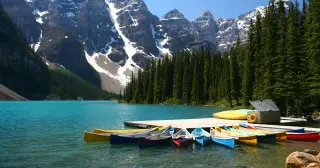
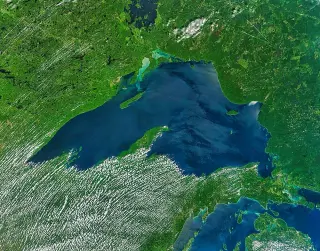
Lake Superior is the world's largest freshwater lake by surface area, spanning 31,700 square miles and holding 10% of global fresh surface water. It exceeds all other continental freshwater lakes in volume and area, except for the Caspian Sea, which is larger but saline. Lake Victoria in Africa is the closest competitor in area, but Superior holds four times the water volume. Other continental lakes, such as Europe's Lake Ladoga and South America's Lake Titicaca, are significantly smaller. Australia's Lake Eyre is often dry, and Antarctica's Lake Vostok is buried under ice, making Superior the clear freshwater heavyweight.
Axios highlights the hidden geographic patterns of U.S. poverty
economy1 month ago

Axios highlights the hidden geographic patterns of U.S. poverty

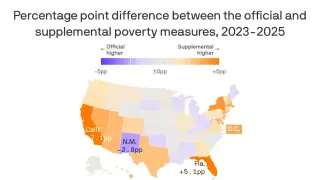
Axios reports on the overlooked geographic dimensions of American poverty, noting that the issue is not confined to specific regions but is a widespread structural challenge. The outlet emphasizes that poverty is a complex, multi-faceted problem that requires a nuanced understanding of its spatial distribution to address effectively. This perspective aligns with broader discussions on the structural mismatches in U.S. housing policy, where subsidized units remain vacant while low-income families face long waitlists.

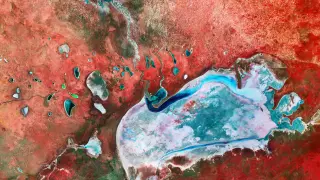
Satellite imagery reveals Namibia's Etosha Pan as a surreal, false-color landscape
science1 month ago

Satellite imagery reveals Namibia's Etosha Pan as a surreal, false-color landscape

A recent satellite image of the Etosha Pan in Namibia, captured by the Copernicus Sentinel-2 mission, presents the salt flat in striking false colors that resemble an alien world. The image, taken on April 5, 2026, uses multispectral data to highlight vegetation and topography, showing the salt pan in shades of blue and surrounding land in red. While the pan appears white to the naked eye, the false-color processing allows scientists to distinguish between different types of vegetation, such as grasslands and mopane trees, which are crucial for local wildlife. This visualization aids in understanding Earth's topography and environmental changes.

Study reveals Constantinople, not Rome, was the Roman Empire's true road hub
science2 months ago

Study reveals Constantinople, not Rome, was the Roman Empire's true road hub

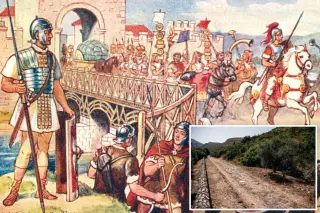
A new study published in Nature Communications challenges the proverb 'all roads lead to Rome.' By analyzing 190,000 miles of ancient routes, researchers found that Constantinople (modern Istanbul) was the central hub for overland travel, while Rome remained the political capital. The study also clarifies that Roman roads were not uniformly straight and that maritime routes were more critical for trade.

Earth Exposed: 21 Surprising Facts You Probably Didn't Know
world2 months ago

Earth Exposed: 21 Surprising Facts You Probably Didn't Know

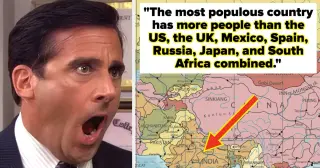
A BuzzFeed list reveals 21 astonishing Earth facts, from the Mid-Ocean Ridge being the planet's longest mountain range and Antarctica being the largest desert, to Earth's day length changing over billions of years and its rotation slowing; Mauna Kea towering above Everest from base, continents drifting a few centimeters each year, the ancient supercontinent Pangea, the origin of the name Earth in Old English, and nitrogen making up most of the atmosphere—showing how our world is more dynamic and surprising than many realize.

New Study Projects Global Drylands to Reach 40% of Land by 2100
science2 months ago

New Study Projects Global Drylands to Reach 40% of Land by 2100

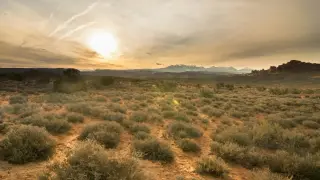
A new study in Environmental Research Letters projects that Earth's drylands could expand to cover 40.28% of land area by 2100, a significant increase from the current 38.58%. The research, led by the Chinese Academy of Forestry, highlights that rising CO2 levels may actually slow this expansion by reducing plant water loss, a factor often ignored in previous models. While the overall trend is concerning, the projected growth is lower than earlier estimates of 56%, though it still represents a massive area equivalent to 30% of Australia.

Glacial Scars: How Ice Age Erosion Created Canada's Two Million Lakes
geography3 months ago

Glacial Scars: How Ice Age Erosion Created Canada's Two Million Lakes

Canada contains over two million lakes, a result of Ice Age glaciers grinding bedrock and leaving behind depressions that filled with meltwater. While often cited as holding 60% of the world's lakes, this figure depends on specific global datasets that count only larger water bodies. The landscape, particularly the Canadian Shield, features a mix of large and remote small lakes formed by glacial erosion and sediment dams, though uneven distribution and environmental threats persist despite the abundance.

Chimborazo: closest to space, not the highest above sea level
science5 months ago

Chimborazo: closest to space, not the highest above sea level

Everest is the highest mountain above sea level at 8,848 m, but Chimborazo in Ecuador sits farther from Earth’s center due to the planet’s equatorial bulge—about 6,384.4 km from the center versus Everest’s ~6,382.3 km, a ~2.1 km difference. Whether it’s closest to space depends on how you define space: from the center (Chimborazo wins) or from sea level (Everest wins). The key point is that “highest” and “farthest from the center” are two different measures, and Earth’s shape, not mountain height alone, drives the gap. Historical geodesy missions helped confirm the bulge and the oblate Earth.

Sunday Puzzle: Key U.S. Cities
puzzles11 months ago

Sunday Puzzle: Key U.S. Cities

The Sunday Puzzle involves identifying major U.S. cities hidden within sentences, each city name embedded in consecutive letters and associated with the state mentioned in the sentence, with answers like Lexington and others. It also includes previous and current puzzle challenges related to famous singers and word manipulations.