
Remora Clings to Nesting Sea Turtle for 19 Minutes on Costa Rican Beach
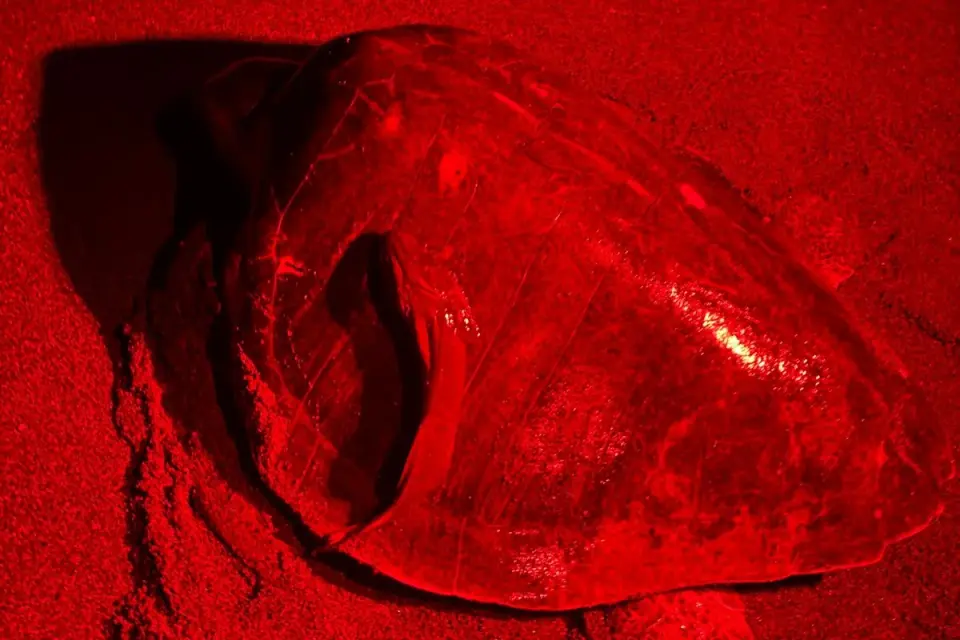
Researchers in Costa Rica observed a remora fish remain attached to an olive ridley sea turtle for 19 minutes after the turtle left the water to nest. The fish survived out of the water and remained active, a behavior rarely documented in scientific literature.
Key points
- A female olive ridley sea turtle was observed nesting on Pejeperro beach in Costa Rica in September 2025 with a remora fish attached to its shell.
- The remora remained attached to the turtle for 19 minutes after the turtle left the water, a duration considered unusually long for a fish out of water.
- The fish was still alive and active when researchers removed it to measure the turtle's shell, thrashing when returned to the ocean.
- The study, published in Frontiers in Marine Science, suggests an intimate and longer-term symbiotic relationship between remoras and sea turtles.
- Researchers are unsure how the remora survived so long out of water, as remoras typically need flowing water over their gills to breathe.
Background
This observation adds to the understanding of marine symbiotic relationships, particularly between remoras and larger marine animals. While remoras are commonly seen attached to turtles, sharks, and whales in the water, their behavior on land is rarely documented. The study highlights the complex interactions between species and the need for further research to understand how remoras survive such conditions. This finding contrasts with earlier reports of sea turtles being used for espionage, as noted in our archive, where China accused foreign powers of attaching sensors to marine life for intelligence gathering. The current study focuses on natural symbiosis rather than human intervention.
Why it matters
Understanding the behavior of remoras and their hosts can help marine researchers better protect these species and their habitats. The rare observation of a remora surviving out of water for an extended period may provide insights into the physiological adaptations of remoras and the nature of their symbiotic relationships. This knowledge can inform conservation efforts and improve the protection of marine ecosystems.
What to watch
Researchers plan to conduct further studies to determine how remoras survive out of water for extended periods. They hope to investigate whether remoras have better oxygen tolerance than other fish species. The findings may lead to new conservation strategies for protecting sea turtles and their symbiotic partners.
Want the full story? Read the original reporting
Read on BBC Wildlife Magazine