
Burnham Vows to Rescue Jodrell Bank After UKRI Funding Cut
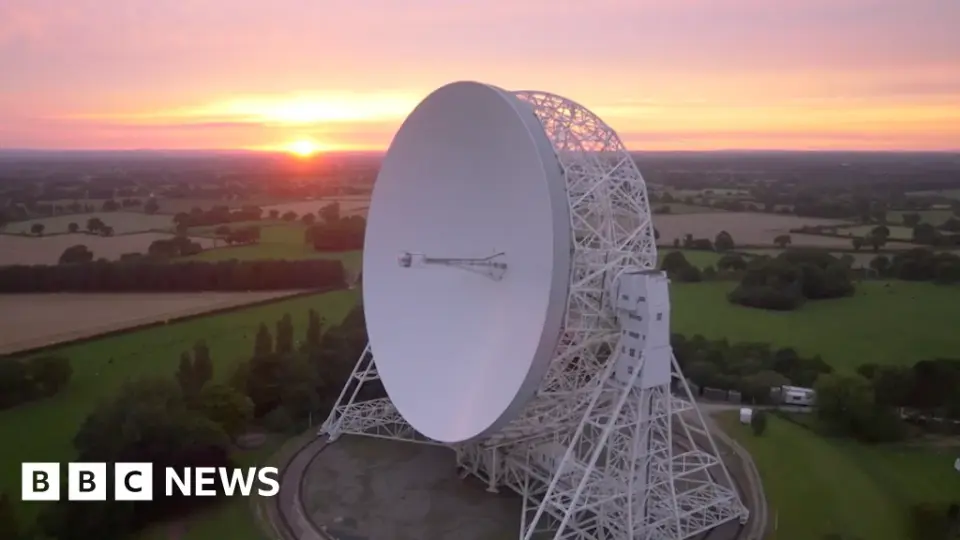
Prime Minister Andy Burnham has pledged to secure alternative funding for the Jodrell Bank Observatory, vowing to prevent the closure of the Lovell telescope despite a decision by UK Research and Innovation (UKRI) to end financial support in March 2028. The site, which houses the world's third-largest steerable radio telescope, faces a deadline of April 1, 2028, for all scientific observations to cease unless new funding is found. Burnham described the observatory as a vital heritage and research asset, committing to finding a solution after being questioned in the House of Commons by Congleton MP Sarah Russell. While UKRI cited a comprehensive prioritization process for the cut, scientists and over 150 public figures, including astronauts and musicians, have condemned the decision as scientifically misguided. The move threatens approximately 28 jobs and disrupts the e-Merlin array, a network of telescopes operated by the University of Manchester. Burnham acknowledged the changes in research funding but emphasized the need to preserve the site's unique historical and scientific value, promising to meet with local MPs to address the issue.
Key points
- Prime Minister Andy Burnham committed to finding a way to save Jodrell Bank Observatory from closure.
- UK Research and Innovation (UKRI) decided not to prioritize the site for funding after March 2028.
- Scientific observations at Jodrell Bank are expected to cease on April 1, 2028, without alternative funding.
- The Lovell telescope, standing since 1957, is the world's third-largest steerable radio telescope.
- Over 150 public figures, including scientists and celebrities, signed a letter urging the government to reverse the decision.
- The funding cut affects the e-Merlin array, a network of telescopes operated by the University of Manchester.
Background
The Jodrell Bank Observatory, established in 1945, has been a pioneer in radio astronomy and space tracking since the early space race. Recent developments in August 2026 highlighted the threat of funding cuts to the e-Merlin network, with UKRI's Science and Technology Facilities Council (STFC) planning to terminate £2.8m/year of funding in 2028. This decision was part of broader cuts to the Particle Physics and Astronomy Programme (PPAN), which also included reductions for CERN and the US Electron-Ion Collider. Critics argued that these cuts jeopardized the UK's leadership in space science and threatened thousands of researchers, while officials maintained that the reductions were necessary to protect postdoctoral and PhD opportunities and preserve leadership in AI and quantum technology. The current situation reflects the ongoing tension between heritage preservation and strategic funding priorities in UK science policy.
Why it matters
The potential closure of Jodrell Bank represents a significant loss for the UK's scientific infrastructure and cultural heritage. As a UNESCO World Heritage site and a key component of the e-Merlin array, the observatory plays a crucial role in international radio astronomy and space observation. The decision to cut funding raises concerns about the UK's commitment to long-term scientific research and its ability to compete globally in space science. The political response from the Prime Minister signals a potential shift in policy, but the outcome remains uncertain as the government must navigate budget constraints while preserving critical research assets. The broader implications include the impact on local jobs, the training of young scientists, and the UK's reputation in the international scientific community.
What to watch
Prime Minister Andy Burnham has promised to set up a meeting with Congleton MP Sarah Russell and Macclesfield MP Tim Roca to discuss the future of Jodrell Bank. The government will need to identify alternative funding sources or adjust its prioritization process to prevent the closure of the observatory by April 1, 2028. Scientists and public figures will likely continue to pressure the government to reverse the UKRI decision, while the University of Manchester may explore other options to sustain the e-Merlin array. The outcome of these discussions will determine whether the Lovell telescope and its associated research programs can continue operations or face permanent closure.
Want the full story? Read the original reporting
Read on BBC