A new, non-peer-reviewed paper requested by HHS Secretary Robert F. Kennedy Jr. argues that existing research links glyphosate to cancer, aiming to pressure the EPA before its Monday review deadline. Simultaneously, a peer-reviewed study from the University of Nebraska found no statistical link between county-level glyphosate use and non-Hodgkin lymphoma rates. The EPA is currently updating its risk assessment, with final conclusions expected next year.
NIH Director Jay Bhattacharya has asked the journal Nature Medicine to investigate whether former officials Anthony Fauci, Francis Collins, and Jeremy Farrar secretly contributed to the influential March 2020 paper that dismissed the COVID-19 lab leak theory. The letter, sent on November 18, 2026, requests a formal review of authorship disclosures and potential retraction. While the paper remains published, the request highlights ongoing disputes over transparency in scientific contributions and the role of government officials in shaping pandemic-era research.
The Trump administration’s National Institutes of Health (NIH) has implemented a controversial 'renegotiation' process that forces researchers to alter grant language and scope to align with political priorities. This has led to widespread changes in funding, with HIV and health equity studies disproportionately affected. While the NIH claims these changes improve scientific rigor, critics and data suggest they constitute viewpoint-based discrimination, causing significant disruptions to medical research and morale.
Kelly Holley-Bockelmann, a prominent astrophysicist, has left the United States to take a position in Leiden, Netherlands, citing disruptions to her work caused by recent U.S. policies. Her move highlights a growing trend of American scientists relocating abroad due to funding uncertainties and regulatory changes under the current administration. European nations have launched multimillion-dollar initiatives to attract this talent, with the EU’s 'Choose Europe for Science' program alone offering $567 million in new funding since 2025. While the specific policy triggers for her departure are not detailed in the report, her relocation underscores the broader 'brain drain' affecting U.S. research institutions. The Netherlands welcomed her with a formal invitation, emphasizing the global competition for scientific expertise. This development occurs against a backdrop of increasing political pressure on federal research agencies and a shift in international scientific collaboration.
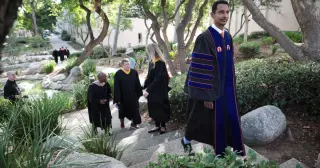
Astrophysicist Ray Jayawardhana was inaugurated as Caltech’s 10th president on Oct. 29, taking over during a period of significant institutional stress. He faces the first competitive bid for the Jet Propulsion Laboratory management contract, a federal investigation into international student visas, and shifting federal funding policies. While Caltech has secured new private funding and increased its federal research grants, the university is navigating reduced graduate admissions and a high-stakes competition to retain its decades-old partnership with NASA.
A wave of American scientists is relocating to foreign institutions due to unstable federal funding and political interference in research. Foreign universities are actively recruiting US talent with guaranteed grants, while US institutions face shrinking graduate enrollments and a potential long-term decline in basic research output.
American researchers are increasingly relocating to foreign institutions due to sustained federal funding reductions. This trend follows the termination of over 5,700 NIH grants since 2025, including critical health equity studies. While the administration cites misalignment with agency priorities, critics argue these cuts constitute censorship and drive a significant loss of scientific talent.
The US faces a resurgence of mosquito-borne diseases like dengue and malaria, yet effective eradication technologies remain stalled by outdated regulatory frameworks. While genetic engineering and Wolbachia bacteria have proven successful in reducing mosquito populations and disease transmission globally, US approval processes have lagged by over a decade. The FDA and EPA have struggled to categorize these biopesticides, leading to prolonged delays in commercial deployment despite urgent public health needs.
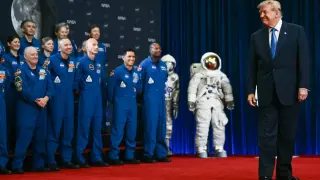
NASA has issued a Request for Information to all 50 states to select a host for the new United States Space Academy. The agency aims to break ground by 2027 and enroll the first 300 students in temporary facilities by 2028, with a permanent 300-acre campus operational by 2031. The institution is designed to train a pipeline of leaders for NASA, the Space Force, and the commercial aerospace sector, with graduates expected to serve in government roles in exchange for tuition-free education.
A new AI tool from Imperial College London can detect heart disease from ECGs in seconds, while France introduces fees on ultra-fast fashion to curb environmental impact. Meanwhile, China’s solar capacity has surpassed coal, and Timor-Leste has eliminated trachoma as a public health threat.
Helen Paterson, an associate professor at the University of Sydney, received the Australian Museum Eureka prize for forensic science. Her research demonstrates that survivors of repeated domestic violence provide accurate but gist-based testimony, challenging legal defenses that dismiss their accounts as unreliable. The award highlights the need for better training in courts regarding the nature of repeated-event memory.
Prime Minister Andy Burnham has pledged to secure alternative funding for the Jodrell Bank Observatory, vowing to prevent the closure of the Lovell telescope despite a decision by UK Research and Innovation (UKRI) to end financial support in March 2028. The site, which houses the world's third-largest steerable radio telescope, faces a deadline of April 1, 2028, for all scientific observations to cease unless new funding is found. Burnham described the observatory as a vital heritage and research asset, committing to finding a solution after being questioned in the House of Commons by Congleton MP Sarah Russell. While UKRI cited a comprehensive prioritization process for the cut, scientists and over 150 public figures, including astronauts and musicians, have condemned the decision as scientifically misguided. The move threatens approximately 28 jobs and disrupts the e-Merlin array, a network of telescopes operated by the University of Manchester. Burnham acknowledged the changes in research funding but emphasized the need to preserve the site's unique historical and scientific value, promising to meet with local MPs to address the issue.
Canada has recruited 64 top researchers from US universities, including Harvard and MIT, through a new C$504m government program. Over 75% of these hires are from the US, driven by federal grant freezes and political interference in US science funding. Key figures include climate researcher Seth Guikema and biopharmaceutical expert Peter Caravan. The move is part of a global trend where countries like the UK, Netherlands, and France are also recruiting US scientists, raising concerns about a long-term 'brain drain' and the US losing its scientific leadership.
Researchers at Stanford and the Broad Institute used AI to design 16 novel bacteriophages that effectively kill antibiotic-resistant E. coli, marking a potential breakthrough against superbugs. However, the capability to generate new viral genomes from scratch has triggered urgent debates over biosafety, biosecurity, and the adequacy of current regulatory frameworks.
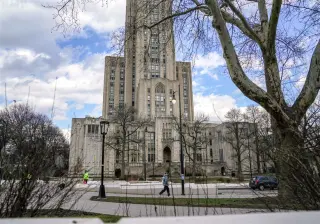
The University of Pittsburgh has lost a total of $40.74 million in federal research funding since the start of the current administration, with the latest cancellations ending two major public health studies. These terminations, which affect researchers Ann Cohen and Tamara Dubowitz, have resulted in the loss of at least seven jobs and disrupted research involving 1,100 participants in Pittsburgh's poorest neighborhoods. While the university is working with officials to mitigate the impact, advocacy groups condemn the cancellations as wasteful and politically motivated.