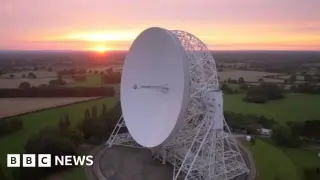
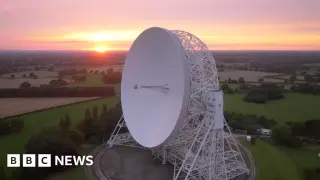
The UK government is 'exploring' long-term options for Jodrell Bank Observatory after UK Research and Innovation (UKRI) declined to prioritize the site for funding beyond March 2028. Business Secretary Jonathan Reynolds stated the facility has a 'secure future' and recently met with the University of Manchester to find solutions, despite a 'science-based decision' to shift focus to the Square Kilometre Array.
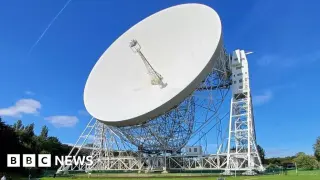
Prime Minister Andy Burnham has pledged to secure alternative funding for the Jodrell Bank Observatory, vowing to prevent the closure of the Lovell telescope despite a decision by UK Research and Innovation (UKRI) to end financial support in March 2028. The site, which houses the world's third-largest steerable radio telescope, faces a deadline of April 1, 2028, for all scientific observations to cease unless new funding is found. Burnham described the observatory as a vital heritage and research asset, committing to finding a solution after being questioned in the House of Commons by Congleton MP Sarah Russell. While UKRI cited a comprehensive prioritization process for the cut, scientists and over 150 public figures, including astronauts and musicians, have condemned the decision as scientifically misguided. The move threatens approximately 28 jobs and disrupts the e-Merlin array, a network of telescopes operated by the University of Manchester. Burnham acknowledged the changes in research funding but emphasized the need to preserve the site's unique historical and scientific value, promising to meet with local MPs to address the issue.
UKRI's STFC plans to terminate £2.8m/year of funding for the e-Merlin network in 2028, risking the Lovell telescope at Jodrell Bank unless alternative funding is found. The move is part of broader PPAN cuts, including scrapping about £49m for a CERN LHCb upgrade and £58.8m for the US Electron-Ion Collider, while the SKA remains funded and UKRI plans to boost budgets for AI and quantum tech; officials say the reductions aim to protect postdocs and PhD opportunities and preserve UK leadership, even as energy costs and international memberships rise.
More than 100 artists, writers and scientists urge the UK government to reverse funding cuts to Jodrell Bank Observatory’s e-Merlin network, arguing that shutting it down would remove a key global eye on the sky, threaten dozens of local jobs and thousands of researchers, and jeopardize the UK’s leadership in space science as other facilities face cuts.
The UK government is cutting funding for the Jodrell Bank Observatory (owned by the University of Manchester), risking its research output and up to 28 jobs as investment shifts toward the Square Kilometre Array. While STFC continues some support for SKA-related work, critics warn the move could weaken the UK’s long‑term radio astronomy capabilities and training for young scientists.
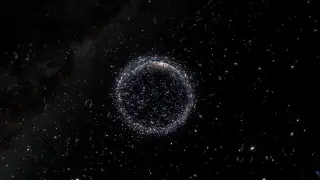
Scientists used the MIT Lincoln Laboratory radar to emit signals that bounce off orbital debris, with reflections received by the Lovell Telescope at Jodrell Bank as part of the Long Baseline Multistatic Radar (LBMR) project. This real-time method measures how far debris is and how quickly it’s moving using a single antenna, and aims to expand to multi-telescope, three‑dimensional tracking, helping monitor the growing risk from space junk in both low Earth orbit and geostationary orbit as satellite traffic rises.
The UK’s Jodrell Bank Observatory faces closure after UKRI cuts shave its £2.8m annual budget as part of a 2.7% reduction in astronomy and related research, risking 28 jobs and Britain’s radio astronomy capabilities—including the Lovell telescope, the e-Merlin network, and future SKA involvement—unless alternative funding is found.
In February 1966, Luna 9 landed in the Moon’s Oceanus Procellarum, unfurled four petals, and transmitted a slow-scan image that Jodrell Bank decoded and published before the Soviets could release their own pictures, showing a rocky, solid surface with limited dust. The mission lasted three days before its unrechargeable batteries died. Sixty years later, two teams claim to have spotted Luna 9 in Lunar Reconnaissance Orbiter imagery, with Chandrayaan-2 expected to help confirm the site, underscoring the enduring intrigue of a long-lost Cold War relic on the Moon.
Sir Francis Graham-Smith, a pioneering figure in radio astronomy and former Astronomer Royal, passed away at 102. His groundbreaking work in radio surveys, pulsar studies, and his leadership at Jodrell Bank significantly advanced our understanding of the universe, including the identification of distant galaxies and the development of major radio telescopes. He was a highly influential scientist, author, and leader in British astronomy, recognized with numerous honors including a knighthood and the Royal Medal.