
NASA targets December 2026 for first robotic moon base infrastructure tests
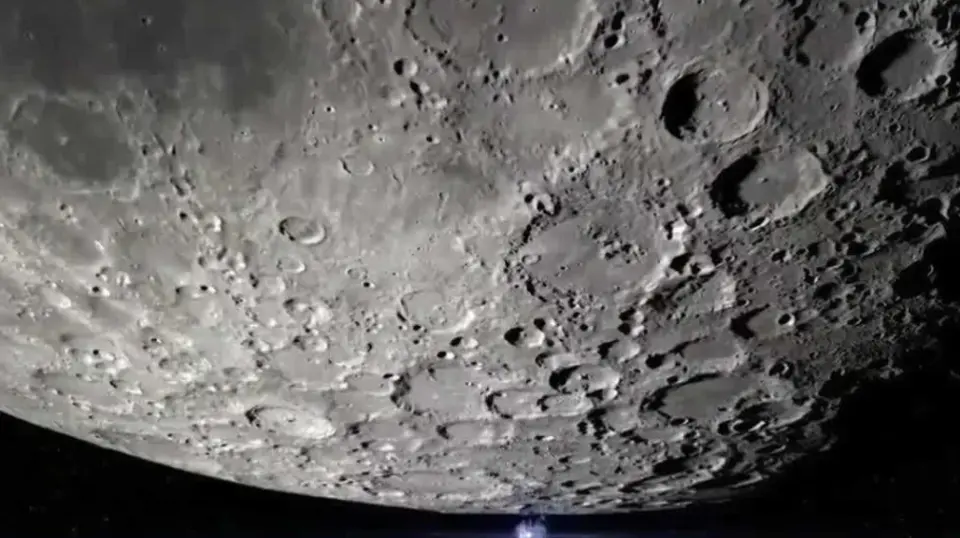
NASA is accelerating its moon base strategy with a series of robotic technology demonstrations, aiming for the first launch by December 2026. These missions, including the Griffin-1 lander, will deliver cargo and rovers to the lunar south pole to test infrastructure for future human habitation. While the agency faces significant environmental challenges, including radiation and dust, this push is part of a broader race against China to secure resources and strategic advantages on the Moon.
Key points
- NASA plans to launch a series of robotic missions to the moon at a pace of roughly one per month, with the first expected no earlier than December 2026.
- The initial mission, Griffin-1, is a commercial lunar lander designed to deliver 1,100 pounds of cargo, including a mobility-testing rover, to the lunar south pole.
- The strategy focuses on the south pole to exploit water ice and sunlight, with the goal of establishing a permanent human presence by the 2030s.
- NASA Administrator Jared Isaacman has emphasized the urgency of securing positions before China and Russia, rejecting partnerships that do not offer tangible mission-critical contributions.
- Challenges include extreme temperature swings, cosmic radiation, and abrasive lunar dust, which necessitate advanced shielding and autonomous maintenance systems.
Background
This development follows NASA's 'Ignition' plan, a $20 billion initiative unveiled in October 2026 to establish a permanent lunar presence by 2032. Recent missions, such as GIMLI, are investigating lava tubes for radiation shielding, while Artemis II data has informed safety assessments. The current push marks a shift from the canceled Gateway station to a more direct, competitive approach in the lunar south pole.
How outlets are covering it
WESH highlights the rapid pace of robotic demonstrations and the specific Griffin-1 mission details. MIT Technology Review emphasizes the environmental hazards and the long-term vision of a self-sustaining lunar city. SpaceNews focuses on the incremental steps and engineering challenges between now and 2028. Aviation Week's content was largely inaccessible due to technical barriers, but its title suggests a focus on the broader objectives and challenges of the moon base program.
Why it matters
The success of these robotic missions is critical for the viability of future human missions. Securing the lunar south pole before competitors like China could define the geopolitical and scientific terms of the next space race, potentially influencing access to water ice and strategic positioning for deep-space exploration.
What to watch
NASA is expected to launch the first robotic mission by December 2026, followed by a series of technology demonstrations. The agency will continue to refine its strategy based on the data collected from these missions, with the ultimate goal of sending humans to the moon by 2028 and establishing a permanent base in the 2030s.
- NASA's plans for a moon base could take shape by the end of 2026 WESH
- NASA Outlines Moon Base Objectives, Challenges Aviation Week
- What it would take to build a city on the moon MIT Technology Review
- How NASA is thinking about a moon base SpaceNews
- Inside NASA’s High-Risk, High-Reward Push for a South Pole Moon Base IEEE Spectrum
Want the full story? Read the original reporting
Read on WESH