
Diamond Melting Curve Resolved, Potentially Tripling Fusion Energy Yield
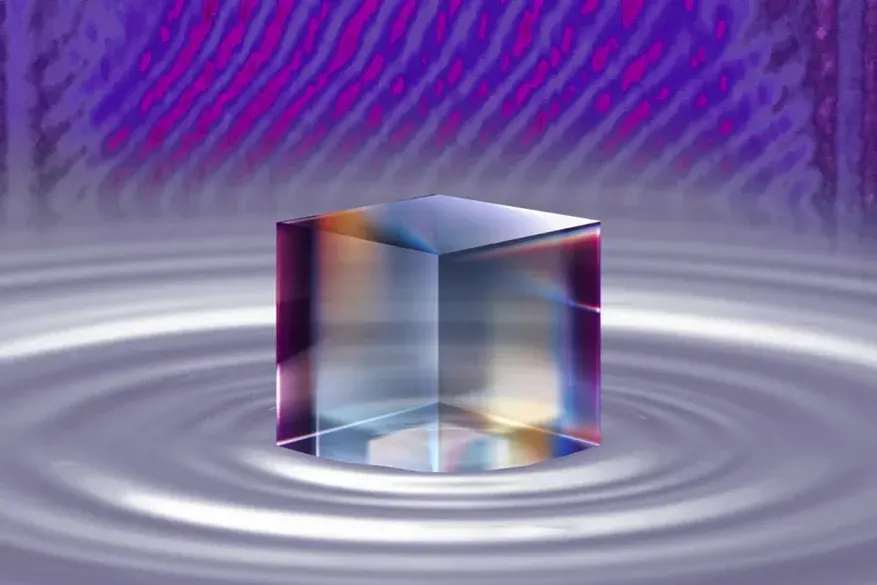
Lawrence Livermore National Laboratory (LLNL) researchers have resolved a 20-year discrepancy in diamond melting data by confirming that diamond retains its cubic structure until it melts into liquid carbon at approximately 1 terapascal (TPa) and 7,300 kelvin. This finding contradicts previous theories predicting a transition to the BC8 phase and suggests that weaker initial shocks in inertial confinement fusion could increase energy yield by up to threefold.
Key points
- LLNL scientists used X-ray diffraction at the Omega Laser Facility to measure diamond melting under shock compression, resolving a 20% temperature gap between experiments and quantum simulations.
- The study confirms diamond melts directly into liquid carbon without transforming into the BC8 phase, a result attributed to the rapid timescale of the shock preventing structural rearrangement.
- The revised melting curve implies that National Ignition Facility (NIF) experiments could use weaker initial shocks, potentially tripling fusion energy output by allowing higher fuel compression.
- The findings provide new benchmarks for modeling carbon behavior in the interiors of ice giant planets like Neptune and Uranus, where pressures exceed those in the experiments.
Background
This development follows decades of LLNL research into diamond behavior under extreme pressure. In 2007 and 2009, researchers observed that diamond becomes denser upon melting, a behavior similar to ice, but subsequent theoretical models failed to match experimental temperatures by roughly 1,500 kelvin. Recent archive coverage from August 2026 highlighted the initial release of these findings, noting the potential for improved fusion efficiency and planetary interior modeling.
How outlets are covering it
The Brighter Side of News and ScienceAlert emphasize the resolution of the 20-year temperature discrepancy and the practical implications for fusion energy, noting that the new data aligns with quantum-mechanical simulations. Interesting Engineering focuses on the potential for a threefold increase in energy gain for laser-driven fusion. The Nature Physics publication, the primary source for the study, highlights the contradiction of the BC8 phase transition, which density functional theory predicted would occur above 1 TPa. All sources agree that the diamond structure persists until melting, but they differ in emphasis: ScienceAlert highlights the 'weird' physics of diamond floating in liquid carbon, while Interesting Engineering focuses on the engineering implications for NIF implosions.
Why it matters
Accurate data on diamond melting is critical for optimizing inertial confinement fusion, where diamond capsules encase fuel. By confirming that weaker shocks can achieve full melting, researchers can design implosions that compress fuel more effectively, potentially increasing energy output without additional laser power. Additionally, the findings improve models of carbon behavior in the deep interiors of ice giant planets, where 'diamond rain' may occur.
What to watch
LLNL plans to use the National Ignition Facility to explore harder-to-reach conditions, including multiple-shock compression, to test where the diamond structure finally loses stability. Future experiments will also aim to control other degradation mechanisms to realize the predicted threefold increase in fusion energy yield.
- Diamond’s extreme melting point could unlock more fusion energy The Brighter Side of News
- Melting diamond could unlock triple fusion gain and the secrets of ice-giant planets Lawrence Livermore National Laboratory (.gov)
- Diamond melting in shock compression experiments at 1 TPa pressures nature.com
- Scientists Melted a Diamond, And It Really Didn't Go The Way They Expected ScienceAlert
- Diamond melting breakthrough could deliver 3x energy gain in laser-driven nuclear fusion Interesting Engineering
Want the full story? Read the original reporting
Read on The Brighter Side of News