
NMR Spectroscopy Evolves: From Nobel-Winning Foundations to Quantum and Medical Frontiers
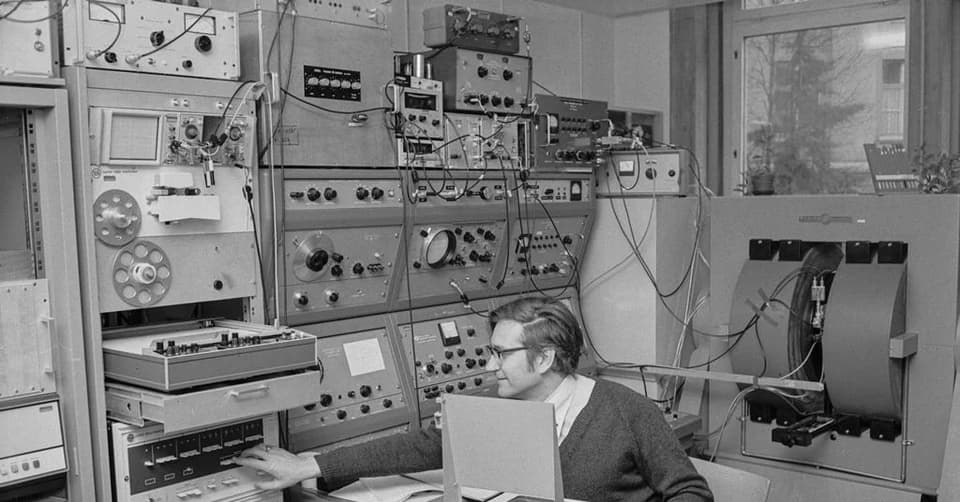
Nuclear magnetic resonance (NMR) spectroscopy has transformed from a 1930s physics experiment into a cornerstone of chemical analysis, largely due to Richard Ernst’s 1991 Nobel-winning innovations in Fourier transform and 2D NMR. Despite persistent limitations in sensitivity and the need for expensive superconducting magnets, modern advancements in hyperpolarisation, microcoils, and benchtop systems are expanding its utility. Researchers are now applying NMR to study working batteries, corrosion, and lung conditions using xenon-129, while also leveraging its principles for quantum computing, proving the technique remains vital decades after its inception.
Key points
- Richard Ernst’s development of Fourier transform and 2D NMR in the 1980s revolutionized spectral resolution, earning him the 1991 Nobel Prize in Chemistry.
- NMR faces significant drawbacks, including low sensitivity, large sample requirements, and reliance on costly liquid helium-cooled superconducting magnets.
- Hyperpolarisation techniques, such as dynamic nuclear polarisation and parahydrogen use, can boost signal intensity by up to 200,000 times, enabling medical applications like tracking pyruvate in metabolic pathways.
- Miniaturised technologies, including microcoils and benchtop NMR systems, are reducing sample sizes and eliminating the need for cryogenic cooling, making the technique more accessible.
- Novel applications include in-situ studies of lithium-ion batteries, corrosion analysis, and lung imaging using xenon-129, which is significantly cheaper than helium-3.
Background
NMR spectroscopy originated from the Stern-Gerlach experiment in the 1920s, which demonstrated quantised magnetic moments in atoms. Isidor Rabi later adapted this to measure nuclear magnetic moments, winning the 1944 Nobel Prize in Physics. Felix Bloch and Edward Mills Purcell independently demonstrated NMR in bulk matter in 1946, sharing the 1952 Nobel Prize. Initially viewed as a physics tool, NMR’s discovery of chemical shifts and spin-spin coupling shifted its focus to chemistry, where it became essential for determining molecular structures. Commercial instruments from Varian and Bruker in the 1960s further popularised the technique, setting the stage for Ernst’s later breakthroughs.
Why it matters
Overcoming NMR’s sensitivity and cost barriers through hyperpolarisation and miniaturisation will democratise access to advanced analytical tools, benefiting fields from pharmaceutical development to renewable energy research. The integration of NMR principles into quantum computing and its application in non-invasive medical imaging, such as xenon-129 lung scans, highlights its potential to drive innovation in both technology and healthcare, addressing critical needs in diagnostics and sustainable materials.
What to watch
Researchers will continue refining hyperpolarisation methods and developing cryogen-free, low-field NMR systems to reduce costs and expand accessibility. The exploration of NMR in quantum computing and real-time battery analysis is expected to yield new insights, while the adoption of xenon-129 for medical imaging may replace expensive helium-3, making advanced diagnostics more viable globally.
Want the full story? Read the original reporting
Read on Chemistry World