
"Revolutionary Approach: Eliminating Gray Mold in Crops Safely and Sustainably"
TL;DR
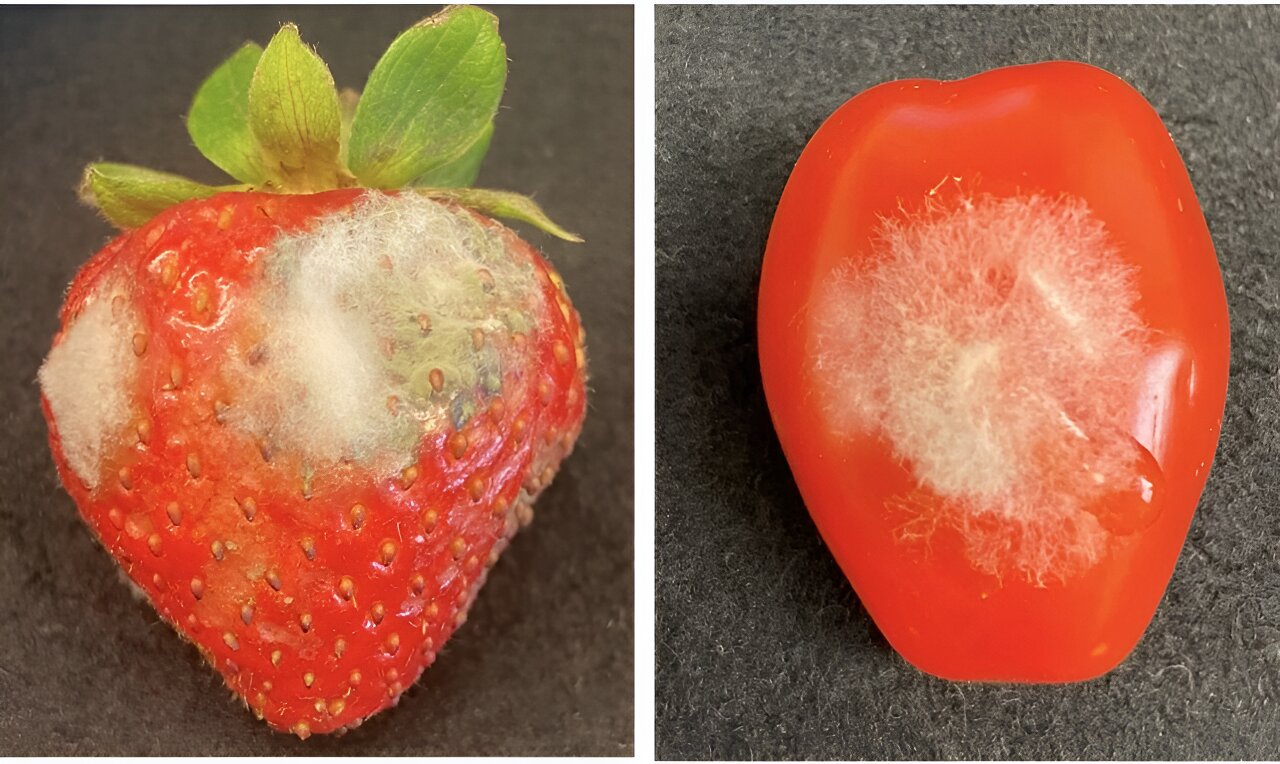
Researchers at the University of California, Riverside have discovered that gray mold, a fungus that causes significant crop losses, uses lipid-based bubbles called extracellular vesicles to communicate with and infect its host plants. These vesicles contain small RNA molecules that suppress the plants' immune systems. By targeting a specific protein called tetraspanin on the surface of these vesicles, the researchers were able to reduce the mold's ability to secrete and deliver the RNA-containing bubbles. This finding could lead to the development of eco-friendly RNA fungicides that effectively combat gray mold and other fungal pathogens, without the use of toxic chemicals.
Topics:sciencescience-and-technology#crop-protection#extracellular-vesicles#gray-mold#plant-pathology#rna-fungicides#science-and-technology
Want the full story? Read the original reporting
Read on Phys.org