
150 public figures urge UK government to reverse Jodrell Bank funding cuts
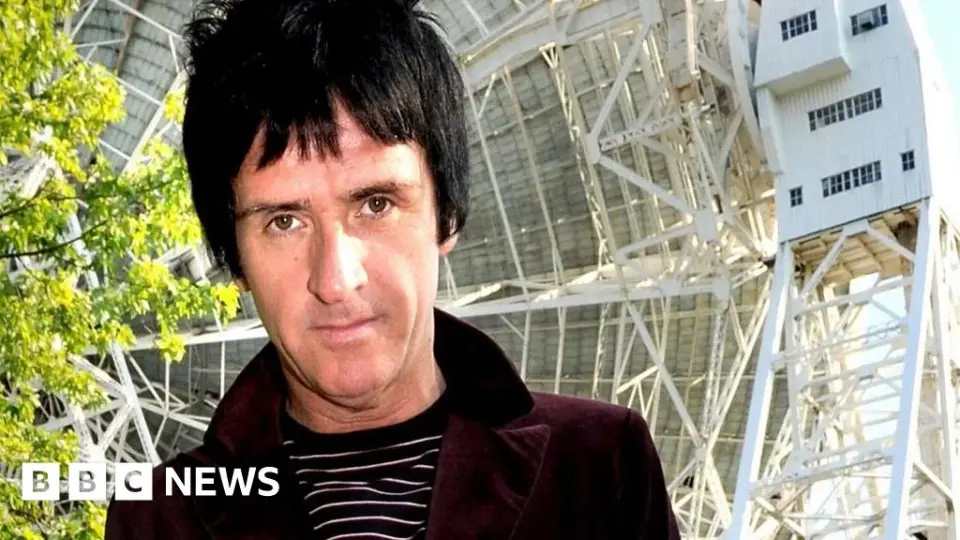
Over 150 public figures, including astronauts and musicians, have signed a letter demanding the UK government restore £2.8m in annual funding for the Jodrell Bank Observatory. The UK Research and Innovation agency (UKRI) cut the budget to prioritize projects with greater long-term economic impact, threatening the closure of the Lovell Telescope by April 2028. Critics argue the decision undermines global scientific leadership and risks 28 jobs, while supporters highlight the site's role in space debris tracking and education.
Key points
- UKRI has cut £2.8m in annual funding for Jodrell Bank, requiring the University of Manchester to find alternative sources by 2028.
- All scientific observations at the observatory are expected to cease on 1 April 2028 if funding is not restored.
- The open letter was signed by over 150 figures, including astronaut Tim Peake, physicist Brian Cox, and musician Sir Brian May.
- UKRI stated the cuts were necessary to focus on projects delivering the 'greatest long-term impact' amid escalating costs in physics and lab operations.
- The decision is part of broader cuts to astronomy and particle physics, including reduced involvement in the James Clark Maxwell Telescope and the Extremely Large Telescope.
- Jodrell Bank serves as the headquarters for the Square Kilometre Array Observatory and hosts over 25,000 schoolchildren annually.
Background
Jodrell Bank Observatory in Cheshire has faced funding threats before, most notably in 2008, when a similar prioritization plan was withdrawn after public scrutiny. The site, founded by Sir Bernard Lovell, gained international prominence during the Cold War for tracking Sputnik and later Luna 9. Recent coverage highlights its role in the Long Baseline Multistatic Radar project, which uses the Lovell Telescope to track space debris in real-time. The current funding crisis follows a 2.7% reduction in astronomy research budgets, with UKRI receiving a record settlement but reallocating funds toward applied sciences like quantum computing and AI.
How outlets are covering it
The BBC reports that the open letter describes the funding cut as 'foolish' and emphasizes the site's cultural and scientific value, noting that 28 jobs are at risk and nearly 3,000 scientists rely on the facility. The Guardian highlights the broader impact on UK global standing, with letters from experts arguing that modern astronomy integrates physics, chemistry, and computing, and that cutting e-Merlin weakens the UK's ability to compete with billion-pound space observatories. BBC Sky at Night Magazine frames the decision as a 'punch in the gut' for scientists, noting that the UK is withdrawing from multiple international projects, including the Event Horizon Telescope and the James Clark Maxwell Telescope, but that Jodrell Bank remains uniquely significant for UK radio astronomy. The Observer criticizes the decision as 'hasty, ill-considered, and devastating,' pointing out that 12 of 13 untouched particle physics and astronomy projects are international collaborations, while 7 of 16 cut projects are UK-based, suggesting a bias against domestic facilities. The Observer also notes that the Square Kilometre Array funding does not cover the Lovell Telescope's operations, contrary to some government claims.
Why it matters
The potential closure of Jodrell Bank threatens the UK's leadership in radio astronomy and its ability to track space debris, a growing global safety concern. The cut also risks the loss of 28 jobs and disrupts research for nearly 3,000 scientists, while undermining the UK's role in the Square Kilometre Array, the world's largest astronomical project. The controversy highlights tensions between funding pure science and applied research, with critics arguing that short-term economic metrics undervalue long-term scientific and cultural benefits.
What to watch
The University of Manchester is seeking alternative funding from government, public agencies, industry, and philanthropic sources to sustain Jodrell Bank before the April 2028 deadline. The open letter calls on the government to reverse the decision and restore the £2.8m annual budget. If no alternative funding is secured, all scientific observations at the observatory will cease, and the site may close, impacting its role in the Square Kilometre Array and space debris tracking.
- Find funding and save Jodrell Bank, stars say BBC
- Science funding cuts will harm Britain’s global standing | Letters The Guardian
- 'A punch in the gut' – I'm a UK scientist. Here's why I'm against plans to cut Jodrell Bank's funding BBC Sky at Night Magazine
- What is Jodrell Bank Observatory and what does it do? BBC
- ‘Hasty, ill-considered, devastating’: closing Jodrell Bank is like turning our backs on the cosmos The Observer
Want the full story? Read the original reporting
Read on BBC