
UK Science Funding Cuts Threaten Closure of Historic Jodrell Bank Observatory
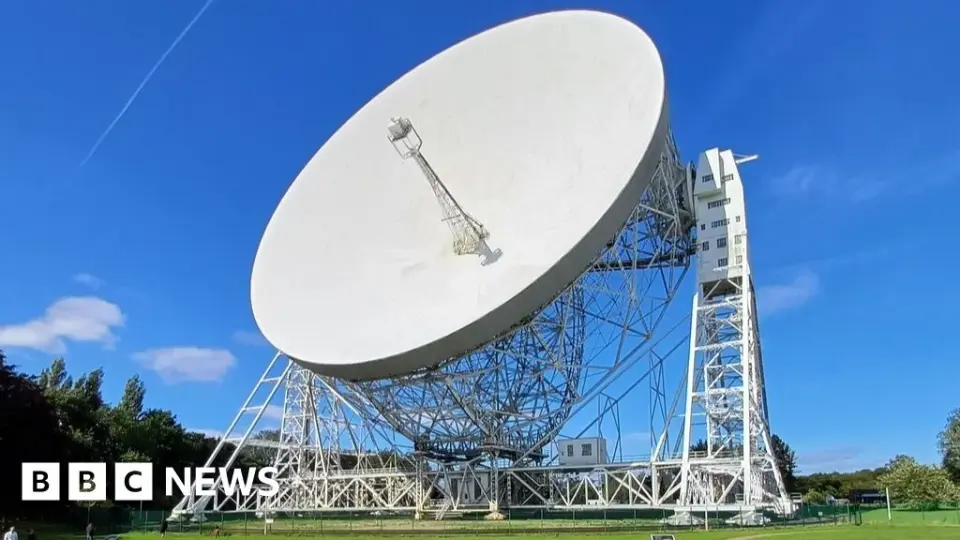
The UK government has announced the withdrawal of funding for the Jodrell Bank Observatory, threatening the operation of the iconic Lovell Telescope and the e-Merlin network by March 2028. While the Science and Technology Facilities Council cites the need to prioritize long-term impact, scientists warn the move risks a brain drain and undermines the UK's role in the upcoming Square Kilometre Array project.
Key points
- UK Research and Innovation will cease funding for the Lovell Telescope and e-Merlin network after March 2028.
- The University of Manchester is urgently seeking alternative funding from private or charitable sources to prevent closure.
- The Lovell Telescope, completed in 1957, remains a critical component of UK radio astronomy and the global Square Kilometre Array headquarters.
- Approximately 28 jobs are at risk if the site ceases operations, with broader cuts affecting other UK physics facilities.
- Critics argue the decision is short-sighted and could force early-career physicists to leave the UK for better-funded international projects.
Background
Jodrell Bank, a UNESCO World Heritage Site in Cheshire, has been a cornerstone of radio astronomy since Sir Bernard Lovell established the site in 1945. The Lovell Telescope, the world's largest when built in 1957, has historically tracked satellites, received the first images from the Moon, and contributed to the discovery of black holes and galaxies. Recent archive reports highlight its continued relevance, including its role in tracking space debris and its status as the global headquarters for the Square Kilometre Array (SKA), a massive international radio telescope project expected to begin data collection in five years.
How outlets are covering it
BBC and AP News emphasize the immediate operational threat to the Lovell Telescope and the potential loss of 28 jobs, framing the decision as a blow to UK research capabilities. The Guardian provides a broader context, noting that Jodrell Bank is part of a wider £162m savings target for the Science and Technology Facilities Council by 2030, driven by cost overruns in areas like CERN. While BBC and AP focus on the specific loss of the telescope, The Guardian highlights a potential 'brain drain,' citing a survey where nearly 80% of early-career physicists are considering leaving the UK. All sources agree that the University of Manchester is scrambling for alternative funding, but The Guardian uniquely details parallel cuts to other facilities like the Diamond synchrotron and the Event Horizon Telescope, suggesting a systemic crisis in UK physics funding rather than an isolated decision.
Why it matters
The potential closure of Jodrell Bank represents a significant setback for the UK's scientific reputation and its ability to compete in global research. The Lovell Telescope is not merely a historical landmark but an active instrument essential for the Square Kilometre Array, a project the UK is heavily invested in. Losing this capability could hinder the training of young researchers and reduce the UK's influence in international collaborations, potentially leading to a long-term decline in the nation's scientific output and innovation capacity.
What to watch
The University of Manchester must secure alternative funding from business, government, or charitable sources before March 2028 to keep the Lovell Telescope operational. If no funding is found, the telescope will cease to be an active scientific facility. Meanwhile, the Science and Technology Facilities Council will continue to fund some activities related to the Square Kilometre Array, but the broader physics sector faces ongoing budget pressures that may force further cuts to other major UK research facilities.
- What is Jodrell Bank Observatory and what does it do? BBC
- UK's iconic Jodrell Bank telescope faces axe in science cuts BBC
- World-class Jodrell Bank is under threat and UK risks a physics brain drain The Guardian
- The future of the UK’s renowned Lovell radio telescope is in question after a funding cut AP News
- Jodrell Bank cuts a disappointing gamble, says Sky at Night host Yahoo
Want the full story? Read the original reporting
Read on BBC