
Kenyan Fossil Tracks Show Paranthropus boisei Were Larger and Socially Complex Than Expected
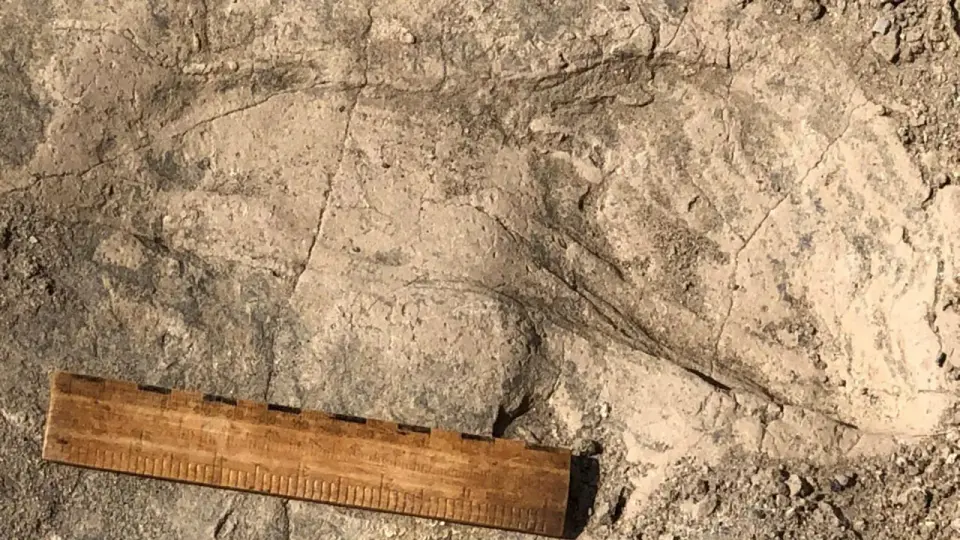
Newly analyzed 1.4-million-year-old footprints in northern Kenya indicate that Paranthropus boisei individuals were significantly larger than previously believed, reaching heights of up to 1.8 meters. The discovery of eight tracks from a single group suggests these ancient human relatives traveled in cohesive social units, challenging earlier assumptions that they were small, solitary creatures.
Key points
- Fossil footprints near an ancient lakeshore in northern Kenya preserve evidence of eight Paranthropus boisei individuals moving together approximately 1.4 million years ago.
- Analysis of the tracks indicates the individuals were adults, with some reaching human-like body sizes of up to 1.8 meters tall and 75 kilograms, contradicting previous estimates based on limited skeletal remains.
- The group appears to have consisted mostly of adult males, with no clear evidence of females or children, suggesting a complex social structure involving male competition and cooperation for safety.
- The tracks were identified using analytical techniques developed in 2024, which rely on foot anatomy and locomotion patterns to distinguish species.
- The discovery highlights the importance of Lake Turkana as a site for understanding hominin behavior, as similar footprint sites across the region suggest these areas were repeatedly visited for resources over 100,000 years.
Background
This discovery adds to a growing body of evidence regarding early human behavior and tool use. Recent findings, such as the 476,000-year-old timber at Kalambo Falls and 1.8-million-year-old elephant butchery at Olduvai Gorge, have shown that early hominins engaged in complex activities like deliberate woodwork and strategic hunting. Additionally, 60,000-year-old ostrich eggshell engravings in southern Africa have revealed sophisticated geometric thinking. The new footprint data complements these findings by providing direct evidence of social organization and physical stature for a species previously known mostly from cranial fossils.
Why it matters
This research fundamentally revises the physical profile of Paranthropus boisei, a key species in human evolution. By demonstrating that these individuals were larger and lived in structured groups, the findings challenge the narrative that they were small, isolated foragers. Understanding their social dynamics and physical capabilities helps clarify how different hominin species coexisted and adapted to their environments during the Early Pleistocene, offering insights into the evolutionary pressures that shaped modern human behavior.
What to watch
The research team plans to return to Kenya in 2026 to continue investigating additional fossil footprint sites around Lake Turkana. Scientists aim to understand the geological conditions that allowed these tracks to be preserved, which could explain why hominins repeatedly returned to these lakeshore environments over a period exceeding 100,000 years. Further analysis may reveal more about the daily lives, movement patterns, and social structures of ancient human relatives.
Want the full story? Read the original reporting
Read on Science Daily