
Yonaguni Monument: A 25-Metre-Deep Underwater Enigma Near Japan's Westernmost Island
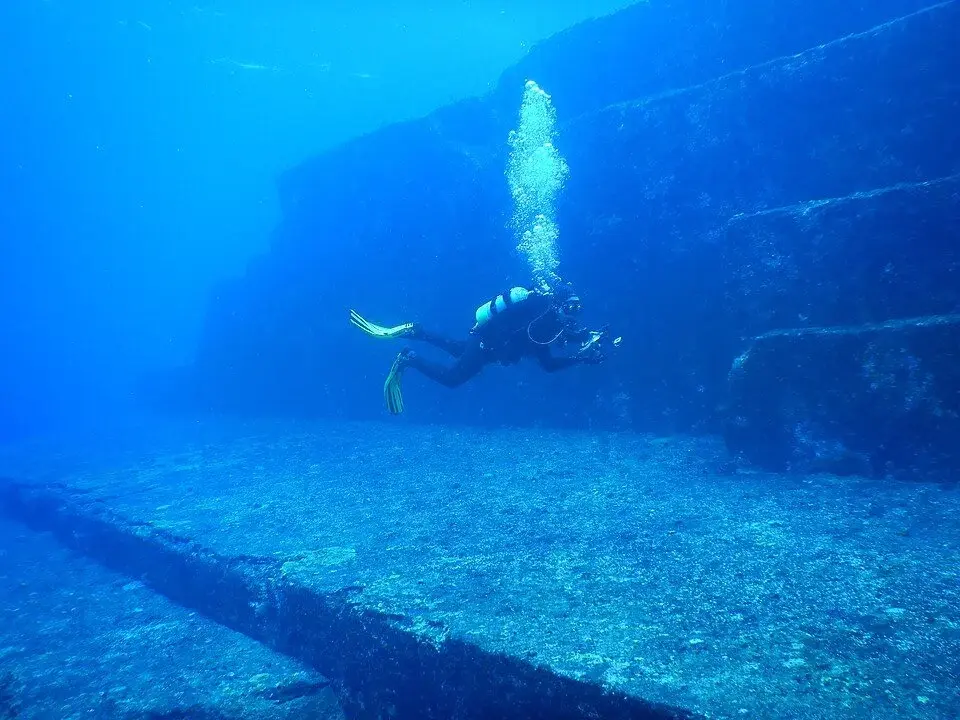
The Yonaguni Monument is a massive underwater rock formation off Japan's westernmost island, measuring 25 metres tall and 100 metres long. Its stepped, pillar-like structure sparks debate between scientists who view it as a natural geological feature and those who argue it is a remnant of a 5,000-year-old sunken city. Accessible only to experienced divers due to strong currents, the site remains a focal point for tourism and geological research.
Key points
- The Yonaguni Monument is located approximately 35 metres deep off the coast of Yonaguni Island, Japan's westernmost inhabited island, which is closer to Taiwan than to Okinawa.
- The formation stands about 25 metres tall, exceeding the height of the Angel of the North sculpture, and spans an area of 100 by 60 metres, comparable to a field hockey pitch.
- Marine geologist Masaaki Kimura proposes the structure is part of a 5,000-year-old city that sank during an earthquake roughly 2,000 years ago, while other geologists attribute the shapes to natural erosion by ocean currents.
- The site is accessible to experienced divers between November and early May, though strong currents and large swells make the journey challenging; semi-submersible tourist boats also offer views during good weather.
- Scientific consensus remains divided, with estimates suggesting the formation predates human capability to construct such structures, yet its angular, step-like features continue to fuel speculation about ancient civilizations.
Background
This story follows broader scientific interest in ancient geological and biological mysteries, such as the discovery of a new crocodile species in the Great Sphinx's limestone and the use of advanced imaging to understand historical structures. While those cases involve terrestrial or fossilized evidence, the Yonaguni Monument represents a unique underwater puzzle where geological dating and morphological analysis conflict, highlighting ongoing debates in marine archaeology and geology.
Why it matters
The Yonaguni Monument challenges conventional understandings of human history and geological processes by presenting a structure that appears artificially designed yet predates known human construction capabilities. Resolving this debate could reshape narratives about ancient civilizations, seismic activity, and the natural evolution of underwater landscapes, while also influencing tourism and marine conservation efforts in the region.
What to watch
Ongoing geological surveys and advanced imaging techniques may provide further clarity on the monument's origins. Tourism operators are expected to continue offering access via diving and semi-submersible boats, while scientific debates will likely persist as new evidence emerges regarding the formation's age and structure.
Want the full story? Read the original reporting
Read on BBC Wildlife Magazine