
Ancient Sea Levels Reveal Rapid Polar Shifts During Dinosaur Era
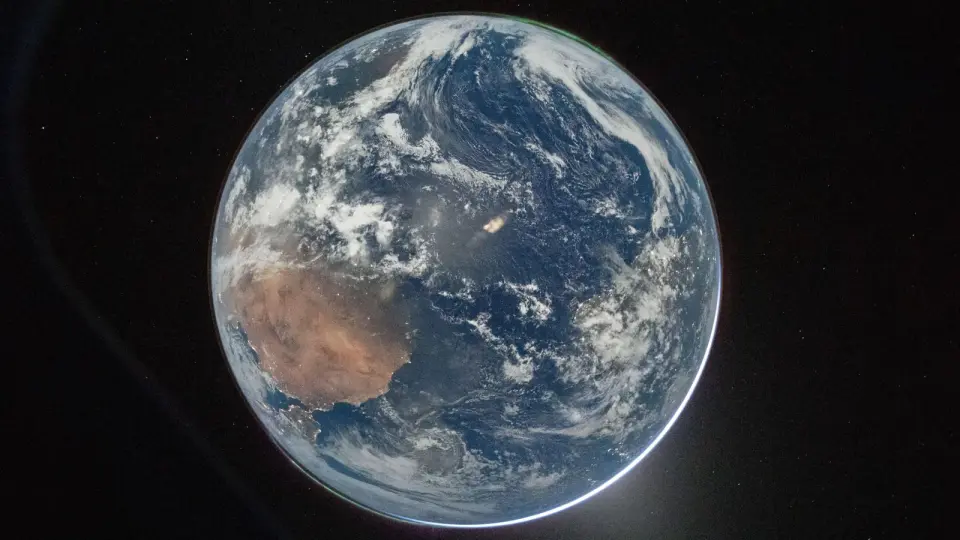
New analysis of ancient sea-level data indicates that Earth's geographic poles shifted rapidly during the Jurassic and Cretaceous periods, moving up to 0.6 degrees per million years. This 'true polar wander' occurred as the planet's crust and mantle reoriented relative to its spin axis to balance mass distribution, potentially altering global climate patterns and habitats for dinosaurs and early primates.
Key points
- Researchers identified four intervals of rapid true polar wander in the last 320 million years, with the most recent occurring 10-20 million years ago.
- The shifts moved the geographic poles by up to 0.6 degrees per million years, a rate faster than typical plate tectonic movements.
- The study uses ancient flooding records caused by sea-level changes to detect these events, rather than relying on magnetic data.
- True polar wander involves the crust and mantle shifting relative to the spin axis, distinct from changes in Earth's rotational tilt caused by Milankovitch cycles.
- These reorientations likely impacted atmospheric circulation and climate, affecting environments where life evolved from the dinosaur era through to early primate ancestors.
Background
This finding builds on earlier reports from October 2026, which highlighted a study in Science led by Mathew Domeier at the University of Oslo. That research also used ancient sea-level changes to identify four rapid true polar wander events, challenging the previous view that Earth's solid exterior shifted slowly. The current article from Space.com elaborates on the mechanism, explaining how Earth's oblate shape and mass distribution imbalances drive these shifts, and notes the potential impact on climate and biological evolution during the Jurassic and Cretaceous periods.
Why it matters
Understanding rapid true polar wander provides critical insights into how Earth's physical reorientation has historically influenced global climate systems. These shifts could have significantly altered habitats and atmospheric circulation, impacting the evolution and survival of species during key geological periods, including the age of dinosaurs and the emergence of early primates.
What to watch
Further research is needed to determine the exact triggers for these rapid polar shifts, as the current study identifies the events and their speed but not the specific causes. Scientists will likely continue analyzing ancient sea-level and geological data to refine models of Earth's mass distribution and its impact on long-term climate stability.
Want the full story? Read the original reporting
Read on Space